Eschscholzia californica
Cham.
Californian Poppy, Cup of Gold
iNaturalist· cc-by-nc
(c) Eric Koberle, some rights reserved (CC BY-NC)
iNaturalist· cc-by-nc
(c) Eric Koberle, some rights reserved (CC BY-NC)
iNaturalist· cc-by-nc
(c) Eric Koberle, some rights reserved (CC BY-NC)
Summary
Source: WikipediaEschscholzia californica, the California poppy, golden poppy, Mexican poppy, California sunlight or cup of gold, is a species of flowering plant in the family Papaveraceae, native to the United States and Mexico. It is cultivated as an ornamental plant flowering in summer (spring in southern Australia), with showy flowers in brilliant shades of red, orange and yellow (occasionally pink and white). It is also used as food or a garnish. It had various uses in indigenous herbalism. It became the official state flower of California in 1903.
Description
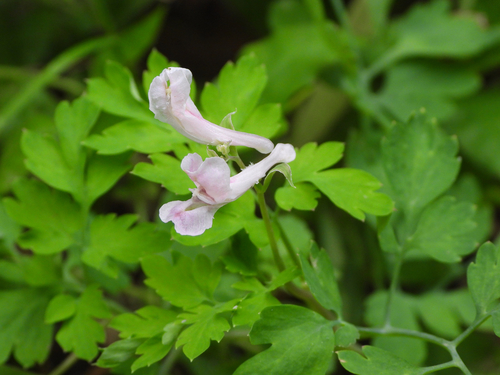
An annual plant. It grows 20-30 cm high and 15-20 cm wide. The leaves are feather like and blue-green. The stems are thin. The flower buds are pointed. The open flowers are cup-shaped and 8 cm across. The petals are silky looking. They are usually orange but can be purple, crimson or white. There are named varieties.
Edible Uses
The leaves are edible when cooked. As this plant belongs to a family that contains many poisonous species, some caution is advised in its use.
Traditional Uses
CAUTION: Because it contains alkaloids, it should be eaten with caution. The boiled and roasted leaves are eaten. They are bitter. They are left lying in water to remove bitterness.
Medicinal Uses
California poppy is a bitter sedative herb with diuretic, analgesic, antispasmodic, and diaphoretic properties. The whole plant is harvested when in flower and dried for use in tinctures and infusions. It is taken internally for nervous tension, anxiety, insomnia, and incontinence, particularly in children. The watery sap is mildly narcotic and has been used to relieve toothache. Although similar in some respects to the opium poppy (Papaver somniferum), it is much milder and does not depress the central nervous system. One account describes its effect on the central nervous system as markedly different — not narcotic, but tending to normalize psychological function. Its gentle antispasmodic, sedative, and analgesic qualities make it useful for treating physical and psychological problems in children, including bedwetting, difficulty sleeping, and nervous tension. An extract of the root is used as a wash applied to the breasts to suppress milk flow in lactating women.
Known Hazards
No records of toxicity have been seen but this species belongs to a family that contains many poisonous plants. Some caution is therefore advised.
Distribution
It is a temperate plant. It is frost hardy. It does best in full sun. It can grow in sandy soils. The soils need to be well drained. It can grow with moderate moisture or in fairly dry places. It does not do well in humid regions. It can grow in arid places. It suits hardiness zones 6-10.
Where It Grows
Africa, Argentina, Asia, Australia, Austria, Britain, Canada, Chile, China, Cyprus, Czech Republic, East Africa, Europe, France, Germany, Hungary, Iran, Iraq, Israel, Korea, Malawi, Mediterranean, Mexico, Middle East, Myanmar, Netherlands, New Zealand, North America*, Pakistan, Portugal, Romania, SE Asia, Slovakia, Slovenia, South Africa, South America, Spain, Tanzania, Tasmania, USA,
Cultivation
Prefers a poor sandy soil and a sunny position but is easily grown in an ordinary garden soil. Succeeds in a hot dry position. Plants grow well in maritime climates. A very ornamental plant, it is commonly grown in the flower garden and there are many named varieties. This plant is the state flower of California. Although a perennial it is usually quite short-lived and is more often grown as an annual in this country. It can tolerate temperatures down to about -10°c, however, and often survives mild winters. If the dead flowers are removed before they set seed the plant will continue flowering for a longer period. A polymorphic species. Plants resent root disturbance and should be sown in situ. The flowers are very attractive to bees. They close during wet or overcast weather. Plants often self-sow if the soil is disturbed by some means such as hoeing. Heat Zone: 9-2.
Propagation
Sow seed in mid-spring or late summer to early autumn directly into a sunny border outdoors, barely covering the seed. Autumn-sown plants may need frost protection in cold winters. Germination usually occurs within 2–3 weeks.
Other Uses
Used as a perennial groundcover for zone 2 firebreaks — the second zone away from buildings in the concentric fire-prevention system developed by the US government for wildfire-prone areas. These low-growing plants provide minimal fuel load.
Notes
There are 8 or 10 Eschscholzia species. It can be invasive. It is the official flower of California. It is used in medicine.
Synonyms
Also Known As
Bein-pan, Zlati kalifornijski mak
References (21)
- Beckstrom-Sternberg, Stephen M., and James A. Duke. "The Foodplant Database." http://probe.nalusda.gov:8300/cgi-bin/browse/foodplantdb.(ACEDB version 4.0 - data version July 1994)
- Bremness, L., 1994, Herbs. Collins Eyewitness Handbooks. Harper Collins. p 250
- Brown, D., 2002, The Royal Horticultural Society encyclopedia of Herbs and their uses. DK Books. p 206
- Burnie, G.(Ed.), 2003, Annuals and Bulbs. The Gardener's Handbooks. Fog City Press. p 157
- Cronin, L., 1989, The Concise Australian Flora. Reed. p 78
Show all 21 references Hide references
- Cundall, P., (ed.), 2004, Gardening Australia: flora: the gardener's bible. ABC Books. p 566
- Kermath, B. M., et al, 2014, Food Plants in the Americas: A survey of the domesticated, cultivated and wild plants used for Human food in North, Central and South America and the Caribbean. On line draft. p 348
- Heywood, V.H., Brummitt, R.K., Culham, A., and Seberg, O. 2007, Flowering Plant Families of the World. Royal Botanical Gardens, Kew. p 241
- Hibbert, M., 2002, The Aussie Plant Finder 2002, Florilegium. p 95
- Joyce, D., 1998, The Garden Plant Selector. Ryland, Peters and Small. p 316
- Lazarides, M. & Hince, B., 1993, Handbook of Economic Plants of Australia, CSIRO. p 96
- Llamas, K.A., 2003, Tropical Flowering Plants. Timber Press. p 309
- Low, T., 1991, Wild Herbs of Australia and New Zealand. Angus & Robertson. p 82 (Drawing)
- Marinelli, J. (Ed), 2004, Plant. DK. p 454
- Moerman, D. F., 2010, Native American Ethnobotany. Timber Press. p 227
- Morley, B. & Everard, B., 1970, Wild Flowers of the World. Ebury press. Plate 154
- Morley, B.D., & Toelken, H.R., (Eds), 1983, Flowering Plants in Australia. Rigby. p 57
- Nees, Horae phys. berol. 73-74. 1820
- Plants for a Future database, The Field, Penpol, Lostwithiel, Cornwall, PL22 0NG, UK. http://www.scs.leeds.ac.uk/pfaf/
- Royal Botanic Gardens, Kew (1999). Survey of Economic Plants for Arid and Semi-Arid Lands (SEPASAL) database. Published on the Internet; http://www.rbgkew.org.uk/ceb/sepasal/internet [Accessed 5th May 2011]
- Tasmanian Herbarium Vascular Plants list p 43