Fumaria officinalis
L.
Fumitory, Earth smoke, Wax dolls
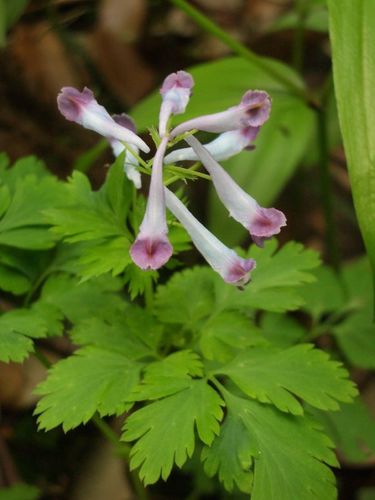
iNaturalist· cc-by-nc
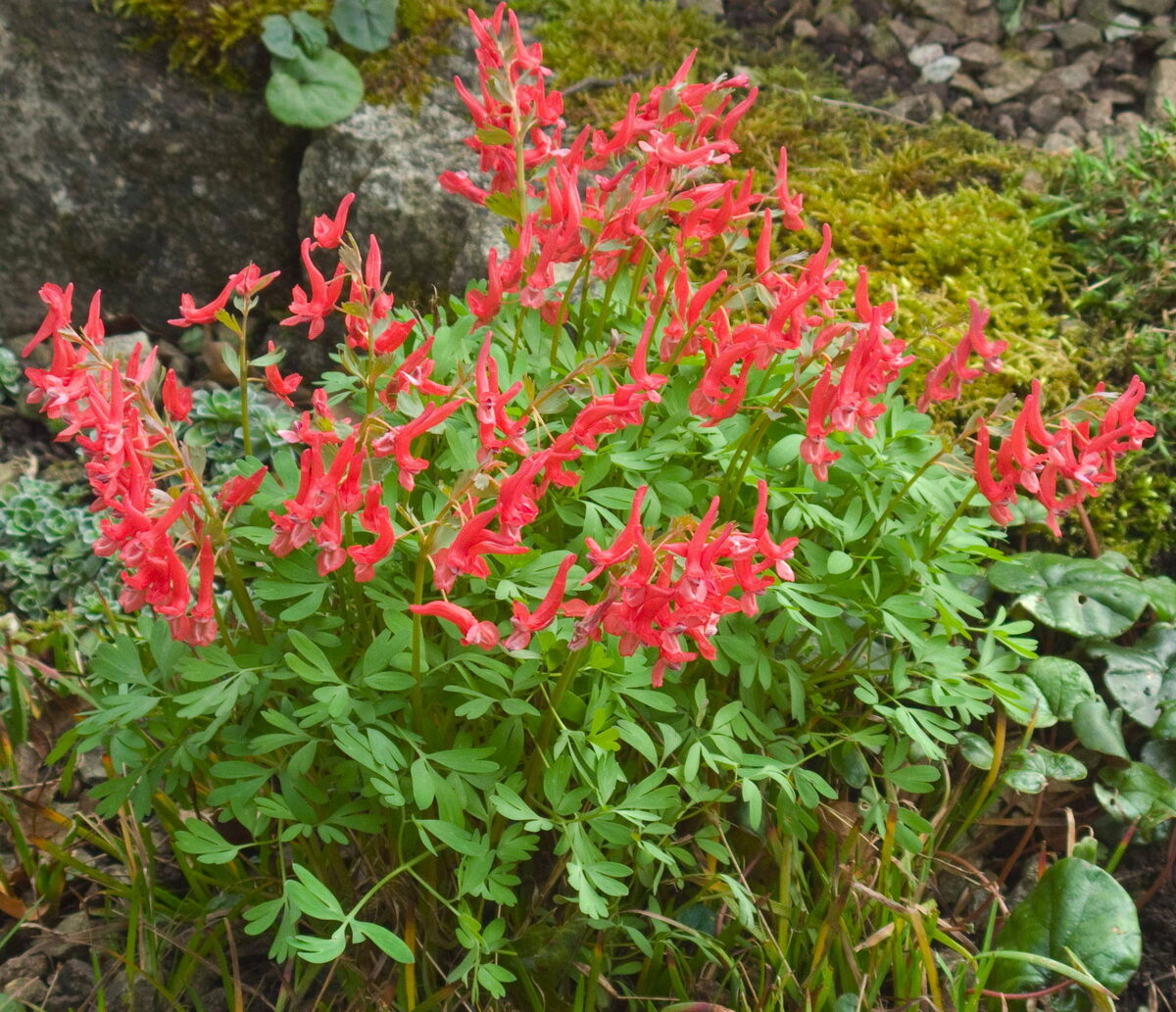
(c) Sergey Mayorov, some rights reserved (CC BY-NC), uploaded by Sergey Mayorov
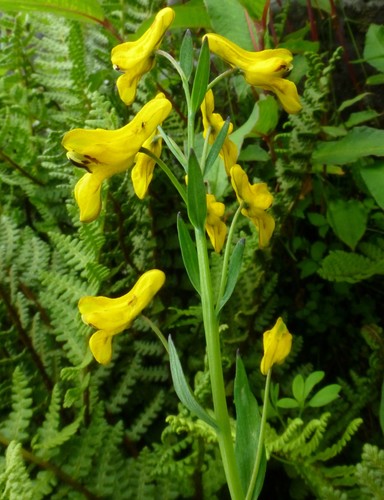
iNaturalist· cc-by-nc
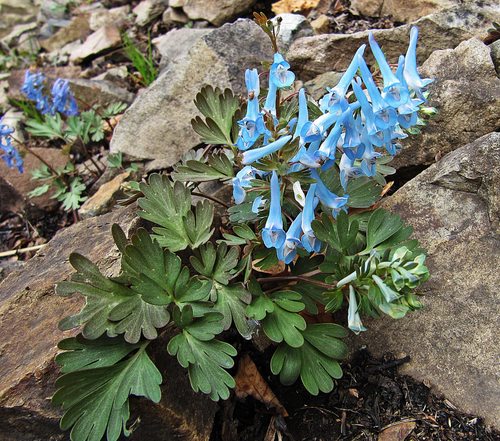
(c) nz_willowherb, some rights reserved (CC BY-NC)
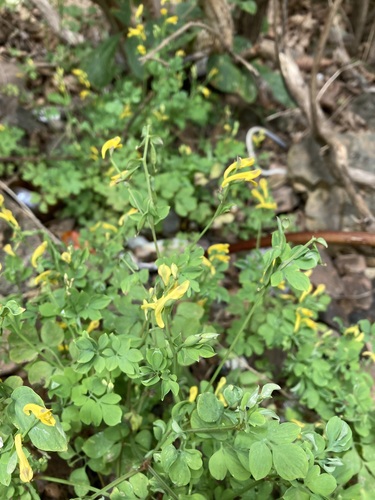
iNaturalist· cc-by-nc
(c) Valerio Lazzeri, some rights reserved (CC BY-NC), uploaded by Valerio Lazzeri
Summary
Source: WikipediaFumaria officinalis, the common fumitory, drug fumitory or earth smoke, is a herbaceous annual flowering plant in the poppy family Papaveraceae. It is the most common species of the genus Fumaria in Western and Central Europe.
Description
A robust herb with weak stems. It is an annual plant and is sprawling or climbing. The leaves are grey-green and finely divided. They are 5-15 cm long. The flowers are pink and 7 mm long. They are in dense elongated groups.
Edible Uses
The fresh or dried herb works as a curdling agent for plant milks. Add a few sprays per litre of liquid and leave until the milk has soured thickly, then remove the sprays. It imparts a tangy flavour, acts as a preservative, and prevents the rancid taste that can develop in soured milk.
Traditional Uses
The plant including flowers is added to sour milk to impart flavour and after the milk has soured thickly the plant is removed. It gives a tangy taste and acts as a preservative. Leaves can be used fresh or dried. They are used in salads and pies.
Medicinal Uses
Fumitory has been prized since at least Roman times for its tonic and blood-cleansing properties. It is especially useful for treating visceral obstructions (particularly those of the liver), scorbutic conditions, and troublesome skin diseases, especially eczema, which can be treated both internally and externally. The herb is antispasmodic, aperient, cholagogue, mildly diaphoretic, mildly diuretic, laxative, and weakly tonic. It is harvested as flowering begins in summer and can be used fresh or dried. Caution is warranted with excessive doses, as these cause hypnotic and sedative effects, particularly when the herb is taken for more than around 8 days.
Known Hazards
Avoid in those with fits and epilepsy. Contraindicated with glaucoma patients. Avoid during pregnancy and breast-feeding. Allopathic medication for high blood pressure - effects increased.
Distribution
It is a temperate climate plant. It needs a light, well-drained soil. In Argentina it grows from sea level to 1,500 m above sea level.
Where It Grows
Africa, Argentina, Asia, Australia, Balkans, Chile, Estonia, Europe, Iran, Libya, Luxembourg, Macedonia, Middle East, Mongolia, North Africa, North America, South America, Taiwan, Tasmania, Turkey, Türkiye, Uruguay,
Cultivation
Prefers a light well-drained soil in a sunny position. This plant can be a common weed in some gardens, self-sowing freely, though it is fairly easy to control by hand weeding. The flowers are seldom visited by insects, but they are self-fertile and usually set every seed.
Propagation
Sow seed in spring directly in situ. In practice, the plant self-sows freely and typically establishes and maintains itself without any intervention.
Other Uses
A yellow dye is obtained from the flowers. A decoction of the herb makes a curative lotion for milk-crust on babies' scalps.
Synonyms
Also Known As
Ahtere, Kolmekorraline hain, Sahtere
References (11)
- Brown, D., 2002, The Royal Horticultural Society encyclopedia of Herbs and their uses. DK Books. p 218
- Dogan, Y., et al, 2004, The Use of Wild Edible Plants in Western and Central Anatolia (Turkey). Economic Botany 58(4) pp. 684-690
- Dogan, Y., 2012, Traditionally used wild edible greens in the Aegean Region of Turkey. Acta Societatis Botanicorum Poloniae 81(4): 329-342
- Ertug, F, Yenen Bitkiler. Resimli Türkiye Florası -I- Flora of Turkey - Ethnobotany supplement
- Facciola, S., 1998, Cornucopia 2: a Source Book of Edible Plants. Kampong Publications, p 117
Show all 11 references Hide references
- Kalle, R. & Soukand, R., 2012, Historical ethnobotanical review of wild edible plants of Estonia (1770s-1960s) Acta Societatis Botanicorum Poloniae 81(4):271-281
- Mahklouf, M. H., 2019, Ethnobotanical Study of Edible Wild Plants in Libya. European Journal of Ecology. 5(2): 30-40
- Ozbucak, T. B. et al, 2006, The Contribution of Wild Edible Plants to Human Nutrition in the Black Sea Region of Turkey. Ethnobotanical Leaflets 10: 98-103
- Polat, R., et al, 2015, Survey of wild food plants for human consumption in Elazig (Turkey). Indian Journal of Traditional Knowledge. Vol. 1(1): 69-75
- Sp. pl. 2:700. 1753
- Urgamal, M., Oyuntsetseg, B., Nyambayar, D. & Dulamsuren, Ch. 2014. Conspectus of the vascular plants of Mongolia. (Editors: Sanchir, Ch. & Jamsran, Ts.). Ulaanbaatar, Mongolia. “Admon“ Press. 334pp. (p. 79-90).