Corylus heterophylla
Fisch. ex Trautvetter
Siberian filbert, Siberian hazel
iNaturalist· cc-by
(c) Repina Tatyana, some rights reserved (CC BY), uploaded by Repina Tatyana
iNaturalist· cc-by-nc
(c) Svetlana Nesterova, some rights reserved (CC BY-NC), uploaded by Svetlana Nesterova
iNaturalist· cc-by-nc
(c) V.S. Volkotrub, some rights reserved (CC BY-NC), uploaded by V.S. Volkotrub
Summary
Source: WikipediaCorylus heterophylla, the Asian hazel, is a species of hazel native to eastern Asia in northern and central China, Korea, Japan, and southeastern Siberia.
Description
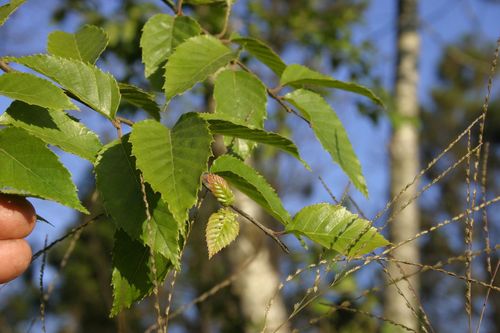
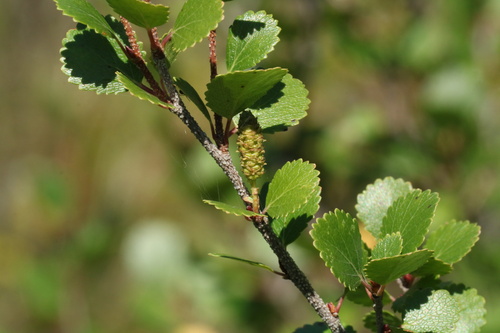
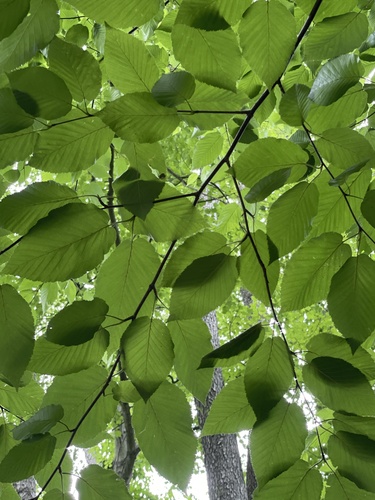
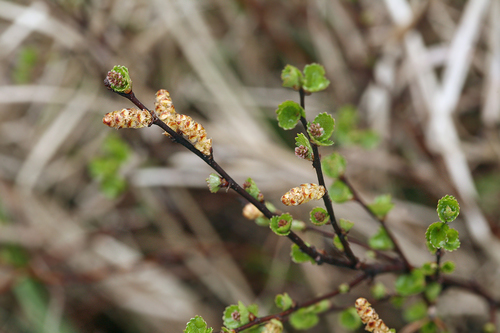
A shrub or small tree. It grows 6 m tall. The leaves are rounded and come to an abrupt point. There are teeth along the edge. They are covered with fine hairs. The leaves are downy underneath. The flowers are in catkins which develop into single or paired fruit. The fruit are enclosed in leafy bracts. The nuts have a hard shell.
Edible Uses
The seed can be eaten raw or cooked. It has a hard shell but a relatively good flavour and is rich in oil. The seed ripens in mid to late autumn and will likely need protection from squirrels. Stored unshelled in a cool place, nuts keep for at least 12 months. An edible oil is also obtained from the seed.
Traditional Uses
The nuts are eaten raw. They are also fried.
This uses section is brief — help expand it
Medicinal Uses
The seed is digestive and acts as an appetizer.
Known Hazards
None known
Distribution
It is a temperate plant. It grows in temperate broad-leaved forests, thickets on mountain slopes between 400–2500 m altitude in China. It suits hardiness zones 6-9.
Where It Grows
Asia, China, Japan, Korea, Manchuria, Mongolia, Russia, Siberia,
Cultivation
An easily grown plant, it succeeds in most soils, but is in general more productive of seeds when grown on soils of moderate fertility. It does less well in rich heavy soils or poor ones. Does well in a loamy soil. Very suitable for an alkaline soil, but it dislikes very acid soils. Plants are fairly wind tolerant. This species is cultivated in Asia for its edible seed but it is of little value as a nut bearer in Britain. Closely related to C. avellana. Members of this genus bear transplanting well and can be easily moved even when relatively large.
Propagation
Seed is best sown as soon as it is harvested in autumn in a cold frame, germinating in late winter or spring. Stored seed should be pre-soaked in warm water for 48 hours, then given 2 weeks of warm stratification followed by 3–4 months of cold stratification; it germinates in 1–6 months at 20°C. When large enough to handle, prick seedlings out into individual pots and grow on in a cold frame or sheltered spot outdoors through their first winter, then plant out in late spring or early summer. Layering in autumn is easy and takes about 6 months. Division of suckers in early spring is very easy; divisions can be planted straight into permanent positions.
Other Uses
An oil is obtained from the seed.
Other Information
The nuts are for sale in shops and markets. It is a cultivated food plant.
Notes
There are about 15 Corylus species.
Also Known As
Maoli, Maolizishu, Sid, Zhenzi
References (20)
- Arora, R. K., 2014, Diversity in Underutilized Plant Species - An Asia-Pacific Perspective. Bioversity International. p 94
- Etherington, K., & Imwold, D., (Eds), 2001, Botanica's Trees & Shrubs. The illustrated A-Z of over 8500 trees and shrubs. Random House, Australia. p 232
- Facciola, S., 1998, Cornucopia 2: a Source Book of Edible Plants. Kampong Publications, p 83
- Fan, L., et al, The Use of Edible Wild Plants and Fungi in Korean-Chinese Villages. Journal of Environmental Information Science 44-5 p 71-79
- Ferns Useful Temperate Plants
Show all 20 references Hide references
- https://en.wikipedia.org/wiki/List of wild edible plants in Mongolian cuisine
- Hu, Shiu-ying, 2005, Food Plants of China. The Chinese University Press. p 339
- Kang, Y., et al, 2012, Wild food plants and wild edible fungi in two valleys on the Qinling Mountains (Shaanxi, central China) Journal of Ethnobiology and Ethnomedicine; 9:26
- Kang, Y., et al, 2014, Wild food plants used by the Tibetans of Gongba Valley (Zouqu country, Gansu, China) Journal of Ethnobiology and Ethnomedicine 10:20
- Lu De-quan, BASELLACEAE [Draft], Flora of China
- Plants for a Future, The Field, Penpol, Lostwithiel, Cornwall, PL22 0NG, UK. http://www.scs.leeds.ac.uk/pfaf/
- Pl. imag. descr. fl. russ. 10, t. 4. 1844
- Sachula, et al, 2020, Wild edible plants collected and consumed by the locals in Daqinggou, Inner Mongolia, China. Journal of Ethnobiology and Ethnomedicine (2020) 16:60
- Tanaka,
- USDA, ARS, National Genetic Resources Program. Germplasm Resources Information Network - (GRIN). [Online Database] National Germplasm Resources Laboratory, Beltsville, Maryland. Available: www.ars-grin.gov/cgi-bin/npgs/html/econ.pl (10 April 2000)
- Wickens, G.E., 1995, Edible Nuts. FAO Non-wood forest products. FAO, Rome. p 118
- Wiersema, J. H. & Leon, B., 2013, World Economic Plants. A Standard Reference CRC Press. 2nd Ed. p 203
- World Checklist of Useful Plant Species 2020. Royal Botanic Gardens, Kew
- www.eFloras.org Flora of China
- Zeven, A. C. & de West, J. M. J., 1982, Dictionary of cultivated plants and their regions of diversity. Wageningen. p 34