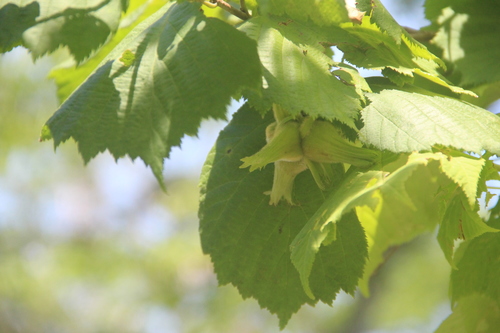
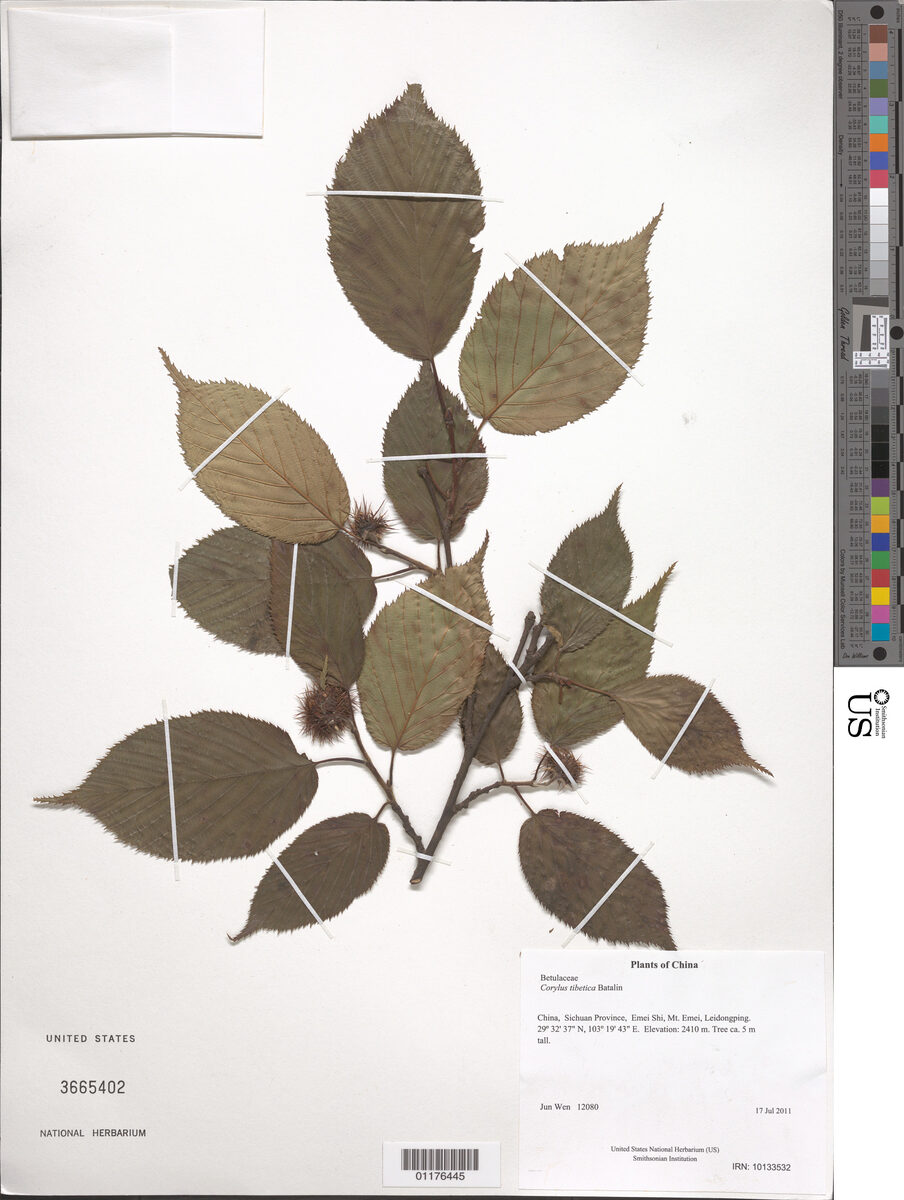
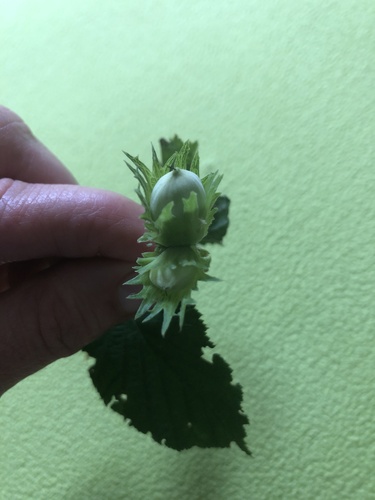
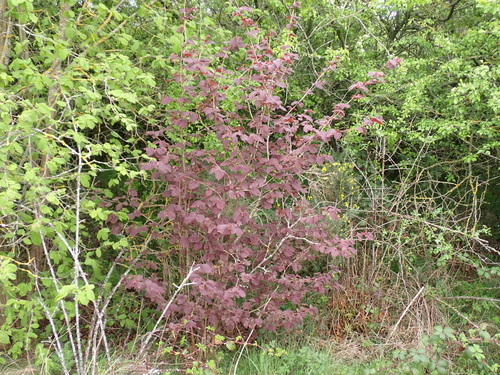
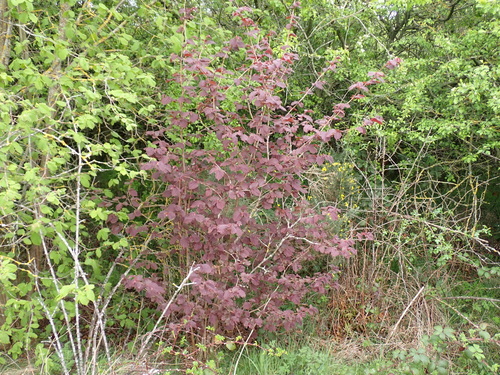
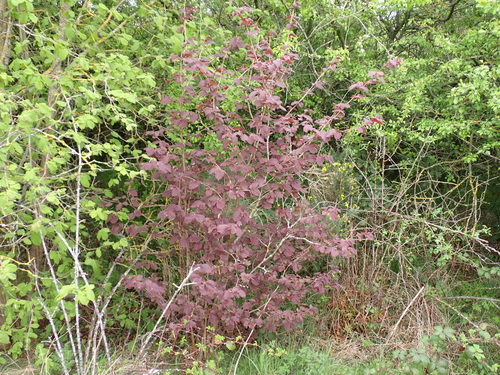
Corylus cornuta var. californica
(A. DC.) Rose
California hazel
iNaturalist· cc-by-nc
(c) Sue Wetmore, some rights reserved (CC BY-NC), uploaded by Sue Wetmore
iNaturalist· cc0
no rights reserved, uploaded by Lynn Harper
iNaturalist· cc-by
(c) Ken-ichi Ueda, some rights reserved (CC BY)
Summary
Source: WikipediaCorylus cornuta, the beaked hazelnut (or just beaked hazel), is a deciduous shrubby hazel with two subspecies found throughout most of North America.
Description
A shrub or small tree. It grows 8 m tall. It has several stems. It loses its leaves during the year. The leaves are dark green and simple and alternate. The leaves are rounded and with twice divided teeth along the edge. The flowers are yellow. The husks are shorter and the catkins longer than the beaked filbert. The nuts are edible.
Edible Uses
The nuts are eaten fresh or stored for later use.
Traditional Uses
The nuts are eaten fresh. They can also be stored for later use.
This uses section is brief — help expand it
Medicinal Uses
The beaked hazelnut has been cultivated by the Gitxsan, Tsimshian, and Nisga'a peoples for at least 7,000 years. Native Americans used the sprouts to create baskets, fish traps, and baby carriers. The nuts were eaten and commonly used as a trade good among indigenous groups—both the Lewis and Clark expedition and prolific early naturalist David Douglas bartered for beaked hazelnuts with local peoples they encountered. It was used medicinally as emetic, for deworming, as an astringent, and for teething. It is considered an excellent nut, with the same uses as any hazelnut. While the beaked hazelnut does not produce as many nuts as commercial European species such as the common hazel or filbert, it is more resistant to common diseases, and has been used in breeding programs to create high-yield, disease resistant hybrids. It is used in restoration plantings to increase biodiversity, improve food sources for wildlife, and to reduce rates of laminated root rot in nearby Douglas-fir and Sitka spruce.
Distribution
It is a temperate plant. It can grow in a sunny or partly shaded position. It needs a pH of 4.8-7.5. It can tolerate frost when dormant and needs a frost free period of 19 weeks.
Where It Grows
Australia, Canada, North America, USA,
Cultivation
It can be grown from seeds. The seeds need cold treatment. A spacing of about 2 m is suitable.
Production
It is slow growing and long lived.
Notes
There are about 15 Corylus species.