Betula utilis
D. Don
Himalayan birch
iNaturalist· cc-by
(c) libby hepburn, some rights reserved (CC BY), uploaded by libby hepburn
iNaturalist· cc-by-nc
(c) zdk0812, some rights reserved (CC BY-NC)
iNaturalist· cc0
no rights reserved, uploaded by John Kenrick Gibson
Summary
Source: WikipediaBetula utilis, the Himalayan birch or bhojpatra (from Sanskrit: भूर्ज bhūrjá), is a deciduous tree native to the Western Himalayas, growing at elevations up to 4,500 m (14,800 ft). The Latin specific epithet utilis means "useful", and refers to the many uses of the different parts of the tree. The white, paper-like bark was used in ancient times as a writing surface for manuscripts of Sanskrit literature. It is still used as paper for the writing of mantras, with the bark placed in an amulet and worn for protection. Selected varieties are used for landscaping throughout the world, even while some areas of its native habitat are being lost due to overuse of the tree for firewood.
Description
A tree. It grows 35 m tall. The bark is dark brown and peels off in thin flakes. The leaves are oval and flowers are in groups. They hang down. The small nuts are broadly oval and 2-3 mm long by 1.5-2 mm wide.
Edible Uses
None known
Traditional Uses
The bark (or resin) is ground and used as a tea substitute. Or as a flavouring addition to tea.
This uses section is brief — help expand it
Medicinal Uses
Antiseborrheic Antiseptic Carminative Urinary An infusion of the bark is antiseptic and carminative. It has been used in the treatment of hysteria and jaundice. It is applied as drops to the ears to rlieve earache. A paste made from the bark is used as a poultice on cuts, wounds and burns. The German Commission E Monographs, a therapeutic guide to herbal medicine, approve Betula species for infections of the urinary tract, kidney and bladder stones, rheumatism (see for critics of commission E).
Known Hazards
The aromatic and aliphatic hydrocarbons in birch tar are irritating to the skin. Do not use in patients with oedema or with poor kidney or heart functions
Distribution
It is a temperate plant. It grows up to 4,500 m above sea level. Arboretum Tasmania.
Where It Grows
Asia, Australia, Bhutan, China, Himalayas, India, Nepal, Northeastern India, Sikkim, Tasmania, Tibet,
Cultivation
Succeeds in a well-drained loamy soil in a sheltered position. Grows well in heavy clay soils. Dislikes wet soils. Shade tolerant. Plants are showing good wind-resistance on our Cornish trial ground. Hybridizes freely with other members of this genus. A good plant to grow near the compost heap, aiding the fermentation process. Trees are notably susceptible to honey fungus.
Propagation
Seed - best sown as soon as it is ripe in a light position in a cold frame. Only just cover the seed and place the pot in a sunny position. Spring sown seed should be surface sown in a sunny position in a cold frame. If the germination is poor, raising the temperature by covering the seed with glass can help. When they are large enough to handle, prick the seedlings out into individual pots and grow them on in a cold frame for at least their first winter. Plant them out into their permanent positions in late spring or early summer, after the last expected frosts. If you have sufficient seed, it can be sown in an outdoor seedbed, either as soon as it is ripe or in the early spring - do not cover the spring sown seed. Grow the plants on in the seedbed for 2 years before planting them out into their permanent positions in the winter.
Other Uses
Incense Paper Waterproofing Wood A paper is made from the inner bark. The outer bark can be carefully peeled off the tree (this does not harm the tree) and used as a paper. The outer bark can also be used as a waterproofing and for roofing houses. The bark is sometimes used as an incense. Wood - tough, even grained, moderately hard, elastic. Used for construction. Special Uses Dynamic accumulator
Synonyms
Also Known As
Bhojpatra, Da gua, Lekh kapasay, Sanglikung, Shak
References (5)
- Ferns, Plants for the Future
- Guo, C., et al, 2022, An Ethnobotany Survey of Wild Plants Used by the Tibetan People of the Yadong River Valley, Tibet, China. Journal of Ethnobiology and Ethnomedicine
- Kishor, A., et al, 2018, Wild Food Plants of Himachal Pradesh: A Review. Plant Archives Vol. 18 No.2 pp. 2737-2751
- Savita, et al, 2006, Studies on wild edible plants of ethnic people in east Sikkim. Asian J. of Bio Sci. (2006) Vol. 1 No. 2 : 117-125
- Wild edible plants of Himachal Pradesh
More from Betulaceae
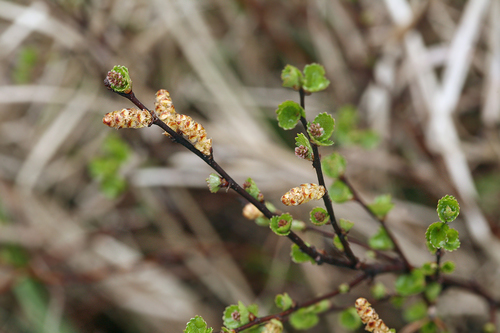
Betula nana
Bog Birch, Dwarf Birch, Smooth Dwarf, Birch, Swamp Birch
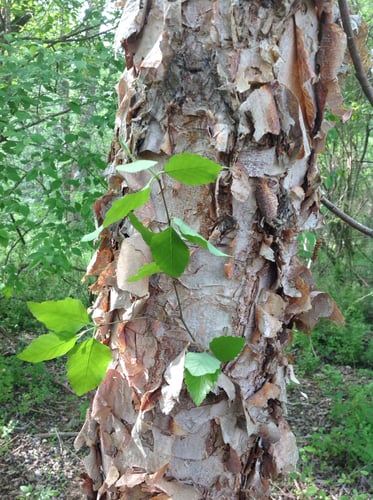
Betula nigra
River Birch, Red Birch, Tropical birch
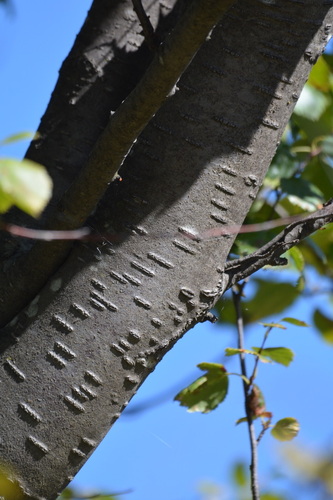
Betula occidentalis
Water birch, White birch
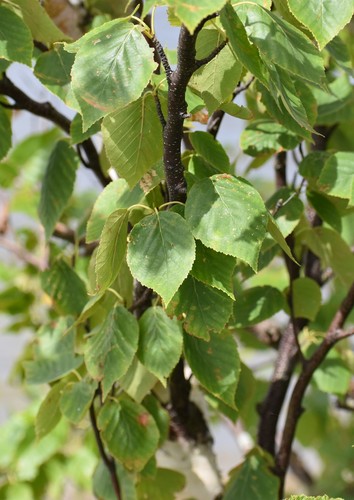
Betula papyrifera
Paper birch, Canoe Birch, White birch
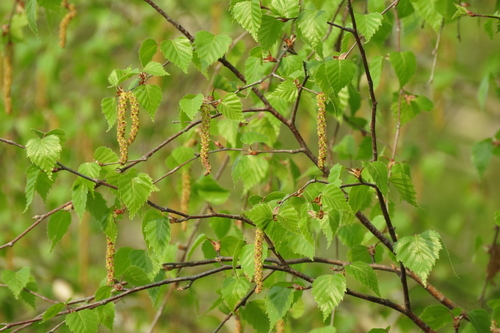
Betula pendula
European Birch, Silver Birch
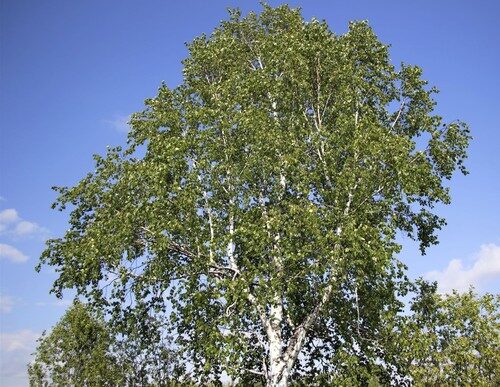
Betula platyphylla
White Birch, Asian white birch