Corylus americana
Marshall
American Hazelnut, American filbert
iNaturalist· cc-by-nc
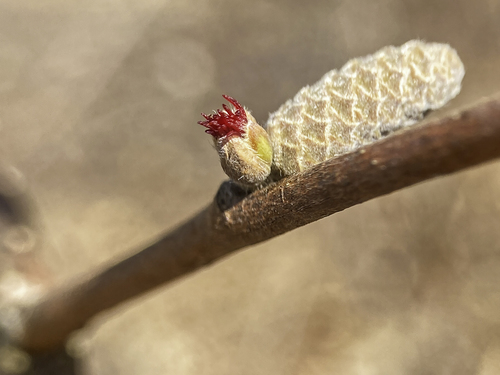
(c) peggyo, some rights reserved (CC BY-NC), uploaded by peggyo
iNaturalist· cc-by-nc
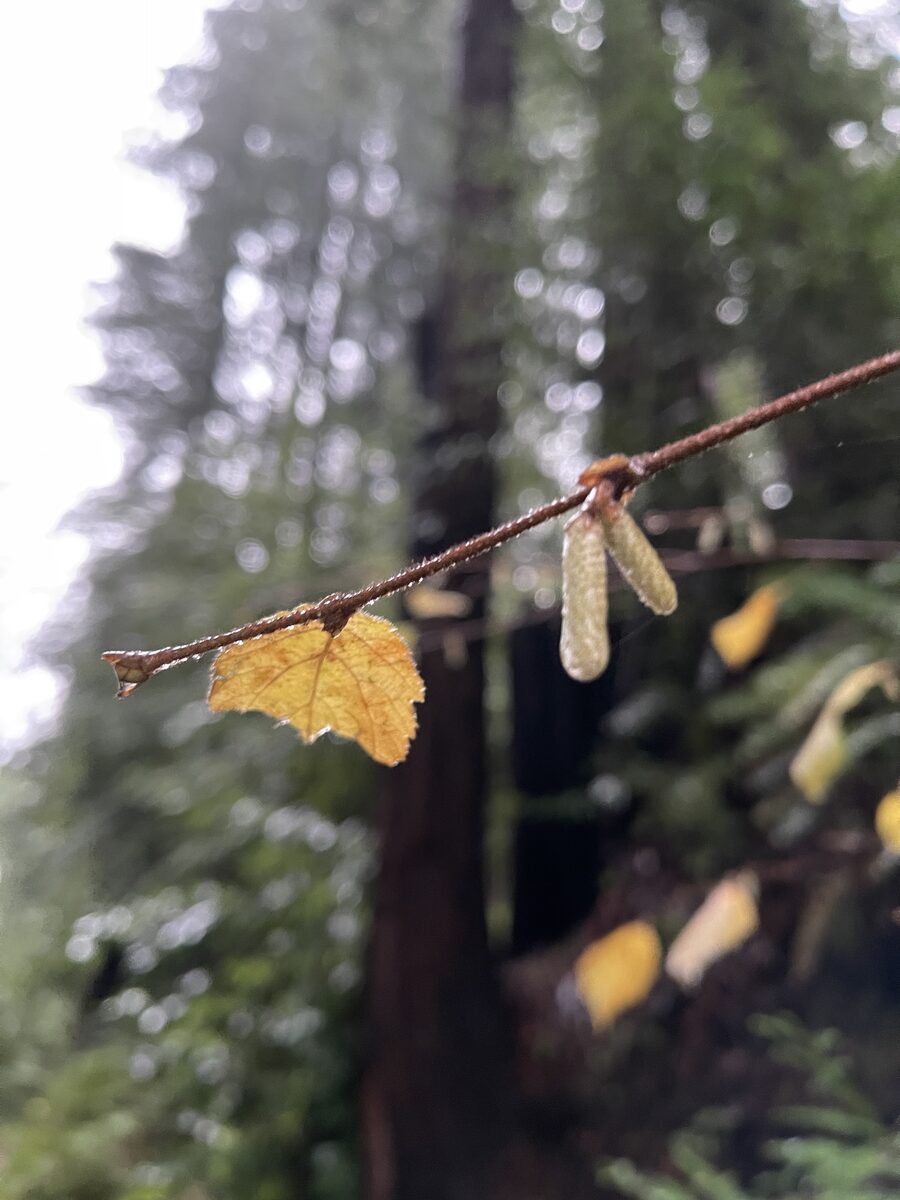
(c) Colin Chapman-Lam, some rights reserved (CC BY-NC), uploaded by Colin Chapman-Lam
iNaturalist· cc-by-sa
(c) Douglas Goldman, some rights reserved (CC BY-SA), uploaded by Douglas Goldman
Summary
Source: WikipediaCorylus americana, the American hazelnut or American hazel, is a species of deciduous shrub in the genus Corylus, native to the eastern and central United States and extreme southern parts of eastern and central Canada.
Description
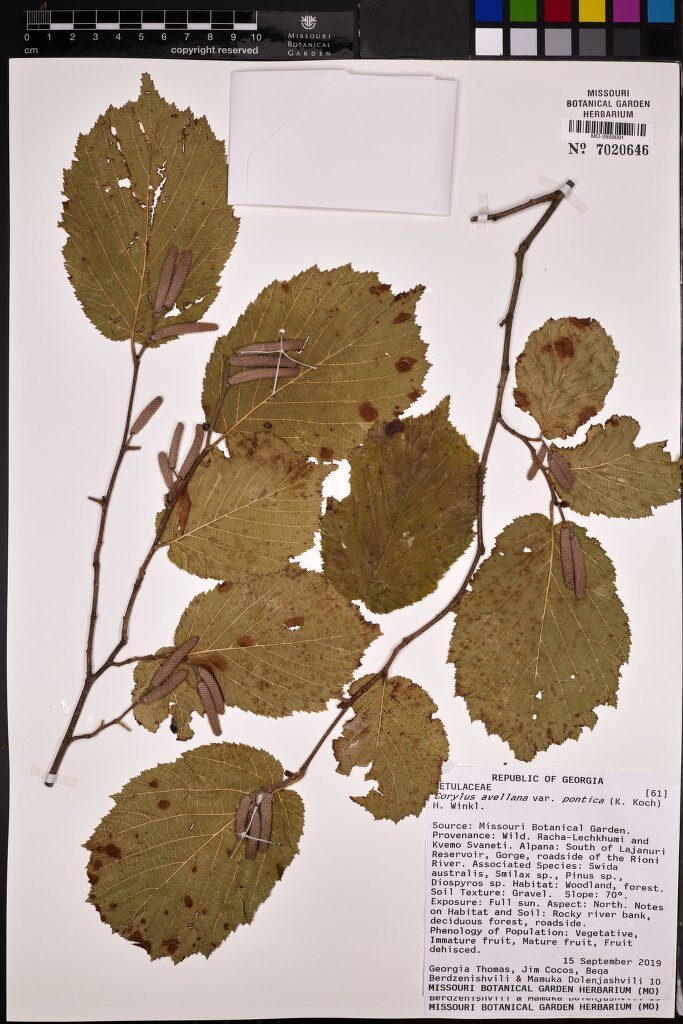
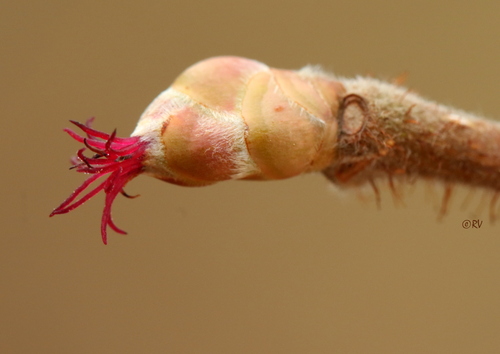
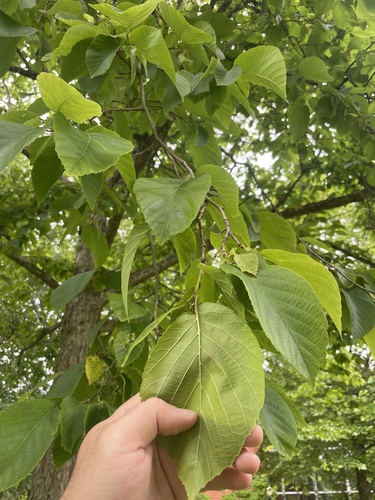
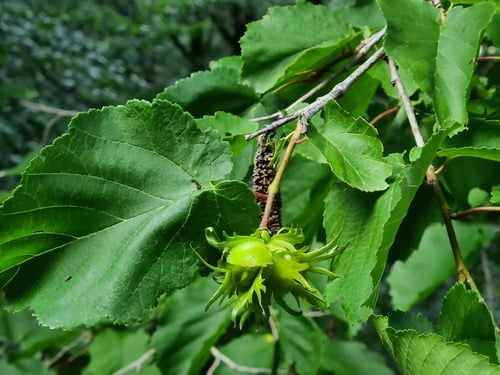
A deciduous shrub. It grows 3 m tall. The branches are tough and flexible. The leaf stalks and twigs are covered with gland tipped hairs. The oval leaves are larger than Corylus avellana. The leaves have teeth along the edge. Male and female flowers grow on the same plant. The fruit are nuts in a fringed, green husk. The nuts are 12 mm long. They occur in clusters.
Edible Uses
The seed can be eaten raw or cooked and works well in soups, bread, biscuits, and sweets. The nuts have a thick shell with a small, sweet kernel and make an excellent dessert nut. Though smaller than those of cultivated species, they are of comparable quality. Nuts gathered at the 'milk' stage, before fully ripening, are softer and sweeter. The seed is rich in oil. It ripens in mid to late autumn and will likely need protection from squirrels. Stored unshelled in a cool place, nuts keep for at least 12 months. An edible oil is also obtained from the seed.
Traditional Uses
The kernels of the nuts are eaten raw or used in soups, breads, cakes and candies.
This uses section is brief — help expand it
Medicinal Uses
A tea made from the bark is astringent and was used to treat hives and fevers. A poultice made from the bark is applied to close cuts and wounds and to treat tumours and old sores.
Known Hazards
None known
Distribution
It is a temperate plant. They have a cold requirement of about 1000 hours below 7°C for fruit set. Cool, moist summers also assist nut production. It suits hardiness zones 4-8.
Where It Grows
Australia, Canada, North America*, USA,
Cultivation
An easily grown plant, it succeeds in most soils including chalk, but is in general more productive of seeds when grown on soils of moderate fertility. It does well in a loamy soil. Plants are fairly wind tolerant. This species is cultivated in America for its edible seed, there are some named varieties. This species is of little value in Britain, however, rarely bearing seeds. Members of this genus bear transplanting well and can be easily moved even when relatively large. A clumping plant, forming a colony from shoots away from the crown but with a limited spread.
Propagation
Seed is best sown as soon as it is harvested in autumn in a cold frame, germinating in late winter or spring. Stored seed should be pre-soaked in warm water for 48 hours, then given 2 weeks of warm stratification followed by 3–4 months of cold stratification; it germinates in 1–6 months at 20°C. When large enough to handle, prick seedlings out into individual pots and grow on in a cold frame or sheltered spot outdoors through their first winter, then plant out in late spring or early summer. Layering in autumn is easy and takes about 6 months. Division of suckers in early spring is very easy; divisions can be planted straight into permanent positions.
Other Uses
The plant makes a good screening hedge. An oil is obtained from the seed.
Notes
There are about 15 Corylus species.
Nutrition
| Part | Moisture | kJ | kcal | Protein | Vit A | Vit C | Iron | Zinc |
|---|---|---|---|---|---|---|---|---|
| Seed | 41.1 | 1570 | 376 | 7.6 | 0 | — | 1.1 | 2.4 |
Synonyms
References (23)
- Arbust. amer. 37. 1785
- Beckstrom-Sternberg, Stephen M., and James A. Duke. "The Foodplant Database." http://probe.nalusda.gov:8300/cgi-bin/browse/foodplantdb.(ACEDB version 4.0 - data version July 1994)
- Brouk, B., 1975, Plants Consumed by Man. Academic Press, London. p 217
- Cundall, P., (ed.), 2004, Gardening Australia: flora: the gardener's bible. ABC Books. p 421
- Elias, T.S. & Dykeman P.A., 1990, Edible Wild Plants. A North American Field guide. Sterling, New York p 173
Show all 23 references Hide references
- Esperanca, M. J., 1988. Surviving in the wild. A glance at the wild plants and their uses. Vol. 1. p 55
- Etherington, K., & Imwold, D., (Eds), 2001, Botanica's Trees & Shrubs. The illustrated A-Z of over 8500 trees and shrubs. Random House, Australia. p 232
- Facciola, S., 1998, Cornucopia 2: a Source Book of Edible Plants. Kampong Publications, p 81
- Farrar, J.L., 1995, Trees of the Northern United States and Canada. Iowa State University press/Ames p 311
- Flowerdew, B., 2000, Complete Fruit Book. Kyle Cathie Ltd., London. p 198
- Hedrick, U.P., 1919, (Ed.), Sturtevant's edible plants of the world. p 220
- Kiple, K.F. & Ornelas, K.C., (eds), 2000, The Cambridge World History of Food. CUP p 1784
- Krochmal, A. & Krochmal, C., 1982, Uncultivated Nuts of The United States. United States Department of Agriculture Forest Service. p 6
- Lord, E.E., & Willis, J.H., 1999, Shrubs and Trees for Australian gardens. Lothian. p 219
- Lyle, S., 2006, Discovering fruit and nuts. Land Links. p 157
- MacKinnon, A., et al, 2009, Edible & Medicinal Plants of Canada. Lone Pine. p 145
- Menninger, E.A., 1977, Edible Nuts of the World. Horticultural Books. Florida p 12
- Plants for a Future database, The Field, Penpol, Lostwithiel, Cornwall, PL22 0NG, UK. http://www.scs.leeds.ac.uk/pfaf/
- Small, E., 2009, Top 100 Food Plants. The world's most important culinary crops. NRC Research Press. p 264
- Toupal, R. S. & Hollenback, K., 2009, An Ethnobotany of Indiana Dunes National Lakeshore: Plant Uses of the Ojibwa People. Bureau of Applied Research in Anthropology. University of Arizona
- Tozer, F., 2007, The Uses of Wild Plants. Green Man Publishing. p 70
- van Wyk, B., 2005, Food Plants of the World. An illustrated guide. Timber press. p 153
- Wickens, G.E., 1995, Edible Nuts. FAO Non-wood forest products. FAO, Rome. p 117