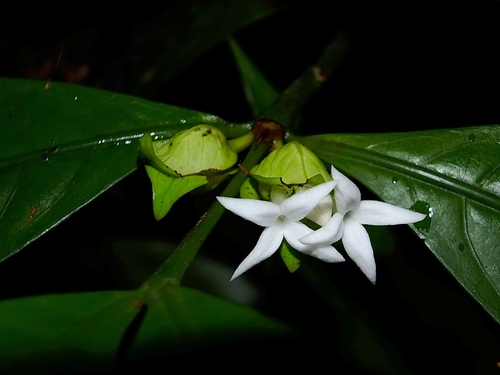
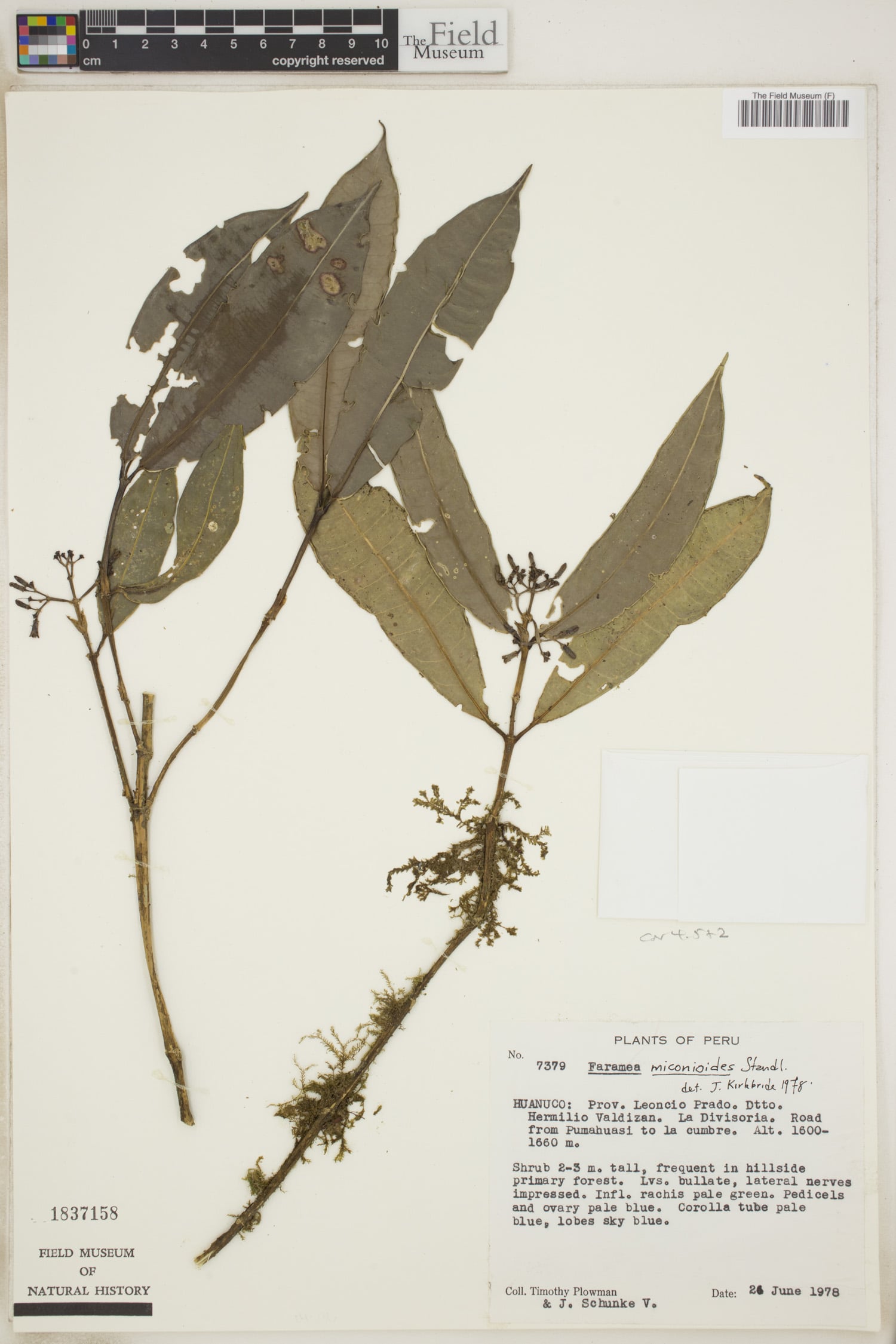
Psychotria viridis
Ruiz & Pav.
Green balsamo
Wikipedia· cc-by-sa
Wikimedia Commons - Hojas_de_chacruna_(Psychotria_viridis).jpg
iNaturalist· cc-by-nc
(c) Leonardo Álvarez-Alcázar, some rights reserved (CC BY-NC)
iNaturalist· cc-by-nc
(c) Leonardo Álvarez-Alcázar, some rights reserved (CC BY-NC)
Summary
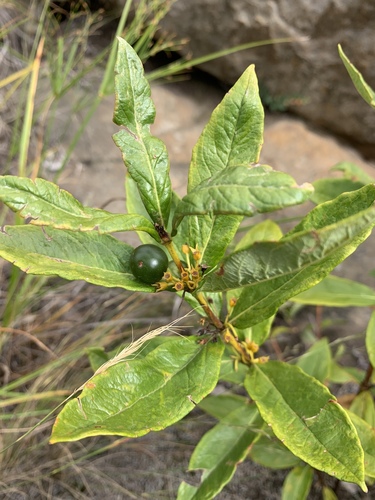
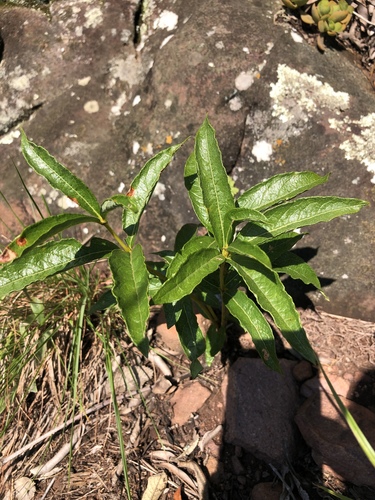
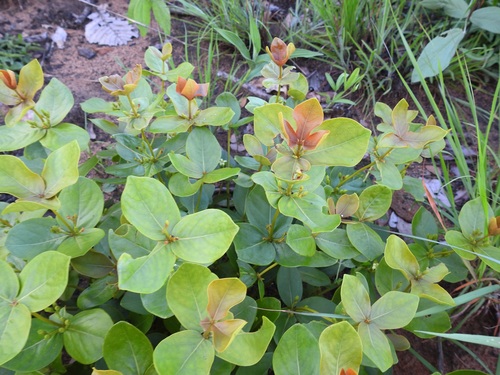
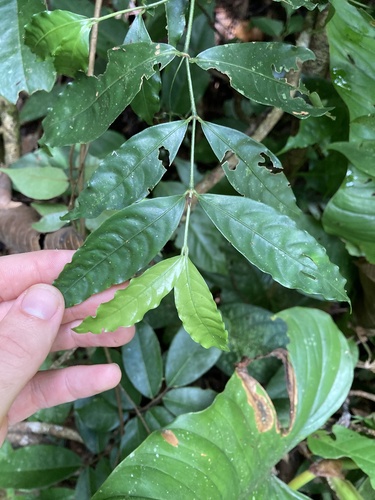
Source: WikipediaPsychotria viridis, also known as chacruna, chacrona, or chaqruy in the Quechua languages, is a perennial, shrubby flowering plant in the coffee family Rubiaceae. It is a close relative of Psychotria carthagenensis (a.k.a. samiruka or amiruca) of Ecuador. It is commonly used as an ingredient of ayahuasca, a decoction with a long history of its entheogenic (connecting to spirit) use and its status as a "plant teacher" among the Indigenous peoples of the Amazon rainforest.
Description
A tropical tree in the Rubiaceae family, native to tropical regions.
This description is brief — help expand it
Medicinal Uses
The Machiguenga people of Peru use juice from the leaves as eye drops to treat migraine headaches.
Known Hazards
Caution is advised regarding edible use.
Distribution
It is a tropical plant.
Where It Grows
Amazon, Belize, Bolivia, Brazil, Central America, Colombia, Cuba, Ecuador, Hispaniola, Mexico, Panama, Peru, South America, Venezuela, West Indies,
Cultivation
Succeeds in full sun and in partial shade. Prefers a well-drained soil on the alkaline side.
Other Uses
The pinkish or pale brown is straight or wavy grained; uniformly fine-textured; of medium weight, compact, tenacious and durable. It takes a smooth polish.
Synonyms
Also Known As
Amiruca panca, Chacruna, Rainha, Samiruca, Tupamaqui, Yage
References (1)
- Grandtner, M. M. & Chevrette, J., 2013, Dictionary of Trees, Volume 2: South America: Nomenclature, Taxonomy and Ecology. Academic Press p 553