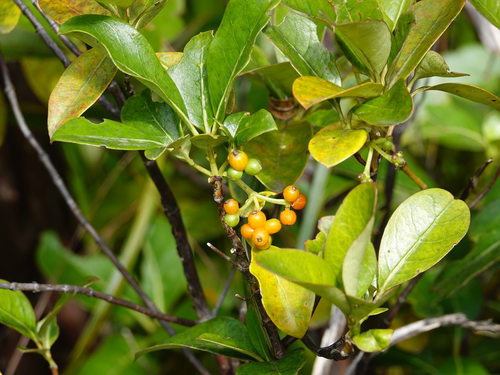
Gardenia volkensii subsp. spatulifolia
K. Schumann, (Stapf & Hutch.) Verdc.
Cape jasmine, Woodland gardenia
iNaturalist· cc-by-nc
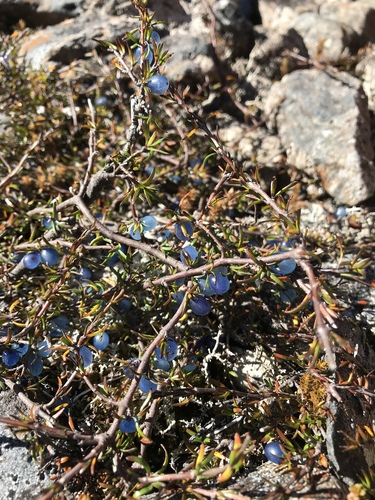
(c) Riana Fourie, some rights reserved (CC BY-NC), uploaded by Riana Fourie
iNaturalist· cc-by-nc
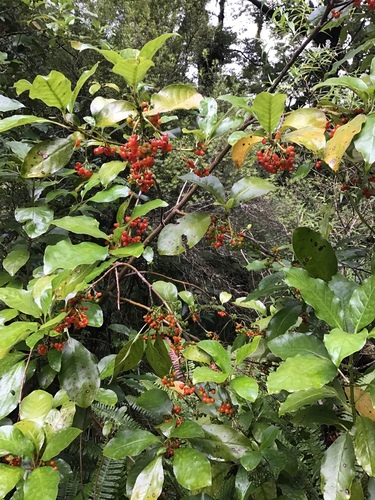
(c) Kate Braun, some rights reserved (CC BY-NC)
Summary
Source: WikipediaGardenia volkensii, commonly known as bushveldt gardenia or Transvaal gardenia, is a species of plant in the family Rubiaceae native to southern Africa.
Description
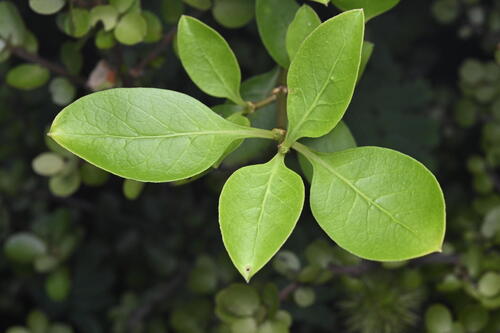
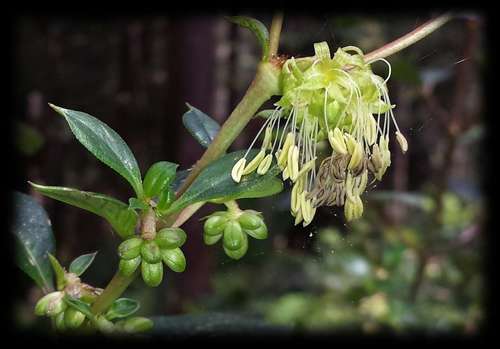
A large shrub or small evergreen tree. The stems are rigid. The leaves are in threes and have up to 3 branches in their axils. The leaves can taper and be spiny. The leaf blades are broadly oval or round and 3 cm across. The flowers occur singly. They are usually at the ends of side shoots. The flowers have a scent. The flowers are tubes or funnel shaped and pale yellow or white. The fruit are woody and oval. They have a rough surface and usually prominent ridges.
Edible Uses
The fruit pulp is used in porridge and eaten fresh.
Traditional Uses
The fruit pulp is used in porridge and eaten fresh.
This uses section is brief — help expand it
Medicinal Uses
These trees are often planted near a village to protect it from lightning. These trees are also believed to provide protection against evil spirits. The wood is hard and fine-grained and is used for carving. This species is known to have been used medicinally to treat a variety of conditions in at least eleven of the countries in which it naturally occurs. It is used to treat respiratory infections such as asthma and tuberculosis (Botswana, Eswatini, Namibia, South Africa and Zimbabwe), menstrual problems (Zimbabwe), infertility (Kenya and Zimbabwe), gastro-intestinal problems (Eswatini, Mozambique and Namibia) and epilepsy (Botswana, Eswatini, Kenya, South Africa and Namibia), amongst others. It is also used as an antivenom and to treat cancer. The fruits and bark have been found to have anti-microbial properties.
Distribution
It is a tropical and subtropical plant. It grows in dry sandy soils. It grows in areas with an annual rainfall over 300 mm. It cannot tolerate frost. It can tolerate drought. It is often on termite mounds. It grows between 750-1,125 m above sea level. It can grow in arid places.
Where It Grows
Africa, Angola, Botswana, Central Africa, East Africa, Eswatini, Mozambique, Namibia, South Africa, Southern Africa, Swaziland, Zambia, Zimbabwe,
Cultivation
Plants are grown from seeds. They take about 3 weeks to germinate. Seedlings can be transplanted. Plants are easily grown from cuttings. They are best if treated with rooting hormone.
Production
It grows quickly in a well drained sheltered site.
Synonyms
Also Known As
Cikololo, Cisombo, Emangwelamhlophe, Sigoba, Transvaal gardenia
References (9)
- Fowler, D. G., 2007, Zambian Plants: Their Vernacular Names and Uses. Kew. p 56
- Mannheimer, C. A. & Curtis. B.A. (eds), 2009, Le Roux and Muller's Field Guide to the Trees and Shrubs of Namibia. Windhoek: Macmillan Education Namibia. p 462
- Nalan & Owen-Smith, 1974,
- Peters, C. R., O'Brien, E. M., and Drummond, R.B., 1992, Edible Wild plants of Sub-saharan Africa. Kew. p 170
- Pickering, H., & Roe, E., 2009, Wild Flowers of the Victoria Falls Area. Helen Pickering, London. p 103 (Not subsp. spatulifolia)
Show all 9 references Hide references
- Royal Botanic Gardens, Kew (1999). Survey of Economic Plants for Arid and Semi-Arid Lands (SEPASAL) database. Published on the Internet; http://www.rbgkew.org.uk/ceb/sepasal/internet [Accessed 10th June 2011]
- Ruiters-Welcome, A. K., 2019, Food plants of southern Africa. Ph.D. thesis. Univ. of Johannesburg p 96
- Swaziland's Flora Database http://www.sntc.org.sz/flora
- Welcome, A. K. & Van Wyk, B.-E., 2019, An inventory and analysis of the food plants of southern Africa. South African Journal of Botany 122 (2019) 136–179