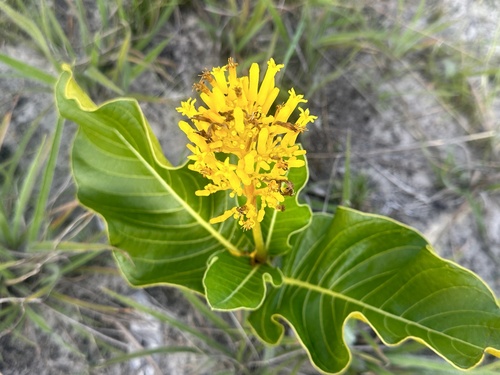
Gardenia ternifolia subsp. jovis-tonantis
(Welw.) Verdc.
Powder-bark gardenia
iNaturalist· cc-by-nc
(c) jordivanoort, some rights reserved (CC BY-NC), uploaded by jordivanoort
iNaturalist· cc-by-nc
(c) jordivanoort, some rights reserved (CC BY-NC), uploaded by jordivanoort
iNaturalist· cc-by-nc
(c) jordivanoort, some rights reserved (CC BY-NC), uploaded by jordivanoort
Description
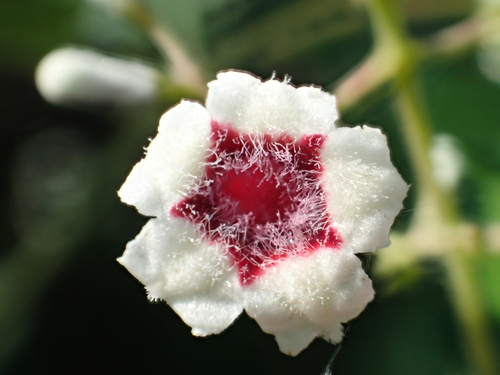
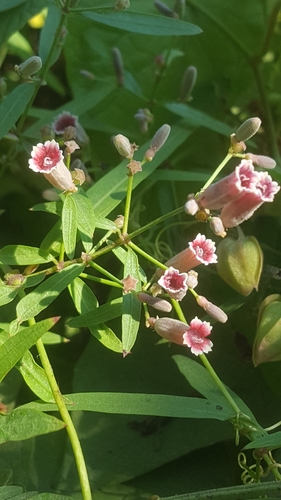
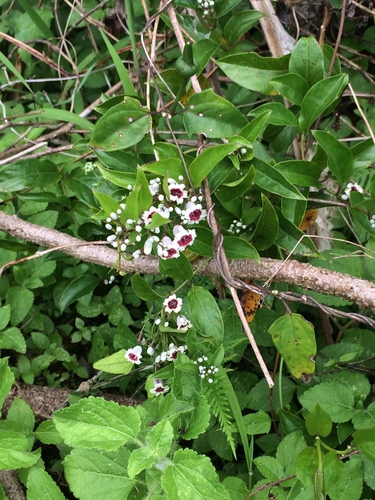
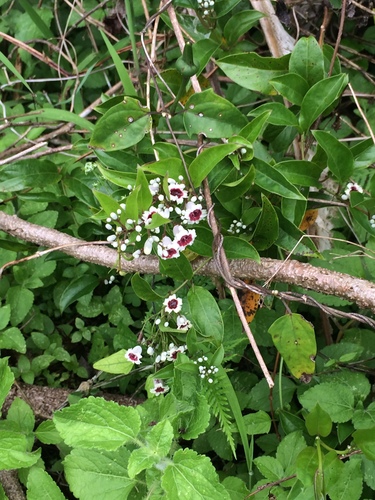
An evergreen shrub. It grows 4-7 m tall. The leaves are in rings of three on short side branches. The leaves are broadly oval. They are 2.5-8 cm long. The flowers occur singly on the ends of branches. The flowers are trumpet shaped. They are 10 cm long. The tube is slender. It is green and the lobes are yellowish-white. The fruit is yellow. It is oval and 5 cm long by 3.5 cm wide.
Edible Uses
The ripe fruit is eaten raw. The seeds are also edible.
Traditional Uses
The ripe fruit are eaten raw.
This uses section is brief — help expand it
Distribution
A tropical plant. It needs moderate moisture. It grows in an average to fertile, well-drained soil. It can grow in full or part sun. It is often on termite mounds. It suits hardiness zones 10-12.
Where It Grows
Africa, Botswana, Central Africa, Congo DR, East Africa, Ethiopia, Guinea, Guinée, Guinea-Bissau, Kenya, Mozambique, South Africa, Sudan, Uganda, West Africa, Zambia, Zimbabwe,
Cultivation
Plants can be grown from large cuttings (8 cm across). They are best dipped in rooting hormone. Plants can be grown from seed.
Production
Fruit is often not produced in cultivation.
Notes
There are about 200 Gardenia species.
Nutrition
| Part | Moisture | kJ | kcal | Protein | Vit A | Vit C | Iron | Zinc |
|---|---|---|---|---|---|---|---|---|
| Seeds | 1043 | — | 21.9 | — | — | 11.1 | 2.8 | — |
Synonyms
Also Known As
Bireu, Bosseleole, Brintintchi, Cikololo, Djugale, Gambilo, Manceba, Mukololo, Mutara, Mutarara, Mutarura, N'do, N'due, Odwong, Umvalasangwa, Undagal
References (8)
- Asfaw, Z. and Tadesse, M., 2001, Prospects for Sustainable Use and Development of Wild Food Plants in Ethiopia. Economic Botany, Vol. 55, No. 1, pp. 47-62
- Fowler, D. G., 2007, Zambian Plants: Their Vernacular Names and Uses. Kew. p 56
- Kew Bull. 34:354. 1979 (As jovis-tonantis)
- Jardin, C., 1970, List of Foods Used In Africa, FAO Nutrition Information Document Series No 2.p 139 (As Gardenia jovia-tonantis)
- Latham, P., 2004, Useful Plants of Bas-Congo province. Salvation Army & DFID p 138
Show all 8 references Hide references
- Llamas, K.A., 2003, Tropical Flowering Plants. Timber Press. p 325
- Oryema, C., et al, 2013, Edible wild fruit species of Gulu District, Uganda. International Journal of Biology and Biological Sciences Vol 2(4) pp 068-082 (As Gardenia jovis-tonantis)
- www.zimbabweflora.co.zw 2011