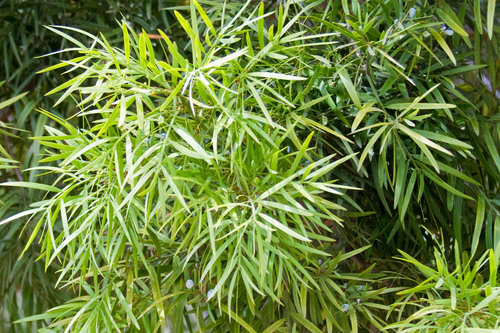
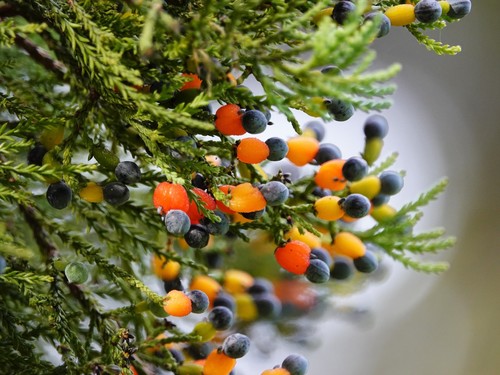
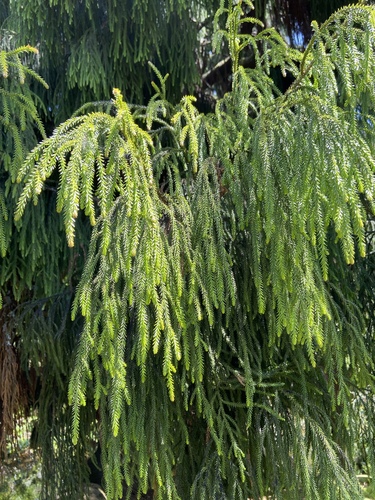
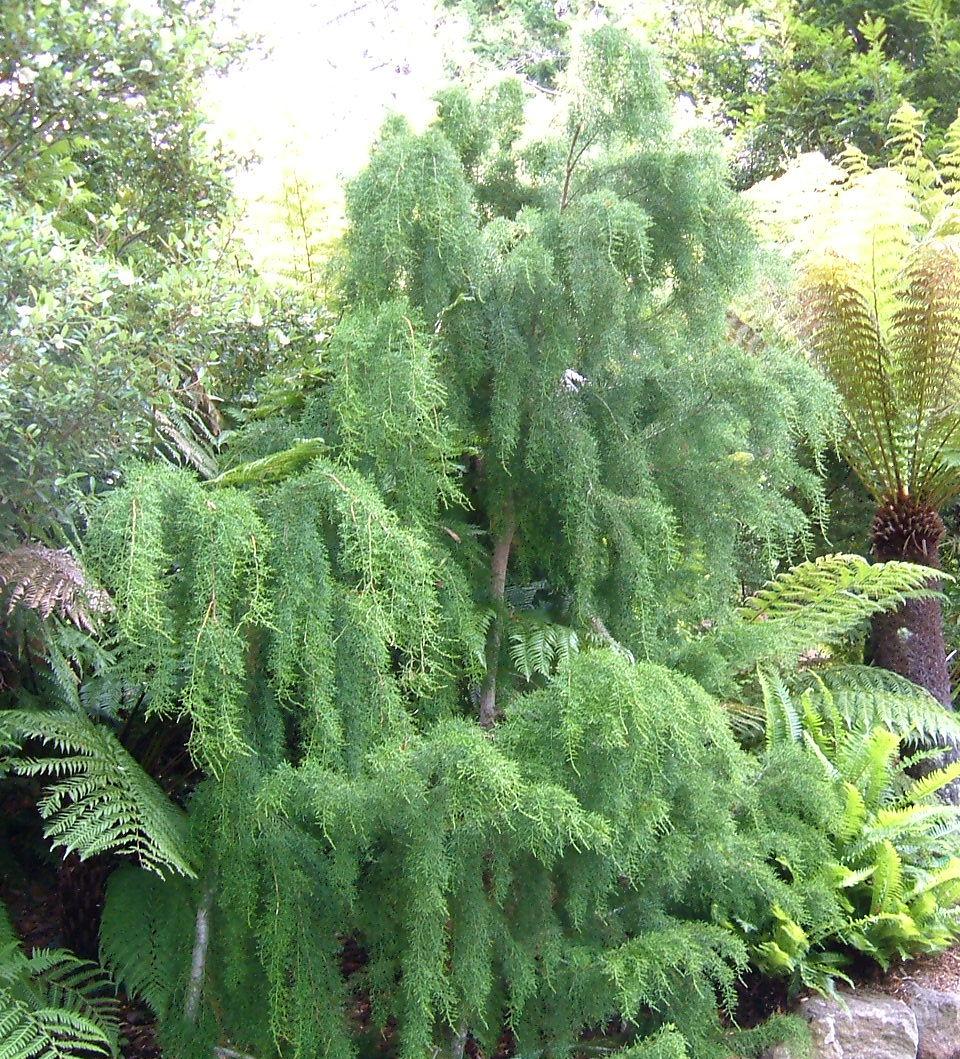
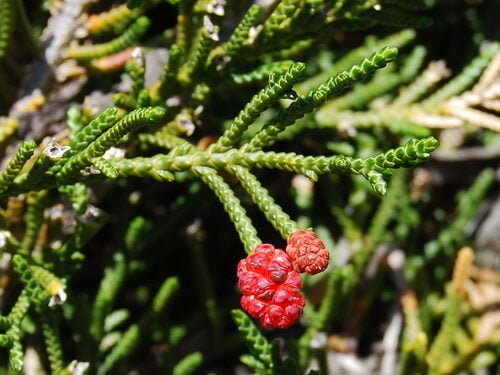
Nageia nagi - (Thunb.)Kuntze.
(Thunb.)Kuntze.
Nagi, Nagi Podocarpus, Broadleaf Podocarpus
gbif· cc-by-nc
lubukun
gbif· cc-by-nc
lubukun
gbif· cc-by-nc
freesiahsu
Description
Nageia nagi is an evergreen Tree growing to 25 m (82ft 0in) at a medium rate. See above for USDA hardiness. It is hardy to UK zone 8. It is in leaf all year, in flower from March to May, and the seeds ripen from September to November. The species is dioecious (individual flowers are either male or female, but only one sex is to be found on any one plant so both male and female plants must be grown if seed is required). and is pollinated by Wind. The plant is not self-fertile. Suitable for: light (sandy), medium (loamy) and heavy (clay) soils. Suitable pH: mildly acid, neutral and basic (mildly alkaline) soils. It can grow in semi-shade (light woodland) or no shade. It prefers moist soil.
Edible Uses
Oil. Young leaves are occasionally parboiled and eaten. The seeds yield an edible oil which is also used in industry.
Distribution
E. Asia - S. China, S. Japan.
Where It Grows
TEMPERATE ASIA: China (Fujian Sheng, Guangdong Sheng, Guangxi Zhuangzu Zizhiqu, Hunan Sheng, Jiangxi Sheng, Sichuan Sheng, Zhejiang Sheng), Japan (Honshu (west), Kyushu, Ryukyu Islands, Shikoku), Taiwan
Cultivation
This species is hardy to about -20°c, but plants require a 4 month hot humid summer for satisfactory development. Best grown in a warm continental climate. Dioecious, male and female plants must be grown if seed is required.
Propagation
Seed - can be sown at any time of the year in a sandy soil in a warm greenhouse, though it is probably best sown as soon as it is ripe. When they are large enough to handle, prick the seedlings out into individual pots and grow them on in the greenhouse for at least their first winter. Plant them out into their permanent positions in late spring or early summer, after the last expected frosts. Cuttings of half-ripe terminal shoots, 5 - 10cm long, July/August in a frame.
Other Uses
Oil Oil Wood. The seeds yield an edible oil which is also used in industry. The wood is used for constructing houses and bridges, making furniture, utensils, and handicraft articles.