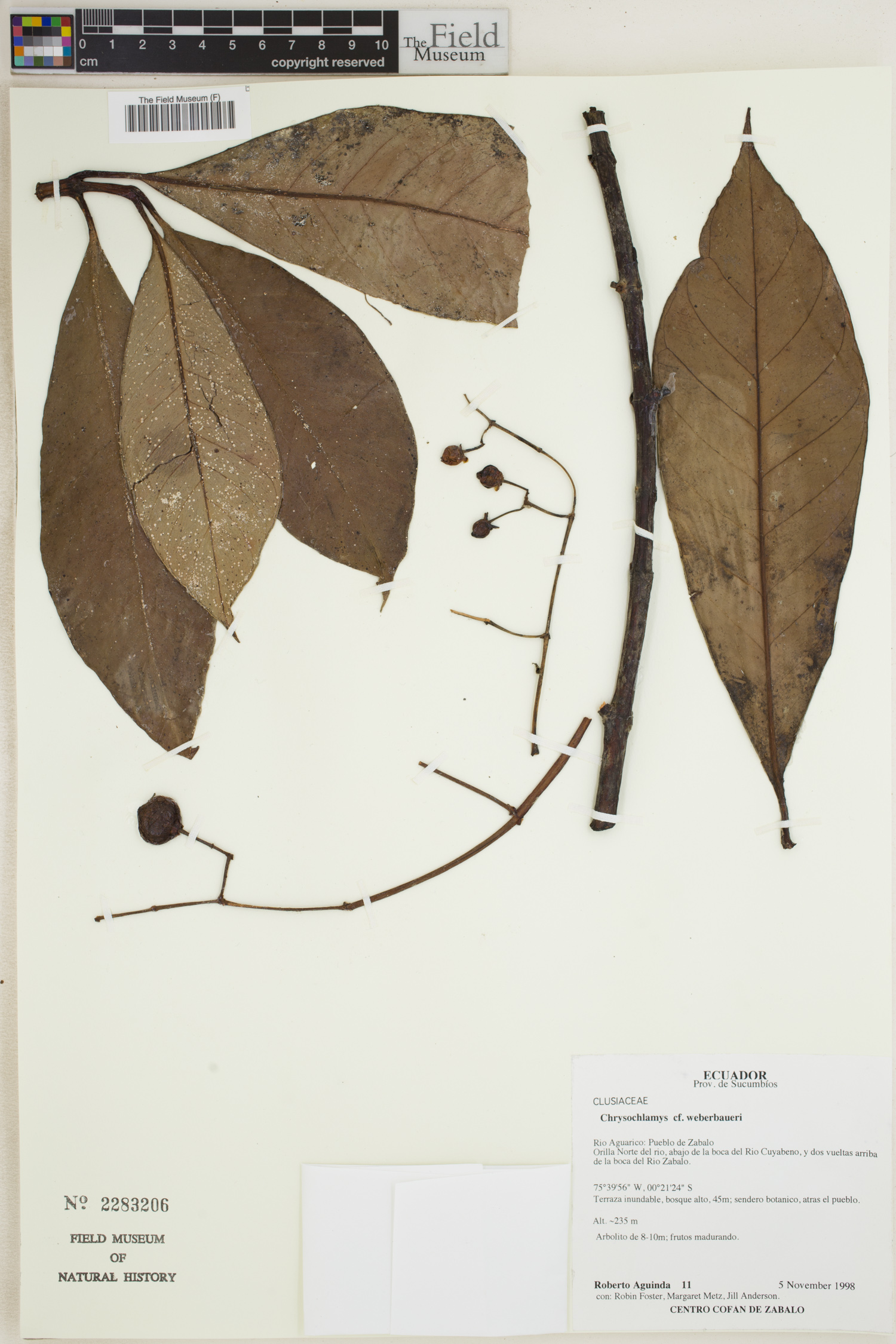
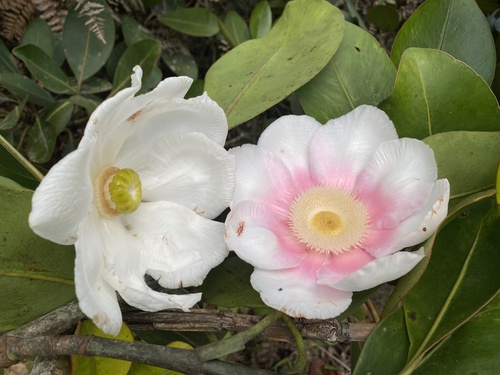
Garcinia gardneriana
(Planch. & Triana) Zappi
Gardner garcinia, Achacha
iNaturalist· cc-by-nc
(c) felipeseron, some rights reserved (CC BY-NC)
iNaturalist· cc-by-nc
(c) Tayri Piyanko, some rights reserved (CC BY-NC)
Summary
Source: WikipediaGarcinia gardneriana, the bacupari, is an evergreen, dioecious species of the genus Garcinia. It is distributed throughout South America's Amazon Basin and produces fruit with edible arils.
Description
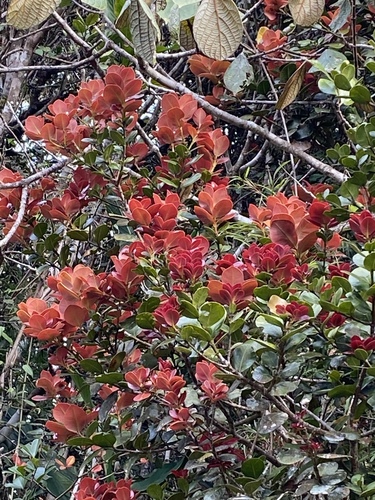
Garcinia gardneriana is an evergreen tree reaching 8 m tall by 6 m wide, growing at a slow rate and hardy to UK zone 10. It adapts to light sandy, medium loamy, or heavy clay soils across mildly acidic to mildly alkaline pH ranges. The tree grows in semi-shaded woodland or full sun and prefers moist soil.
Edible Uses
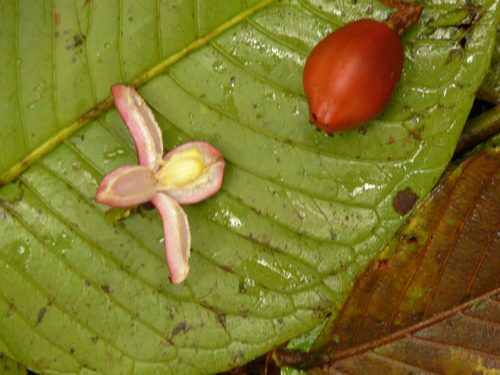
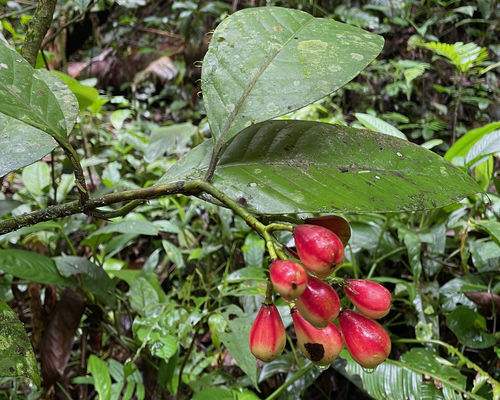
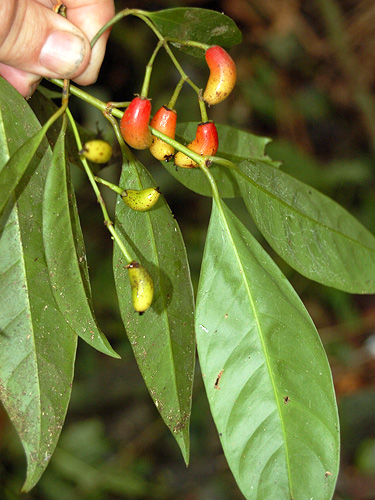
The fruit is eaten raw and has a sweet, white pulp with an acidic, pulpy flesh. Although very tasty, it contains little edible pulp. The fruit is around 5cm in diameter.
Medicinal Uses
None known.
Distribution
It is a tropical plant.
Where It Grows
Argentina, Australia, Bolivia, Brazil*, Colombia, Ecuador, French Guiana, Paraguay, Peru, Puerto Rico, South America, Venezuela, West Indies,
Cultivation
Although in nature the tree grows in the shade of the rainforest, it produces more fruit when growing in a sunny position. Trees can withstand periodic inundation. Newly planted young trees are slow to establish and grow away. Young trees, planted in a sunny position, commence fruiting sooner than plants growing in shady positions.
Propagation
Sow seed in a shady position in individual containers as soon as it is ripe. Germination rates in excess of 80% are usually achieved, with sprouting occurring within 60–80 days. Seedlings grow away slowly.
Other Uses
The wood is soft, moderately heavy, and moderately durable under natural conditions. It is used to make tool handles and fence posts and for general construction. More generally, wood from trees in the Americas formerly classified under Rheedia has dark yellow-brown, grayish- or pinkish-brown heartwood that merges gradually into the sapwood, sometimes specked with resinous exudations. The texture is medium to coarse, the grain straight to irregular and roey, with medium to rather low lustre and no discernible odour or taste. Surinam species are rated durable against decay fungi and fairly resistant to dry wood termites; Colombian species resist brown-rot fungus but not white-rot in laboratory assays, though under field conditions the wood is susceptible to decay and insect attack. It dries rapidly but tends to warp and check during air seasoning. Workability varies from moderate to high resistance to cutting, with variable finishing results. Uses include furniture, quarter-sawn flooring, heavy construction, and general carpentry.
Other Information
It is cultivated.
Synonyms
Also Known As
Abrico, Baacuri-mirim, Bacopare, Bacopari, Bacopari-miudo, Bacupari, Bacuri-miudo, Charichuelo, Charichuelo de hoja menuda, Damasco, Escropari, Jatari-, irim, Mangostao-amarelo, Remelento
References (7)
- Bendezu, Y. F., 2018, Arboles nativos de lad Region Ucayali. Instituto Nacional de Innovacion Agraria. p 95
- Brack, P., et al, 2020, Frutas nativas do Rio Grande do Sul, Brasil: riqueza e potencial alimentício. Native fruits of Rio Grande do Sul, Brazil: richness and potential as food. Rodriguésia 71: e03102018.
- Flores, Y., 2018, Arboles nativos de la Region Ucayili. Estacion Experimental Agragia Pucallpa. Pucallpa Peru, 375 p. p 94
- Grandtner, M. M. & Chevrette, J., 2013, Dictionary of Trees, Volume 2: South America: Nomenclature, Taxonomy and Ecology. Academic Press p 260
- Kew Plants of the World Online
Show all 7 references Hide references
- Leal, M. L. et al, 2018, Knowledge, use, and disuse of unconventional food plants. Journal of Ethnobiology and Ethnomedicine (2018) 14:6
- Wiersema, J. H. & Leon, B., 2013, World Economic Plants. A Standard Reference CRC Press. 2nd Ed. p 317