Garcinia huillensis
Welw. ex Oliv.
Granite garcinia
No photos yet for Garcinia huillensis
Sign in to contribute a photoDescription
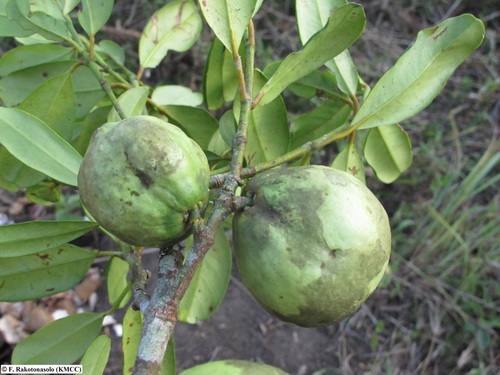
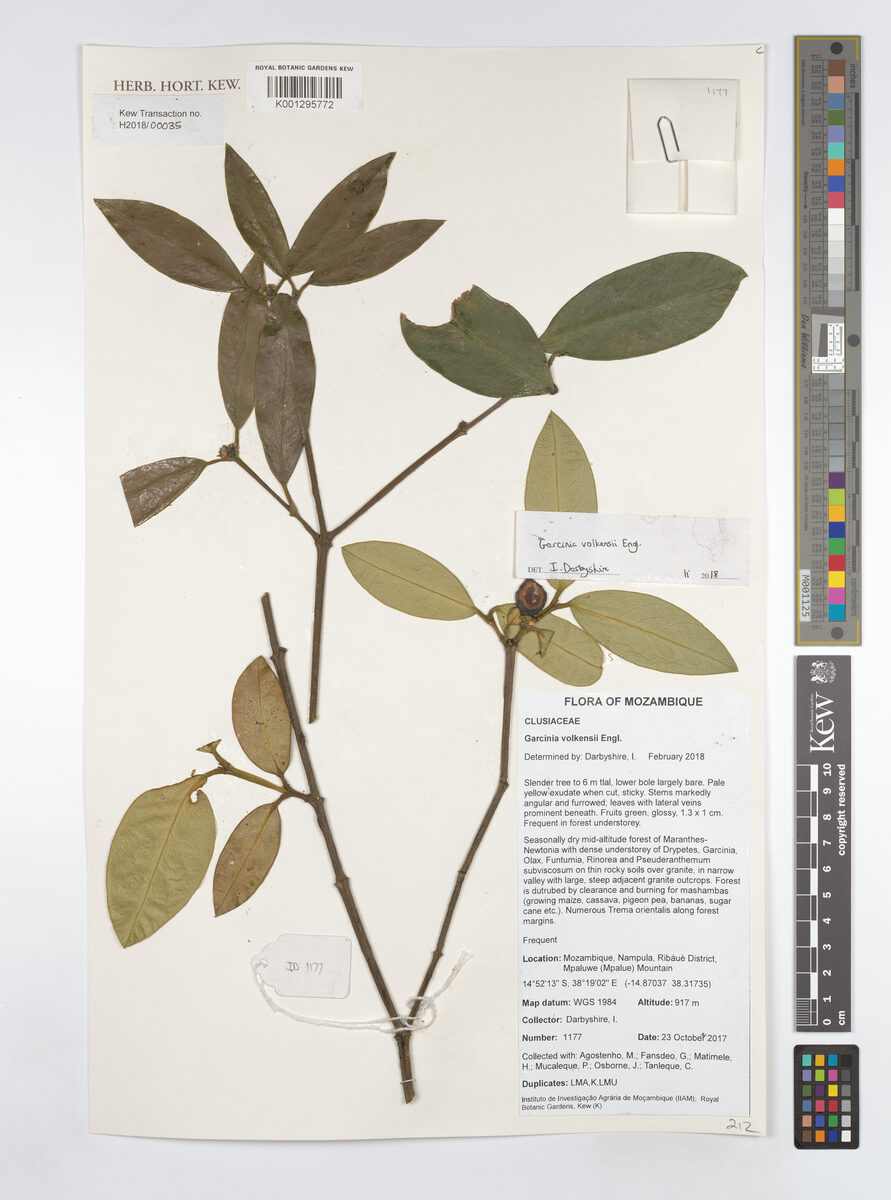
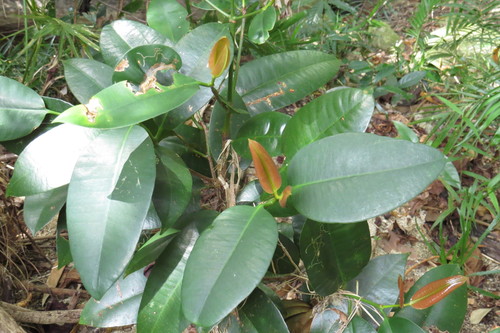
A shrub or small tree. It grows 2-15 m tall. The branches are spreading, angular and grooved. The leaves are opposite and 5-11 cm long by 3-5 cm wide. They are broadly oval. They are dark green above and more pale underneath. They have a purple tinge when young. The flowering shoots are usually in the axils of the leaves but occasionally at the ends of branches. They are yellowish-green. Flowers can be male or female or have both sexes. The fruit is a berry 2-2.5 cm across. It is round and yellow or orange when ripe. There are 1-3 seeds. The seeds are curved and 10 mm long.
Edible Uses
The fruit are eaten raw.
Traditional Uses
The fruit are eaten raw.
This uses section is brief — help expand it
Distribution
A tropical plant. It grows in the lowlands. It grows in forests near rivers. In Malawi it grows between 600-1,750 m altitude. It grows in the savannah.
Where It Grows
Africa, Angola, Central Africa, Congo DR, East Africa, Ethiopia, Kenya, Malawi, Mozambique, Southern Africa, Sudan, Tanzania, Zambia, Zimbabwe,
Notes
There are about 300 Garcinia species. This one is very similar to Garcinia buchananii.
Nutrition
| Part | Moisture | kJ | kcal | Protein | Vit A | Vit C | Iron | Zinc |
|---|---|---|---|---|---|---|---|---|
| Fruit | 83 | 1470 | 352 | 4.5 | — | — | — | — |
Synonyms
Also Known As
Kabobo, Kisima, M'veto, Mholoholo, Mlemandembo, Mpilipili, Mukukwe, Murugubali, Musongwa, Omuserere, Peta-peta, Pimbe
References (14)
- Dale, I. R. and Greenway, P. J., 1961, Kenya Trees and Shrubs. Nairobi. p 231
- Food Composition Tables for use in Africa FAO http://www.fao.org/infoods/directory No. 921
- Fox, F. W. & Young, M. E. N., 1982, Food from the Veld. Delta Books. p 156
- http://www.fao.org/forestry/25323-096344a3de335832e8f363c3ac5184a66.pdf
- Jardin, C., 1970, List of Foods Used In Africa, FAO Nutrition Information Document Series No 2.p 139
Show all 14 references Hide references
- Kakeya, 1976,
- Latham, P., 2004, Useful Plants of Bas-Congo province. Salvation Army & DFID p 135
- Lautenschläger, T., et al, 2018, First large-scale ethnobotanical survey in the province of Uíge, northern Angola. Journal of Ethnobiology and Ethnomedicine (2018) 14:51
- Malaisse, F., 1997, Se nourrir en floret claire africaine. Approche ecologique et nutritionnelle. CTA., p 63
- Nishida & Uehara, 1983,
- Peters, C. R., O'Brien, E. M., and Drummond, R.B., 1992, Edible Wild plants of Sub-saharan Africa. Kew. p 83
- Tredgold, M.H., 1986, Food Plants of Zimbabwe. Mambo Press. p 103
- White, F., Dowsett-Lemaire, F. and Chapman, J. D., 2001, Evergreen Forest Flora of Malawi. Kew. p 281
- Wild, 1975,