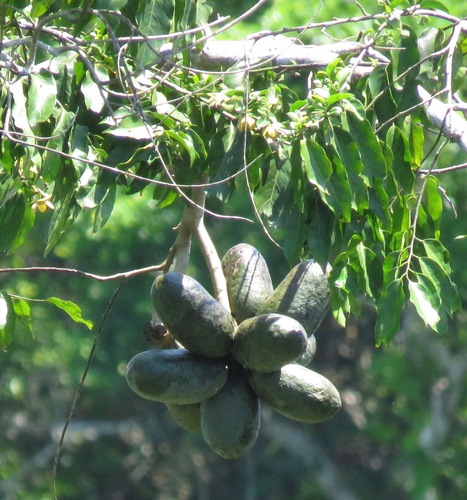
Annona exsucca
DC ex Dunal
Juiceless annona, Black maho
iNaturalist· cc0
no rights reserved, uploaded by w_endo
iNaturalist· cc-by-nc
(c) Nils Servientis - Bivouac Naturaliste, some rights reserved (CC BY-NC)
Description
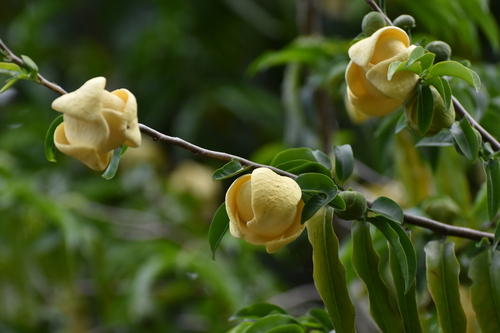
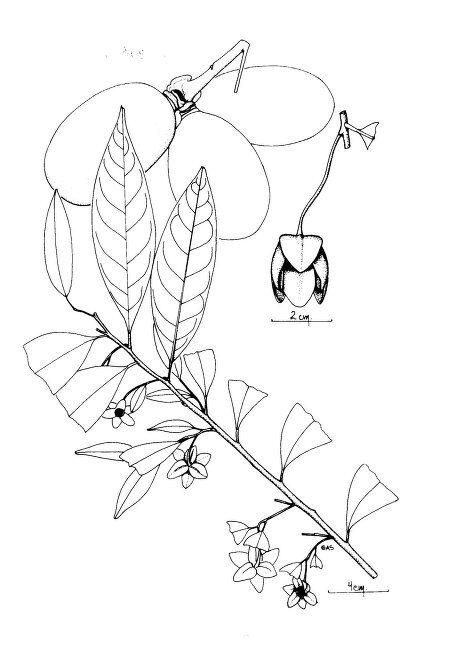
A tree. It grows 4-7 m tall. It can be 15-20 m tall. It spreads 2-3 m wide. The trunk is 10-20 cm across. The leaves are simple and alternate. They are papery and shiny. They are 6-13 cm long by 2-5 cm wide. The edges are wavy. The fruit are in small clusters on the trunk or branches. The stalks are 1.5-3.3 cm long. The fruit are round or oval and 1-1.5 cm across. They can be 4-6 cm. They are greyish-green to yellow. The pulp is white and edible.
Edible Uses
Fruit - raw. A white, juicy pulp. The greyish-green to light yellow, globose to ovoid fruit is around 10 - 25mm in diameter, exceptionally to 75mm.
Medicinal Uses
A decoction of the bark is used in the treatment of cardiac disorders. The bark is used in treatment of fevers and haemorrhages. A cold water infusion of the bark is used for washing the abdomen of women giving birth in order to relieve pain and facilitate delivery. In Guyana, certain species of Annona (formerly classed as Rollinia) known as "koyechi" are used for treating coughs
Distribution
It is a tropical plant. It grows from sea level to 1,000 m above sea level. It can be in rainforests or savannas.
Where It Grows
Amazon, Bolivia*, Brazil, Colombia, French Guiana, Guianas, Guyana, South America, Suriname, Trinidad and Tobago, Venezuela,
Other Uses
The wood is used locally.
References (11)
- Grandtner, M. M. & Chevrette, J., 2013, Dictionary of Trees, Volume 2: South America: Nomenclature, Taxonomy and Ecology. Academic Press p 37
- Johnson, M. and Colquhoun, A., 1996, Preliminary Ethnobotanical Survey of Kurupukari: An Amerindian Settlement of Central Guyana. Economic Botany, Vol. 50, No. 2, pp. 182-194 (As Rollinia exsucca)
- Kermath, B. M., et al, 2014, Food Plants in the Americas: A survey of the domesticated, cultivated and wild plants used for Human food in North, Central and South America and the Caribbean. On line draft. p 751 (As Rollinia exsucca)
- Lopez-Diago, D. & Garcia, N., 2021, Wild edible fruits of Colombia. Biota ColomBiana 22 (2) p 29 (As Rollinia exsucca)
- Maas, P. J. M., et al, 1992, Rollinia, Flora Neotropica Vol. 57. p 94 (As Rollinia exsucca)
Show all 11 references Hide references
- Martin, F. W., et al, 1987, Perennial Edible Fruits of the Tropics. USDA Handbook 642 p 81 (As Rollinia multiflora)
- Murillo-A, J., 2001, Annonaceae of Colombia. Biota Colombiana 2(1): 49-51 (As Rollinia exsucca)
- NYBG herbarium "edible" (As Rollinia exsucca)
- Roa, J. A. G. & Boada, D. S. G., 2018, Fundación para el Fortalecimiento de la Fruticultura y Plantas Alimenticias no Convencionales en Colombia.
- van Roosmalen, M.G.M., 1985, Fruits of the Guianan Flora. Utrecht Univ. & Wageningen Univ. p16 (As Rollinia exsucca)
- www.colecionandofrutas.org