Polyceratocarpus scheffleri
Engl. & Diels
gbif· cc-by-sa
GBIF
gbif· cc-by-sa
GBIF
gbif· cc-by-sa
GBIF
Summary
Source: WikipediaPolyceratocarpus scheffleri is a species of plant in the Annonaceae family. It is endemic to Tanzania.
Description
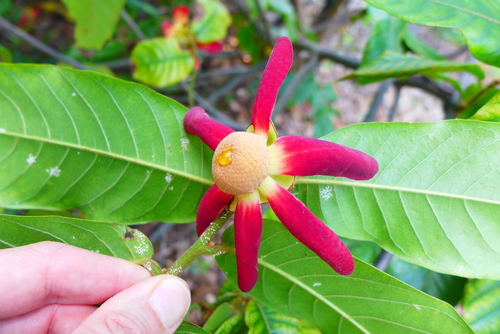
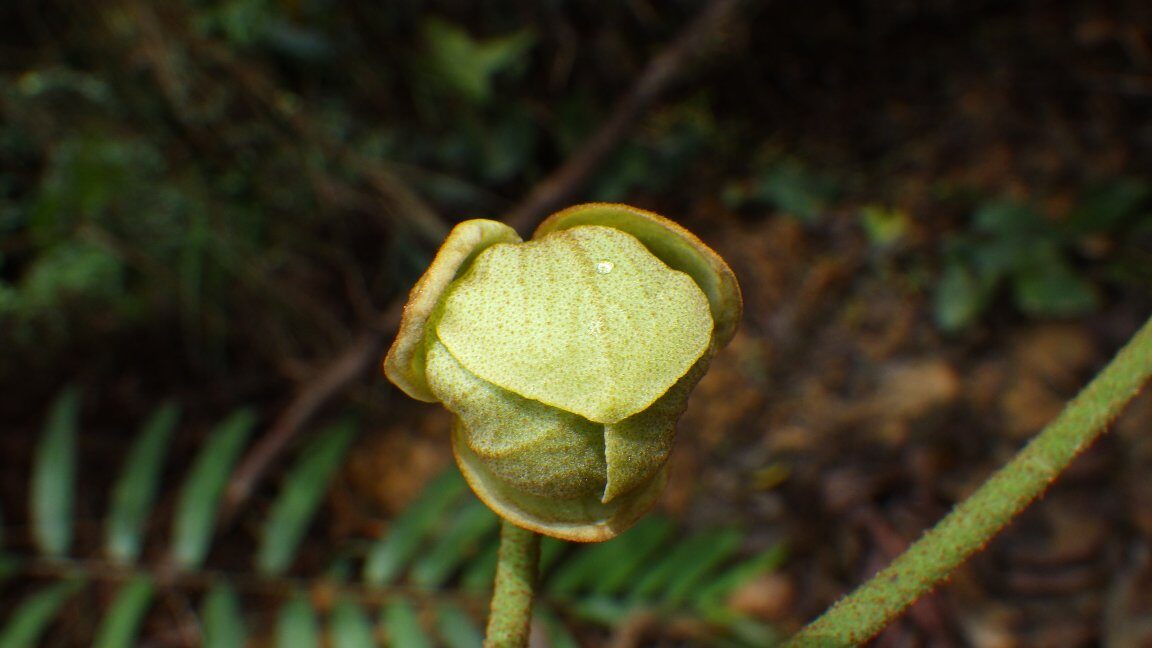
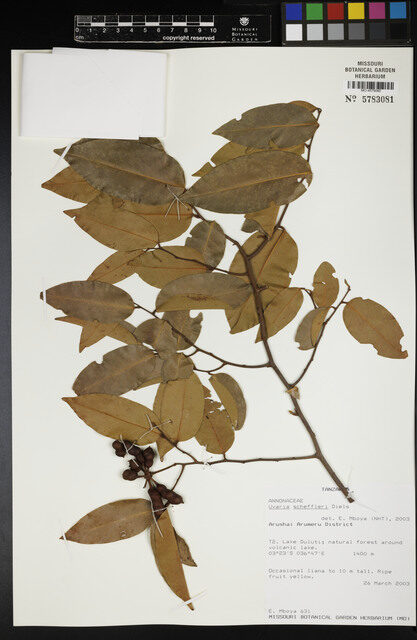
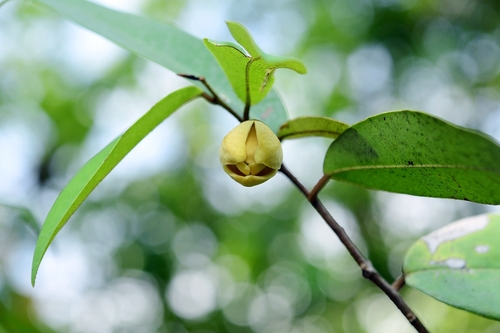
A tall tree. The bark is grey. The young branches have rusty coloured hairs. The leaves are alternate and large and oblong. They are 16-30 cm long. It has a pointed tip. The leaves are shiny above and with rusty hairs underneath. The edges are wavy. The flowers are on older shoots. They have 6 petals in 2 rings. The flower stalk is thick and curved. They are 1.5 cm long. The fruit are about 20 cylinder shaped carpels twisted together. These are 15-20 cm long and 2.5 cm wide. There are about 25 seeds 1.8 cm long. They are striped purple-brown.
Edible Uses
The inner bark is dried, pounded, and sieved to produce a powder used as a spice in soup or tea.
Traditional Uses
The inner bark is dried, pounded and sieved. This powder is used as a spice in soup or tea.
This uses section is brief — help expand it
Known Hazards
The plant is rare and endangered.
Distribution
It is a tropical plant. In Tanzania it grows in the rainforest between 800-1,000 m above sea level. It suits humid locations.
Where It Grows
Africa, East Africa, Tanzania,
Cultivation
Plants can be grown from seeds.
Other Uses
The wood is used for poles, tool handles, bedsteads and spoons. The wood is used for fuel.
Production
The bark is collected all year round. The powder can be stored for several months.
Notes
It is a rare and endangered plant.
Also Known As
Mkenene, Muenene
References (2)
- Ruffo, C. K., Birnie, A. & Tengnas, B., 2002, Edible Wild Plants of Tanzania. RELMA p 532
- World Checklist of Useful Plant Species 2020. Royal Botanic Gardens, Kew