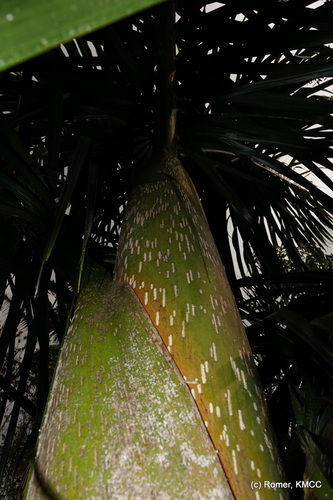
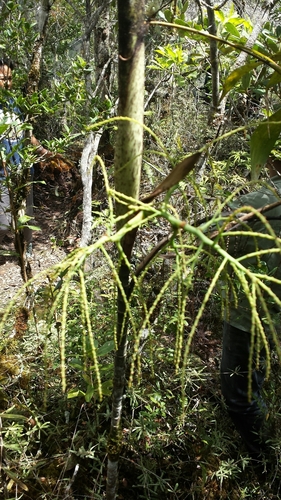
Allagoptera caudescens
(Mart.) Kuntze
Buri palm
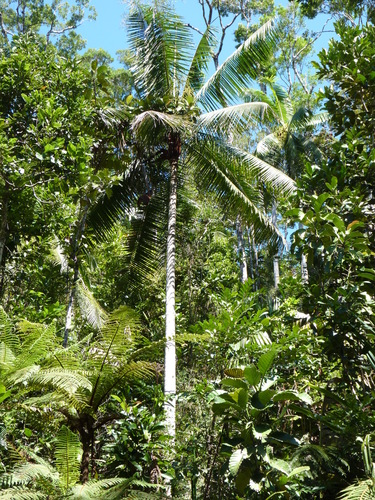
iNaturalist· cc-by-nc
(c) Geovane Siqueira, some rights reserved (CC BY-NC), uploaded by Geovane Siqueira
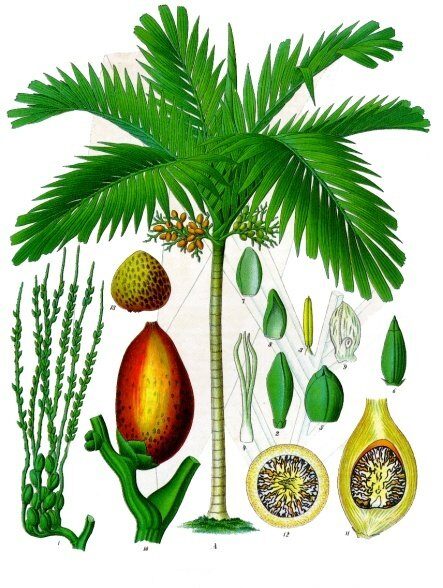
iNaturalist· cc-by-nc
(c) Marcio Santos Ferreira, some rights reserved (CC BY-NC), uploaded by Marcio Santos Ferreira
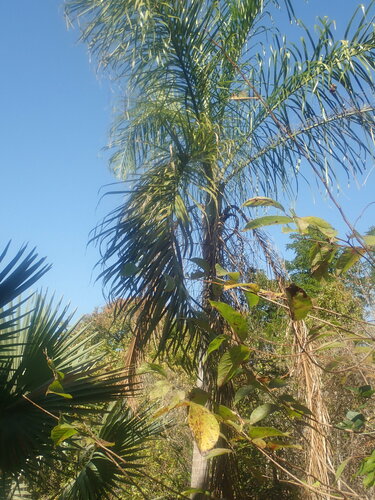
iNaturalist· cc-by-nc
(c) Marcio Santos Ferreira, some rights reserved (CC BY-NC), uploaded by Marcio Santos Ferreira
Summary
Source: WikipediaAllagoptera caudescens is a species of flowering plant in the palm family endemic to Brazil, where it is known as buri palm. The older name Polyandrococos combines the Greek words for "many" and "anther" with the name of another palm genus Cocos, and the epithet is Latin for "bearlike", referring to the hairy tomentum. It was formerly classified as Polyandrococos caudescens, the only species in the genus Polyandrococos.
Description
A tropical tree in the Arecaceae (palm) family.
This description is brief — help expand it
Edible Uses
Fruit. Occasionally eaten. The greenish-brown, almost globose fruit is up to 45mm long and 35mm in diameter, containing a single seed. Seed. Occasionally eaten.
Distribution
It is a tropical plant.
Where It Grows
Brazil, South America,
Cultivation
Plants can be grown in subtropical and tropical areas with highly seasonal rainfall. They also succeed in moist tropical climates where temperatures never fall below 10°c, the average annual rainfall is 1,500mm or more and the driest month has 25mm or more rain. They can also succeed in drier areas with an annual rainfall as low as 250mm and one month or more where rainfall is below 25mm. Prefers a sunny, well drained position. Succeeds in poor coastal sands. Established plants are drought tolerant. A slow-growing plant when very young, speeding up somewhat once planted out.
Propagation
Seed - best sown as soon as it is ripe in a partially shaded position in a nursery seedbed or in individual containers. A low germination rate can be expected, even from fresh-sown seed, with the seed sprouting within 90 - 150 days. When the seedbed-sown seedlings are 5 - 8cm tall, pot them up into individual containers and they should be ready to plant out 9 - 12 months later. Because of its hard seedcoat, this species may benefit from scarification before sowing to speed up germination. This can usually be done by pouring a small amount of nearly boiling water on the seeds (being careful not to cook them!) and then soaking them for 12 - 24 hours in warm water. By this time they should have imbibed moisture and swollen - if they have not, then carefully make a nick in the seedcoat (being careful not to damage the embryo) and soak for a further 12 hours before sowing. The seed usually has a short period of viability in storage.
Other Uses
The leaves are used for thatching. The wood is moderately heavy but soft and of low durability when exposed. It is used locally in the construction of rafters, beams etc in rustic buildings. Although slow-growing, this species can survive in the poor, dry sandy soils near the coast and also is a good source of food for the native fauna. It is therefore a good species to use when restoring native woodland in such areas.
Synonyms
Also Known As
Buri, Palha-branca, Palmito-amargoso
References (1)
- Grandtner, M. M. & Chevrette, J., 2013, Dictionary of Trees, Volume 2: South America: Nomenclature, Taxonomy and Ecology. Academic Press p 23