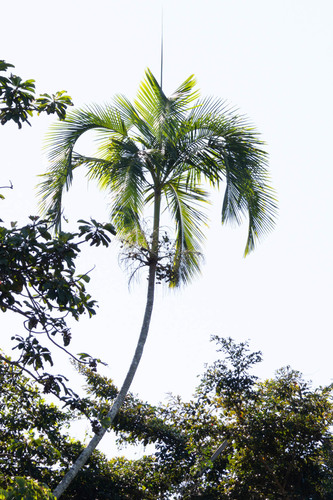
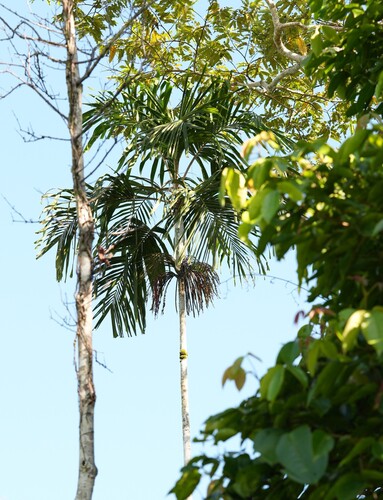
Arenga wightii
Griff.
Wight's sago palm
iNaturalist· cc-by
(c) Siddarth Machado, some rights reserved (CC BY), uploaded by Siddarth Machado
iNaturalist· cc-by
(c) Siddarth Machado, some rights reserved (CC BY), uploaded by Siddarth Machado
iNaturalist· cc-by-sa
(c) Shyamal, some rights reserved (CC BY-SA)
Summary
Source: WikipediaArenga wightii is a species of flowering plant in the family Arecaceae. It is native to the Southern Western Ghats in Kerala in India. This palm has various uses in its communities. Local tribal communities depend on this plant for starch (food supplement) and religious ceremonies. It is also used to cover the roofs of houses due to its string resemblance to coconut leaves. Scientists have discovered that this palm has medicinal value. It is said to have antimicrobial and antioxidant phytochemicals. It is threatened by habitat loss and logging.
Description
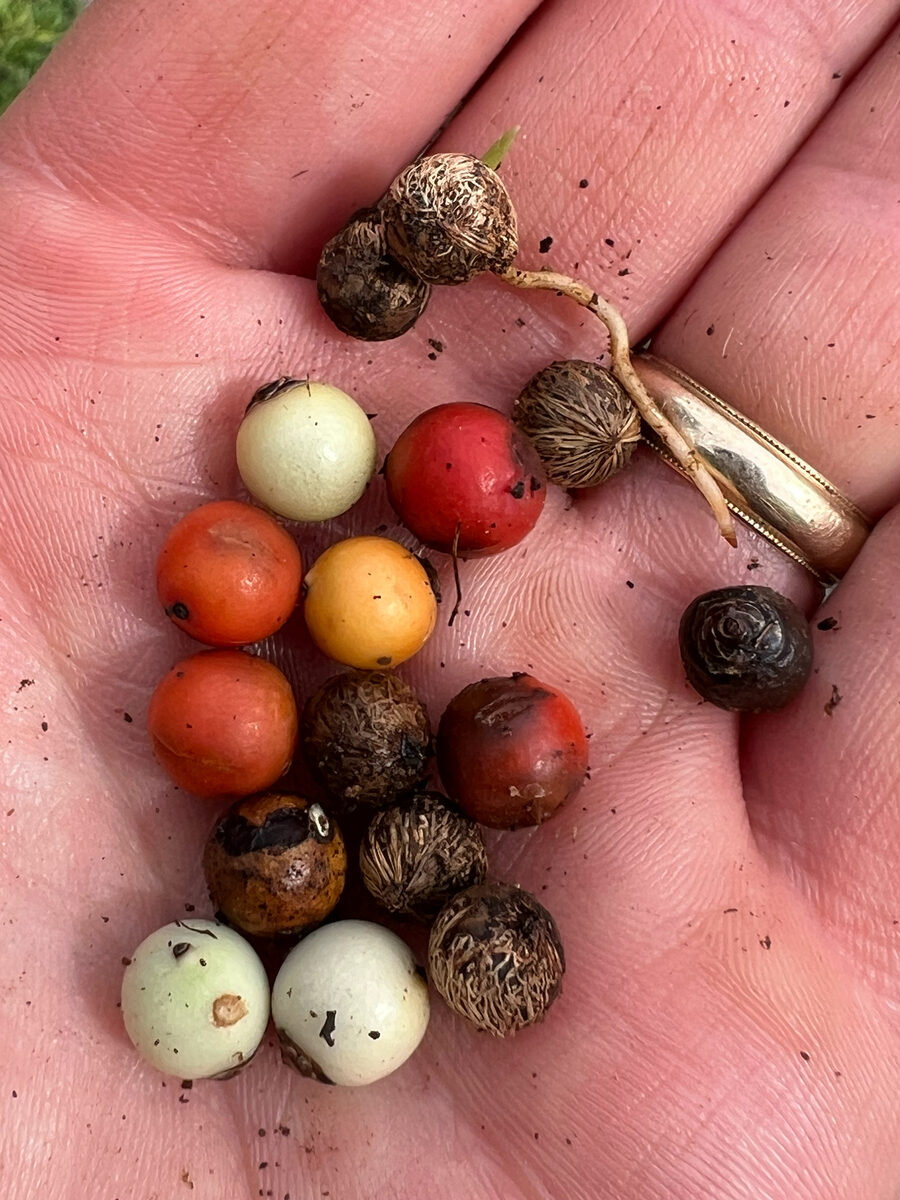
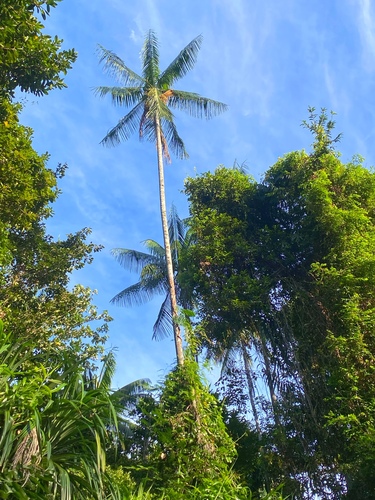
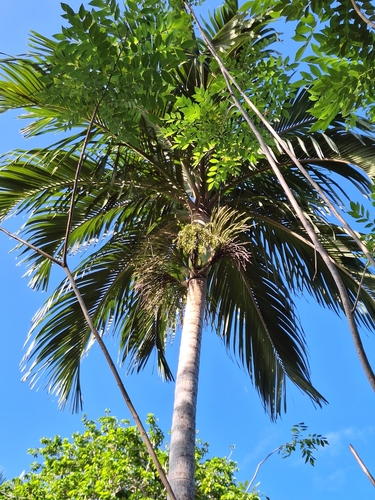
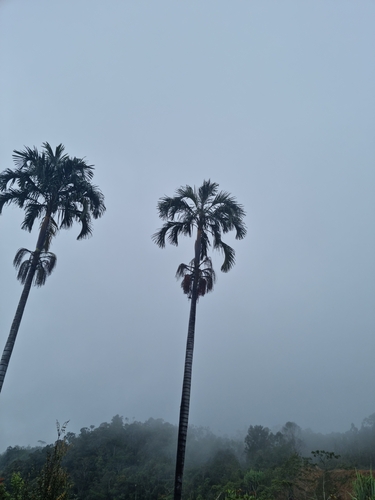
A clump forming palm. It grows 6 m tall. There are a few crowded, black, fibrous trunks. The crown has arching leaves. The leaves are 2-3 m long. The leaves have long, narrow, leaflets. There are small teeth and lobes along the edges of the leaflets. The leaflets are 30 cm long and 5 cm wide. The leaflets are white or silvery underneath. The leaflets spread out in a flat layer each side of the stalk. The fruit are blackish and round. They are 2 cm across and contain 3 seeds.
Edible Uses
Local tribal communities, such as the Mudhuvans in Idukki, rely on this palm primarily for the starch obtained from its pith and for toddy, which is collected by tapping its inflorescence. The inflorescence of the palm is used in religious ceremonies, while its leaves, resembling those of the coconut palm, are used for thatching huts and pandals within the settlement. Although the fruit contains needle-like oxalate crystals that cause irritation, it is dehusked and repeatedly boiled to make it suitable for consumption. The dried kernels are ground into a powder and mixed with rice flour to prepare various foods. The palm's terminal bud, also known as the "cabbage," is edible, though it is rarely used by the community today. Starch is harvested from the stem of the palm when it reaches an age of 15–20 years. This process involves felling the tree and removing its sclerenchymatous hypodermis. The cylindrical cortex is then chopped, and the starch is extracted by mixing it with water, followed by drying. The dried starch serves as a food supplement and is also used in the preparation of traditional dishes like kurukk and upuma.
Traditional Uses
The sap is tapped from the fruit stalk. The fruit is chewed as a substitute for betel nut. The pith is sweetish and edible.
This uses section is brief — help expand it
Distribution
A tropical plant. It grows in Kerala, Karnataka, Tamil Nadu. It needs to grow in a sheltered position.
Where It Grows
Asia, Australia, India*,
Notes
There are 17-20 Arenga species.
Synonyms
Also Known As
Alam panei, Alathil thenga, Dhadashi, Dhudasal, Kottukamugu, Netipankumpu
References (11)
- Ambasta S.P. (Ed.), 2000, The Useful Plants of India. CSIR India. p 51
- Arinathan, V., et al, 2007, Wild edibles used by Palliyars of the western Ghats, Tamil Nadu. Indian Journal of Traditional Knowledge. 6(1) pp 163-168
- Bircher, A. G. & Bircher, W. H., 2000, Encyclopedia of Fruit Trees and Edible Flowering Plants in Egypt and the Subtropics. AUC Press. p 41
- Calcutta J. Nat. Hist. 5:474. 1845 ("1844")
- Garcia, G. S. C., 2006, The mother-child nexus. Knowledge and valuation of wild food plants in Wayanad, Western Ghats, India. Journal of Ethnobiology and Ethnomedicine, 2:39
Show all 11 references Hide references
- Haynes, J., & McLaughlin, J., 2000, Edible palms and Their Uses. University of Florida Fact sheet MCDE-00-50-1 p 2
- Johnson, D.V., 1998, Tropical palms. Non-wood Forest products 10. FAO Rome. p 40
- Jones, D.L., 1994, Palms throughout the World. Smithtonian Institution, Washington. p 137
- Jones, D.L., 2000, Palms of Australia 3rd edition. Reed/New Holland. p 121
- Narayanan Ratheesh, M. K. et al, 2011, Wild edible plants used by the Kattunaikka, Paniya and Kuruma tribes of Wayanad District, Kerala, India. Journal of Medicinal Plants Research Vol. 5(15), pp. 3520-3529
- Ramachandran, V.S. and Nair, V.J., 1981, Ethnobotanical studies in Cannanore District, Kerala State (India). J Econ. Tax. Bot. Vol 2 pp 65-72