Arenga undulatifolia
Becc.
Gelora sugar palm
iNaturalist· cc-by-sa
(c) Emőke Dénes, some rights reserved (CC BY-SA)
iNaturalist· cc-by-nc
(c) Ryan E. Gray, some rights reserved (CC BY-NC)
iNaturalist· cc-by
(c) Kiwi Shen, some rights reserved (CC BY)
Description
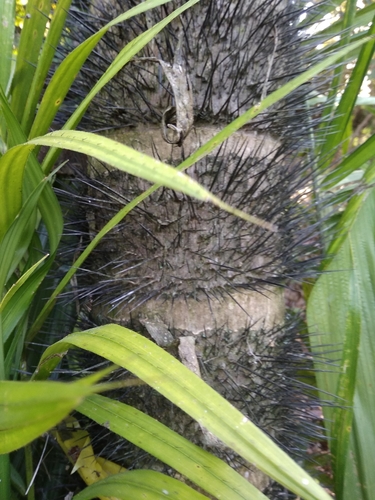
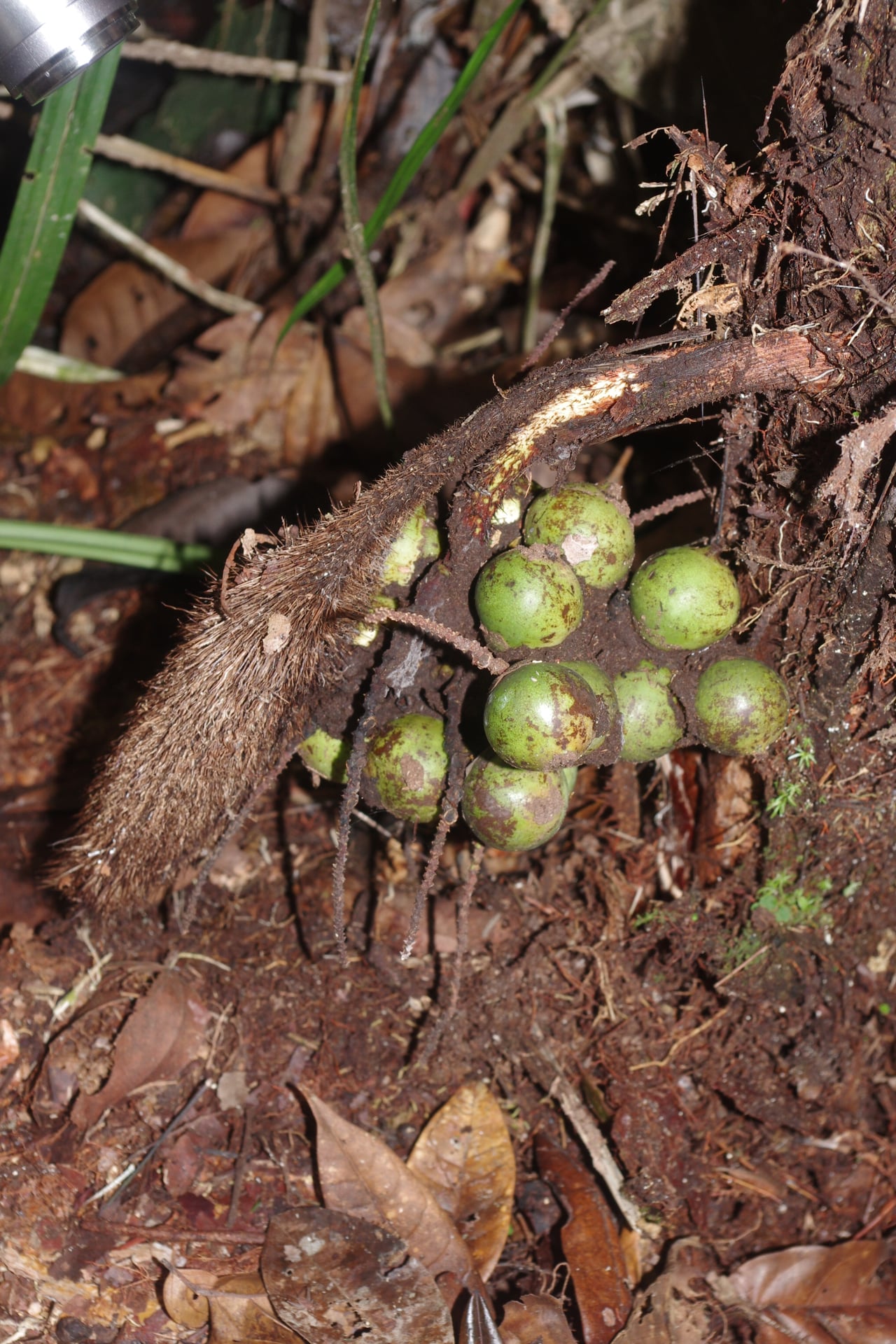
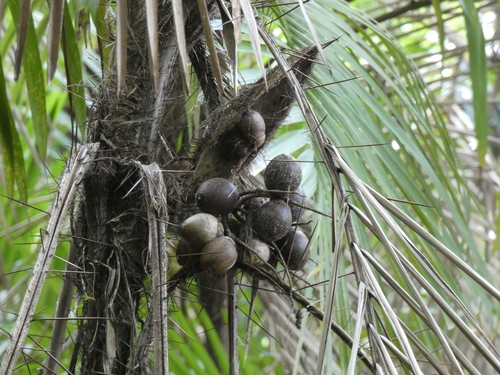
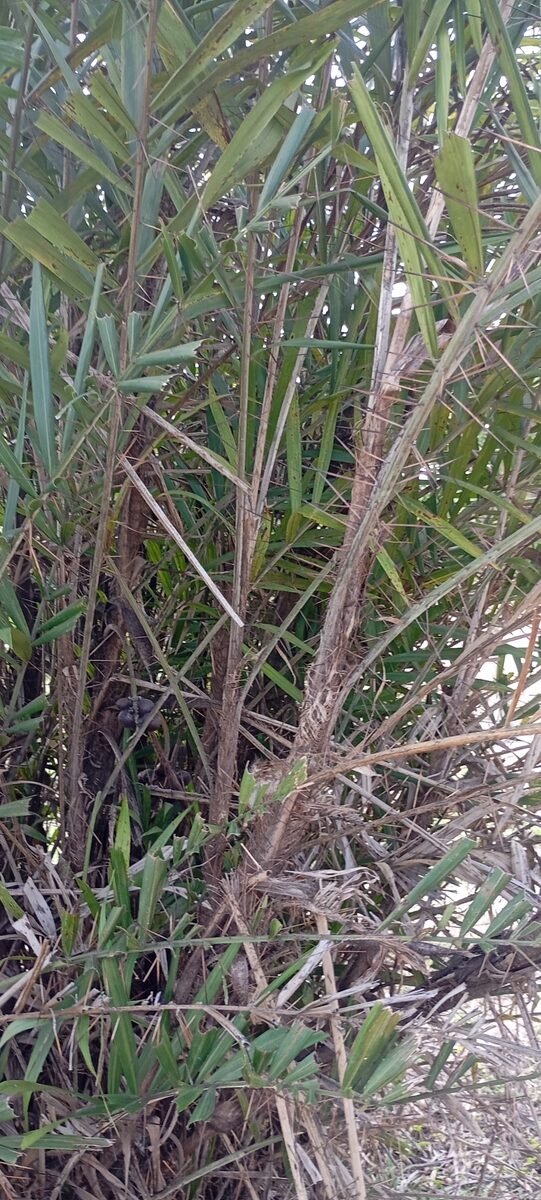
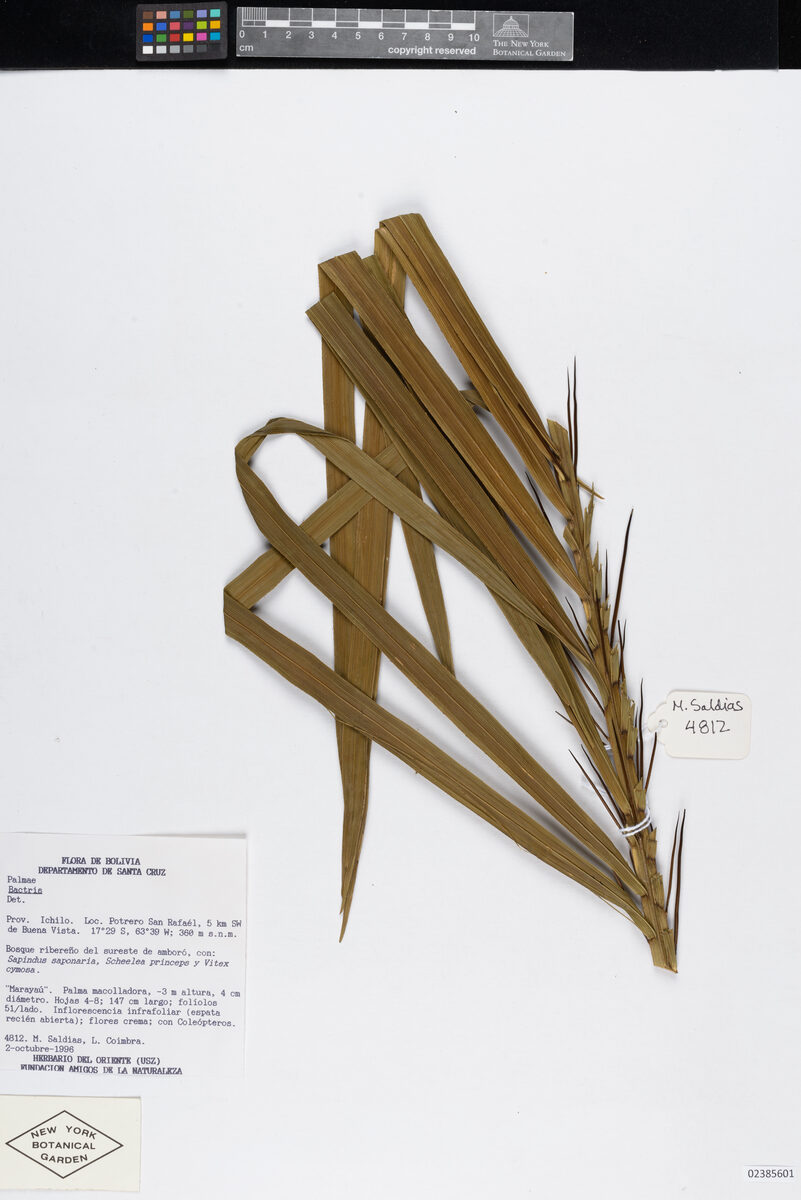
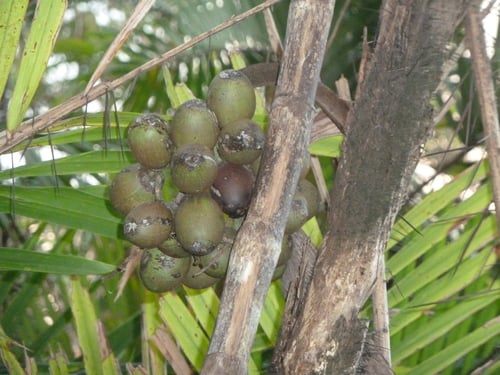
A broad clumping palm. It grows to 4-9 m tall and spreads more widely than this. It develops many stems and these become a tangled group. They are covered with old leaf fibres. The leaves are long and wide. The crown spread 4.5 m wide. The leaves have wavy edges. They are blue-green. The leaflets are 70 cm long and 6-10 cm wide. The flowers grow among the leaves. The fruit is round and becomes dark purple when ripe. The fruit damage the skin. There are 3 seed in each fruit. These have one flattened face.
Edible Uses
Starch extracted from the stem is edible, and the buds are cooked and eaten as palm heart (cabbage).
Traditional Uses
The starch from the stem can be extracted and is edible. The bud is cooked and eaten.
This uses section is brief — help expand it
Known Hazards
The fruits of most species in this genus are poisonous and are sometimes used criminally. The fleshy mesocarp of the fruits usually contains many oxalate crystals, making the flesh inedible.
Distribution
A tropical plant. It grows in rainforest and up to 1,500 m above sea level. It occurs in Palawan, Balacbac, Mindanao, Cebu, southern Luzon and probably in some other islands of the Philippines. It suits hardiness zones 11-12. In Cairns Botanical Gardens.
Where It Grows
Asia, Australia, Indonesia*, Malaysia*, Pacific, Philippines, SE Asia, Singapore,
Cultivation
Plants are grown from fresh seed. The seed grow easily. They can also be grown from suckers.
Propagation
Seed - a deep root is formed before the seedling emerges above soil level, and so the seed should be sown in individual, deep containers. Pre-soak the seed for 24 hours in warm water before sowing. It can take 3 - 6 months or more before signs of growth are seen above soil level.
Other Uses
The leaves are used for thatching and wickerwork. The petioles and midribs are used to make arrows for blowpipes. Plugs for blowpipe darts are made from the pith of the petiole.
Production
It grows quickly.
Notes
There are 17-20 Arenga species.
Synonyms
Also Known As
Ambung, Aping, Aren Gelora, Bo'
References (19)
- Bircher, A. G. & Bircher, W. H., 2000, Encyclopedia of Fruit Trees and Edible Flowering Plants in Egypt and the Subtropics. AUC Press. p 40 (As Arenga ambong)
- Blomberry, A. & Rodd, T., 1982, Palms. An informative practical guide. Angus & Robertson. p 57
- Burkill, I.H., 1966, A Dictionary of the Economic Products of the Malay Peninsula. Ministry of Agriculture and Cooperatives, Kuala Lumpur, Malaysia. Vol 1 (A-H) p 232
- Chai, P. P. K. (Ed), et al, 2000, A checklist of Flora, Fauna, Food and Medicinal Plants. Lanjak Entimau Wildlife Sanctuary, Sarawak. Forestry Malaysia & ITTO. p 161
- Etherington, K., & Imwold, D., (Eds), 2001, Botanica's Trees & Shrubs. The illustrated A-Z of over 8500 trees and shrubs. Random House, Australia. p 104
Show all 19 references Hide references
- Facciola, S., 1998, Cornucopia 2: a Source Book of Edible Plants. Kampong Publications, p 26 (As Arenga ambong)
- Gibbons, M., 1993, Palms. Compact study Guide and Identifier. Sandstone. p 20
- Haynes, J., & McLaughlin, J., 2000, Edible palms and Their Uses. University of Florida Fact sheet MCDE-00-50-1 p 2
- Hibbert, M., 2002, The Aussie Plant Finder 2002, Florilegium. p 32
- Johnson, D.V., 1998, Tropical palms. Non-wood Forest products 10. FAO Rome. p 46
- Jones, D.L., 1994, Palms throughout the World. Smithtonian Institution, Washington. p 57, 137
- Jones, D.L., 2000, Palms of Australia 3rd edition. Reed/New Holland. p 120
- Martin, F.W. & Ruberte, R.M., 1979, Edible Leaves of the Tropics. Antillian College Press, Mayaguez, Puerto Rico. p 209 (As Arenga ambong)
- Monsalud, M.R., Tongacan, A.L., Lopez, F.R., & Lagrimas, M.Q., 1966, Edible Wild Plants in Philippine Forests. Philippine Journal of Science. p 514 (As Arenga ambong)
- Riffle, R.L. & Craft, P., 2003, An Encyclopedia of Cultivated Palms. Timber Press. p 38, 261
- Soepadmo, E., 1998, Plants. The Encyclopedia of Malaysia. Archipelago press. p 54
- Sukarya, D. G., (Ed.) 2013, 3,500 Plant Species of the Botanic Gardens of Indonesia. LIPI p 754
- Terra, G.J.A., 1973, Tropical Vegetables. Communication 54e Royal Tropical Institute, Amsterdam, p 25 (As Arenga ambong)
- World Checklist of Useful Plant Species 2020. Royal Botanic Gardens, Kew