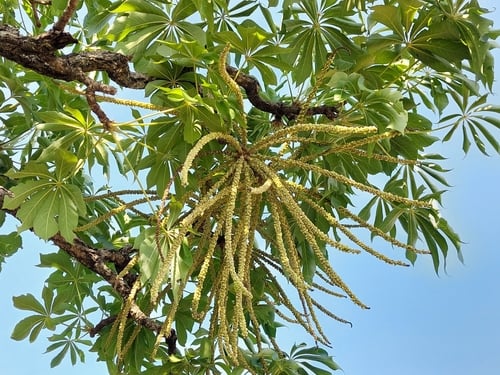
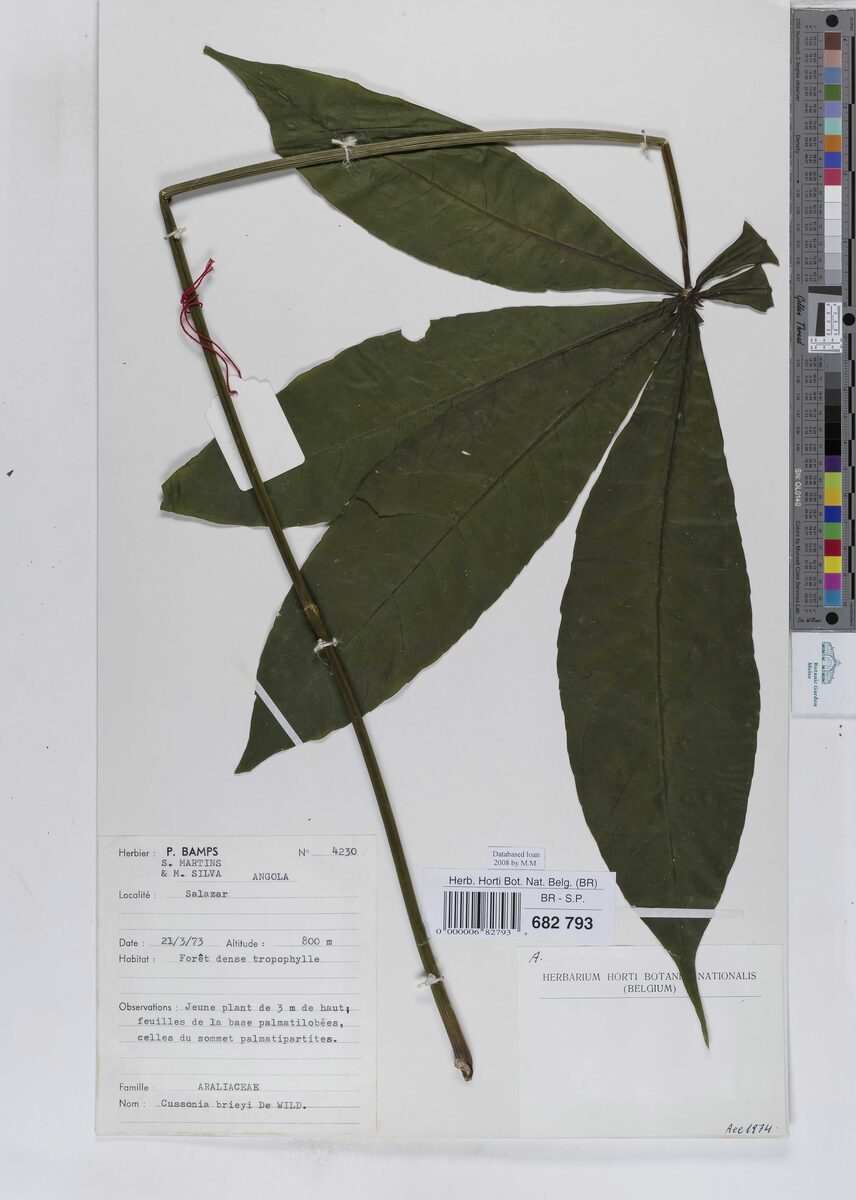
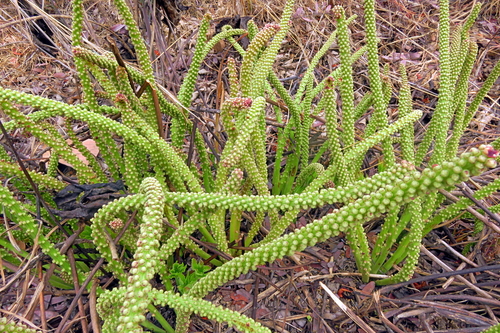
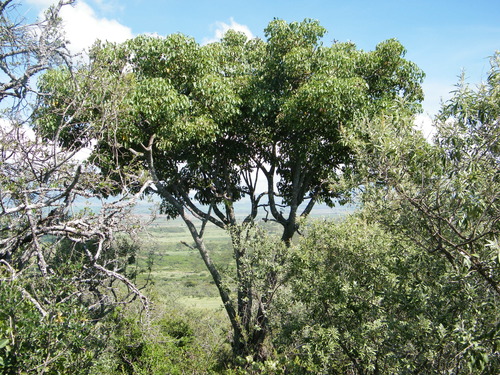
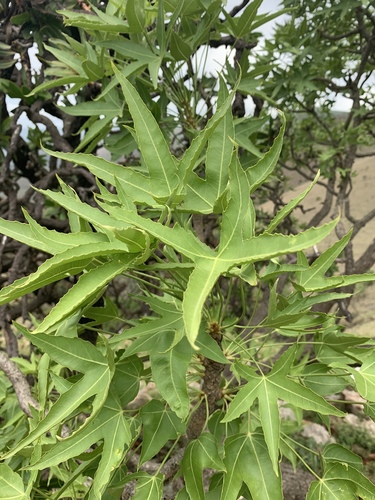
Schefflera elliptica
(Blume) Harms
iNaturalist· cc-by-nc
(c) galanhsnu, some rights reserved (CC BY-NC)
iNaturalist· cc-by-sa
(c) Steve Fitzgerald, some rights reserved (CC BY-SA)
iNaturalist· cc-by-sa
(c) Steve Fitzgerald, some rights reserved (CC BY-SA)
Description
A tropical shrub in the Araliaceae family.
This description is brief — help expand it
Edible Uses
The leaves are edible.
Medicinal Uses
The bark is employed as a bechic in the treatment of coughs. The resin is vulnerary. A decoction of the leaves is an effective antiscorbutic and may also be used in aromatic baths. The wood has been chewed to relieve toothache. The roots, mixed with rice, are eaten to cure dropsy. A study yielded oleanoli acid, lutein, fatty alcohols and hydrocarbons from the leave. A lectin extracted from the leaves is non-bood type specific and non-blood group specific. The lectin was a glycoprotein containing 2.33% total sugars. The leaves have been suggested as an inexpensive source of lectins that have wound-healing properties. A study demonstrated antioxidant and immunomiodulatory properties in the leaves. Lectins from the plant have been found to possess high cytotoxic activity against Acanthamoeba sp. (a keratitis-causing amoeba) and Tetrahymena pyriformis.
Distribution
It is a tropical plant.
Where It Grows
Asia, Pacific, Philippines, SE Asia,
Synonyms
Also Known As
Lima-lima
References (1)
- Alegado, A. M. & De Guzman, R. B., 2014, Indigenous food crops of the Aetas tribe in the Philippines and their traditional methods of food preparation. in Promotion of Underutilized Indigenous Food Resources for Food Security and Nutrition in Asia and Pacific. FAO. Bangkok p 160 (As Schefflera odorata)