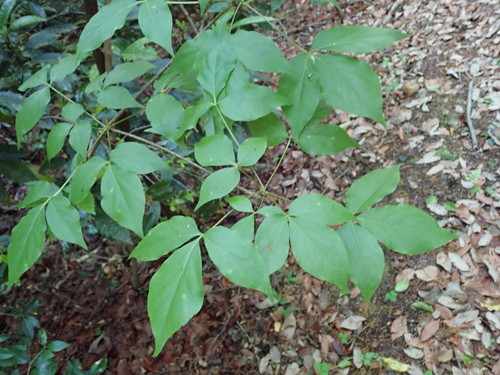
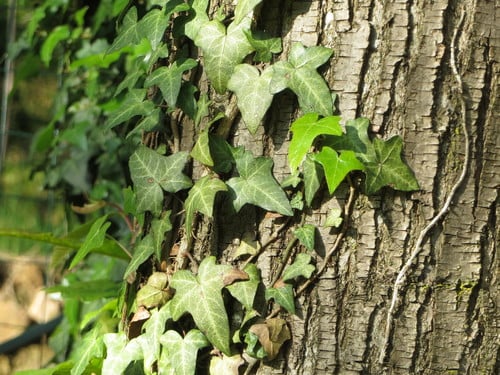
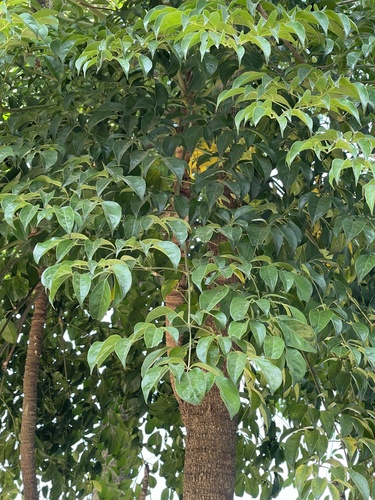
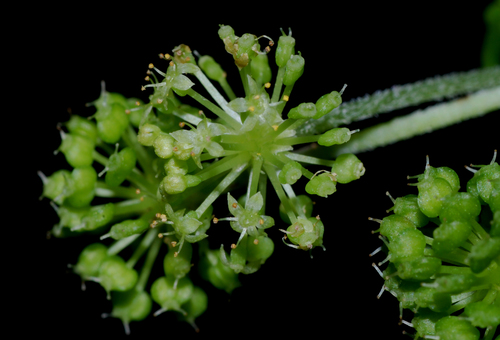
Aralia schmidtii
Pojark.
Sakhalin Spikenard
gbif· cc0
Alice R. Tangerini
gbif· cc0
Alice R. Tangerini
gbif· cc-by-nc
President and Fellows of Harvard College
Description
Aralia schmidtii is a PERENNIAL growing to 3 m (9ft 10in). See above for USDA hardiness. It is hardy to UK zone 5 and is not frost tender. It is in flower from July to August. The species is hermaphrodite (has both male and female organs) and is pollinated by Bees. Suitable for: light (sandy), medium (loamy) and heavy (clay) soils, prefers well-drained soil and can grow in nutritionally poor soil. Suitable pH: mildly acid, neutral and basic (mildly alkaline) soils. It can grow in full shade (deep woodland) or semi-shade (light woodland). It prefers moist soil.
Edible Uses
The following uses are for the closely related A. cordata. It is quite possible that they also apply to this species. Shoots - cooked or raw. They can be up to 1.5 metres long and have a mild and agreeable flavour. They are usually blanched and are crisp and tender with a unique lemon-like flavour. They can be sliced and added to salads, soups etc. The shoots contain about 1.1% protein, 0.42% fat, 0.8% soluble carbohydrate, 0.55% ash. Root - cooked. Used like scorzonera.
Distribution
E. Asia - N. Japan.
Where It Grows
TEMPERATE ASIA: Russian Federation (Kurile Islands, Sakhalin)
Cultivation
Prefers a deep moderately fertile moisture-retentive well-drained loam and a semi-shady position. Requires a sheltered position. Plants are hardier when grown in poorer soils. This species is not hardy in the colder areas of the country, it tolerates temperatures down to between -5 and -10°c. The young growth in spring, even on mature plants, is frost-tender and so it is best to grow the plants in a position sheltered from the early morning sun. This species is closely related to A. racemosa. The rootstock is similar to A. cordata. It is considered to be no more than a subspecies of A. cordata by some botanists.
Propagation
Seed - best sown as soon as ripe in a cold frame. Stored seed requires 3 - 5 months of cold stratification. Germination usually takes place within 1 - 4 months at 20°c. When large enough to handle, prick the seedlings out into individual pots and grow them on in light shade in a greenhouse for at least their first winter. Once the plants are 25cm or more tall, they can be planted out into their permanent positions, late spring or early summer being the best time to do this. Root cuttings 8cm long, December in a cold frame. Store the roots upside down in sand and pot up in March/April. High percentage. Division of suckers in late winter. Very easy, the suckers can be planted out direct into their permanent positions if required.