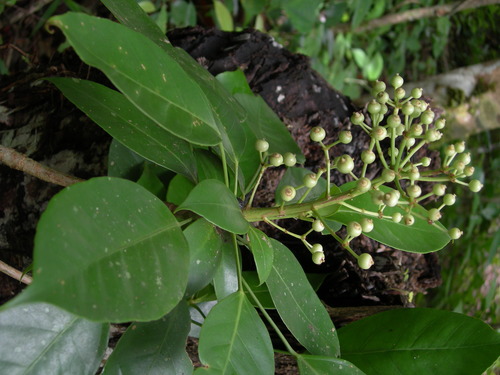
Brassaiopsis glomerulata
(Blume) Regel
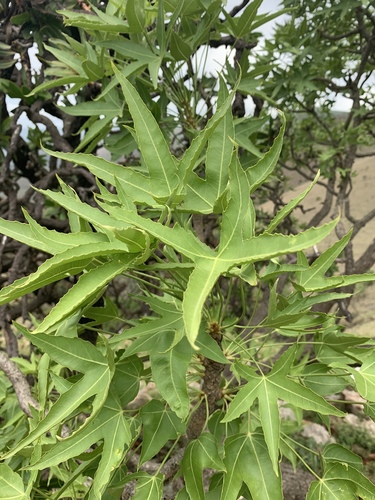
Hoblaiso
iNaturalist· cc-by-nc
(c) John P, some rights reserved (CC BY-NC), uploaded by John P
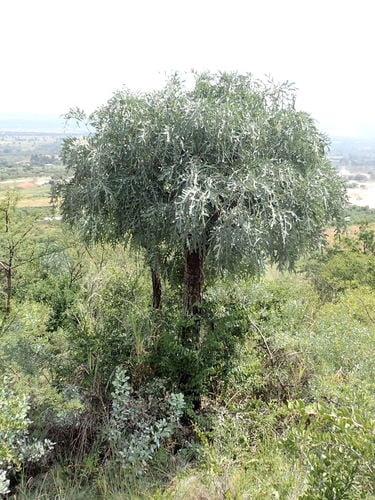
iNaturalist· cc-by-nc
(c) John P, some rights reserved (CC BY-NC), uploaded by John P
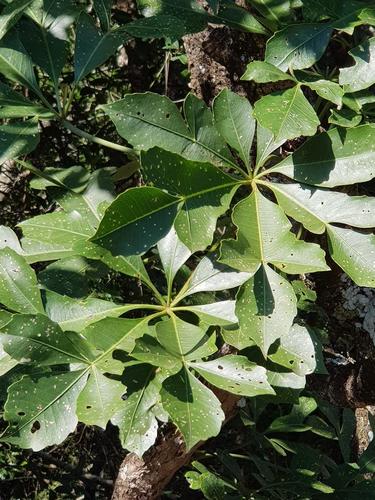
iNaturalist· cc-by-nc
(c) equisetalean, some rights reserved (CC BY-NC)
Summary
Source: WikipediaBrassaiopsis glomerulata is a species of shrub in the family Araliaceae. Extracts are sold as bodybuilding supplements based on the assumption that aromatase inhibitors present in the plant might have effects in humans.
Description
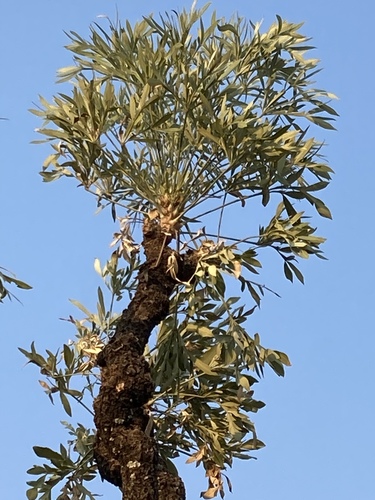
A tree. It grows 20 m tall. The branches have prickles. They have a rusty red coating when young. The leaves are compound and have leaflets arranged like fingers on a hand. There are 5-9 leaflets. The leaflets are 15-35 cm long by 6-15 cm wide. The fruit are round and 7-10 mm across.
Edible Uses
The fruits are eaten as chutney, and young leaves are also made into chutney.
Traditional Uses
The fruit are eaten as chutney. The young leaves are made into chutney.
This uses section is brief — help expand it
Distribution
It is a tropical plant. It grows on mountain slopes and in valleys between 400-2,400 m above sea level. In Sichuan and Yunnan.
Where It Grows
Asia, Bhutan, Cambodia, China, Himalayas, India, Indochina, Indonesia, Laos, Myanmar, Nepal, Northeastern India, SE Asia, Thailand, Vietnam,
Synonyms
Also Known As
Baw, Dong gong lu, Guo dan, Ta bi ta la, Tago
References (5)
- Cao, Y., et al, 2020, Ethnobotanical study on wild edible plants used by three trans-boundary ethnic groups in Jiangcheng County, Pu’er, Southwest China. Journal of Ethnobiology and Ethnomedicine (2020) 16:66
- Johnson, N., 2002, Environmental Change in northern Thailand: Impact on Wild Edible Plant Availability. Ecology of Food and Nutrition, 41: 5, 373-399
- Murtem, G. & Chaudhrey, P., 2016, An ethnobotanical note on wild edible plants of Upper Eastern Himalaya, India. Brazilian Journal of Biological Sciences, 2016, v. 3, no. 5, p. 63-81 (As Brassiopsis)
- Priyadi, H., et al, Five hundred plant species in Gunung Halimun Salak National Park West Java. A checklist including Sundanese names, distribution and use. CIFOR, FFPRI, SLU p 137
- Srivastava, R. C., 2010, Traditional knowledge of Nyishi (Daffla) tribe of Arunachal Pradesh. Indian Journal of Traditional Knowledge. 9(1):26-37 (Also as Brassaiopsis speciosa)