Copaifera baumiana
Harms
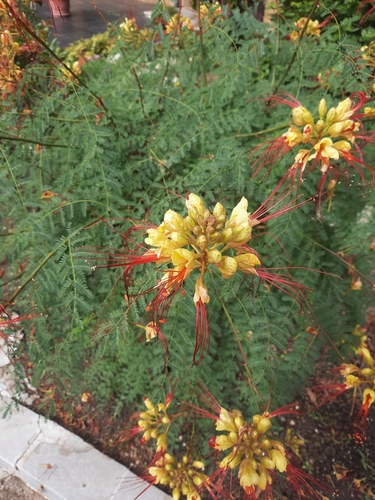
iNaturalist· cc-by
(c) National Geographic Okavango Wilderness Project, some rights reserved (CC BY), uploaded by National Geographic Okavango Wilderness Project
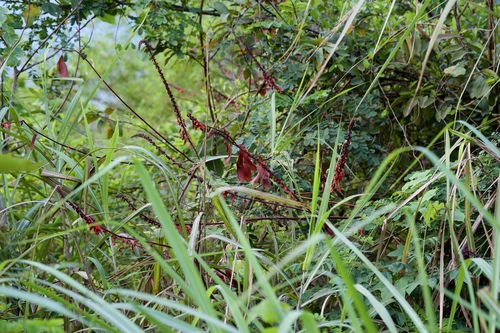
iNaturalist· cc-by-nc
(c) Bart Wursten, some rights reserved (CC BY-NC)
Description
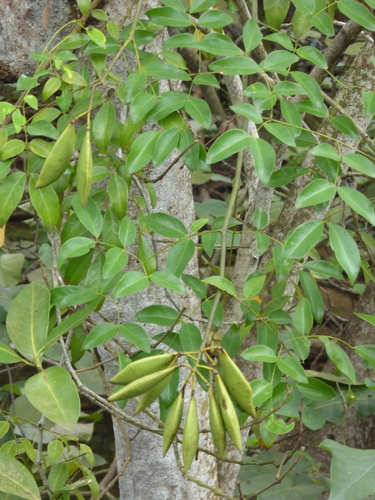
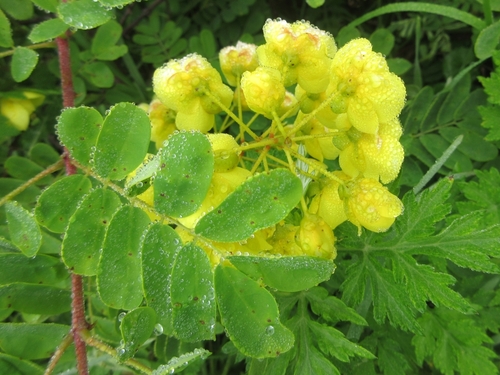
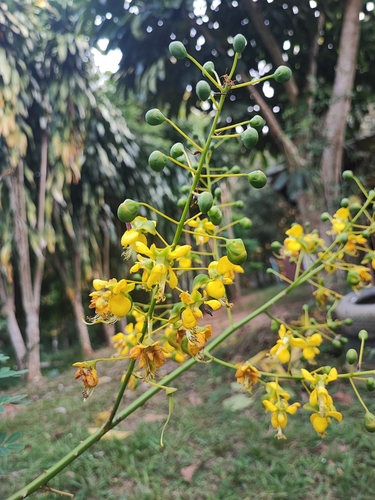
A small shrub. It can grow 3 m tall. It has woody rootstock. The small branches are brown. There are fine cracks along them. The leaves have leaflets along the stalks and one at the end. There are 4-5 pairs of leaflets and they are 3-5 cm long by about 1 cm wide. They are often unequal and rounded at the tip and with a wedge shaped base. The flowers are in the axils of the leaves and at the ends of the branches. The flowers are tightly packed and 5-7 mm long. The fruit is a pod with one seed. It is 2.5-3 cm across. It is almost round but flattened. The seed is 15 mm long by 12 mm wide.
Edible Uses
The seeds are edible, with the aril or layer around the seed being the edible portion.
Distribution
A tropical plant. It grows on Kalahari sands and in grassland and woodland. It grows between 750-1,400 m altitude.
Where It Grows
Africa, Angola, Central Africa, Congo, East Africa, Zambia,
Notes
There are 35-40 Copaifera species. They are tropical trees. Several Copaifera have the aril or layer around the seed edible. van Roosmalen, M.G.M., 1985, Fruits of the Guianan Flora. Utrecht Univ. & Wageningen Univ. p 181. Also as Caesalpinaceae.
Also Known As
Mukuwa
References (5)
- Baidu-Forson, J.J., et al ,2014,. Assessment of agrobiodiversity resources in the Borotse flood plain, Zambia. CGIAR Research Program on Aquatic Agricultural Systems. Penang, Malaysia. Working Paper: AAS-2014-12.
- Brown, D., 2002, The Royal Horticultural Society encyclopedia of Herbs and their uses. DK Books. p 179
- Flora Zambesiaca. http://apps.kew.org/efloras
- Fowler, D. G., 2007, Zambian Plants: Their Vernacular Names and Uses. Kew. p 30
- Menninger, E.A., 1977, Edible Nuts of the World. Horticultural Books. Florida p 92