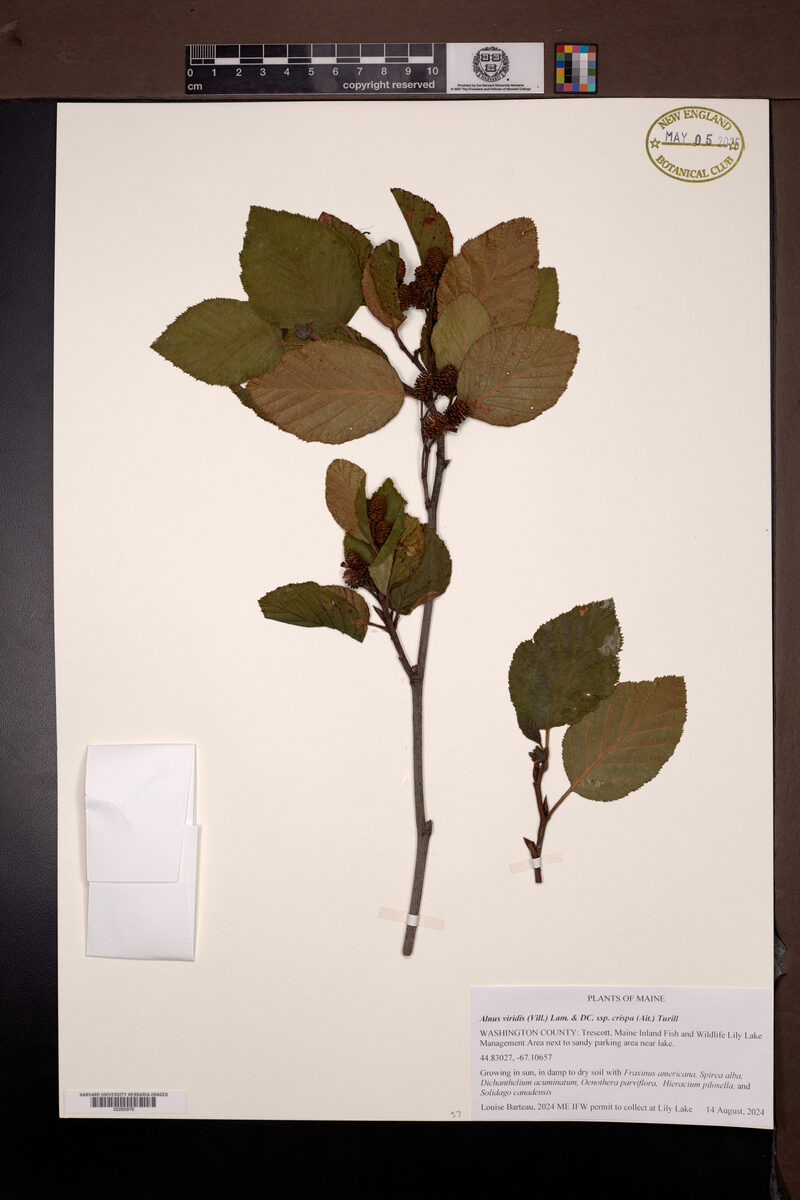
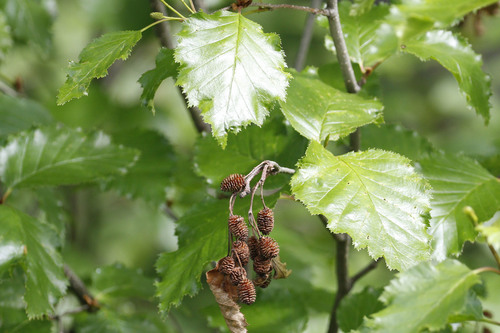
Corylus colurna
L.
Turkish Hazel tree
iNaturalist· cc-by-nc
(c) ramazan_murtazaliev, some rights reserved (CC BY-NC), uploaded by ramazan_murtazaliev
iNaturalist· cc-by-nc
(c) denisvetragor, some rights reserved (CC BY-NC)
Summary
Source: WikipediaCorylus colurna, the Turkish hazel, is a deciduous tree native to Eurasia.
Description
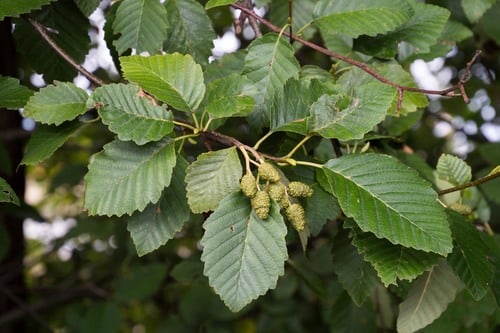
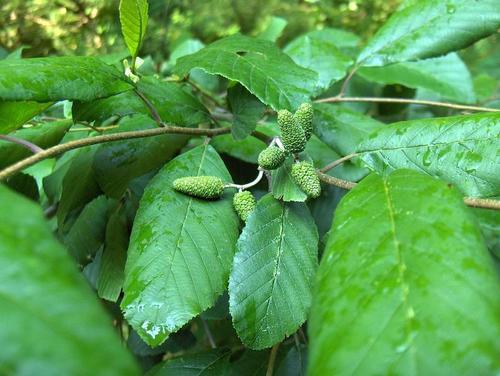
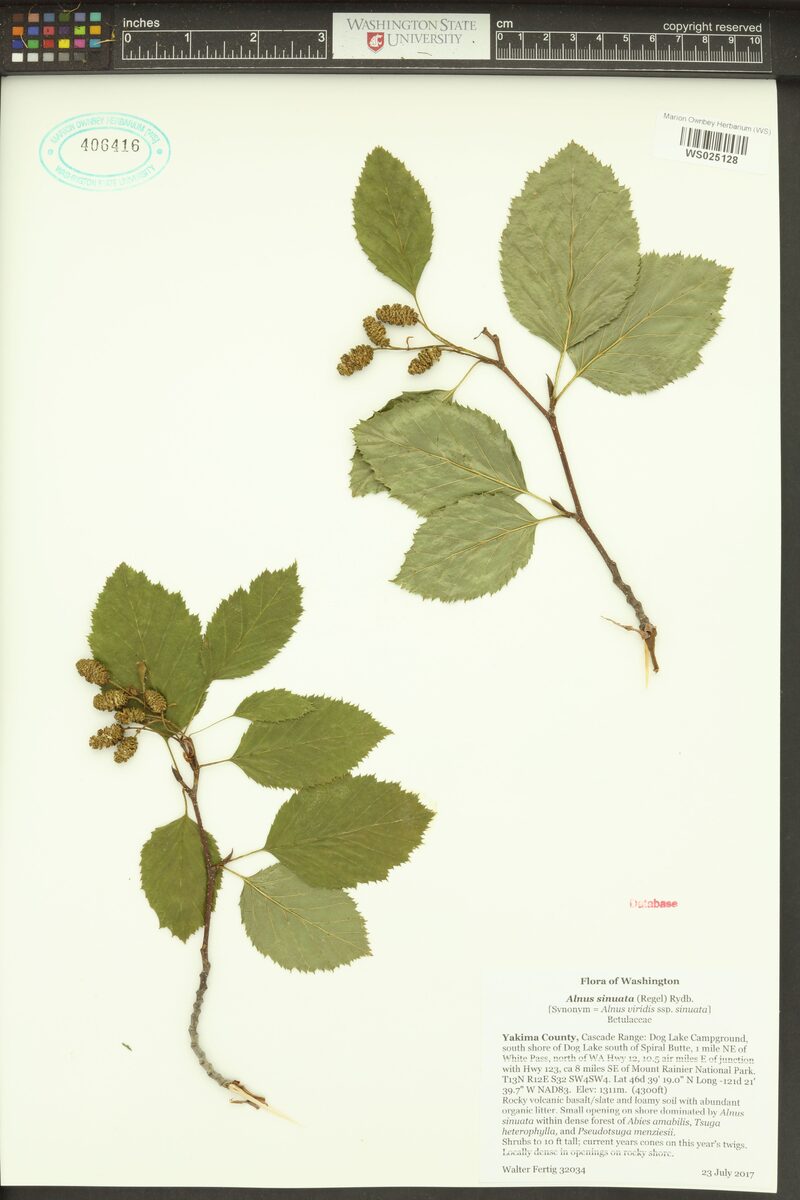
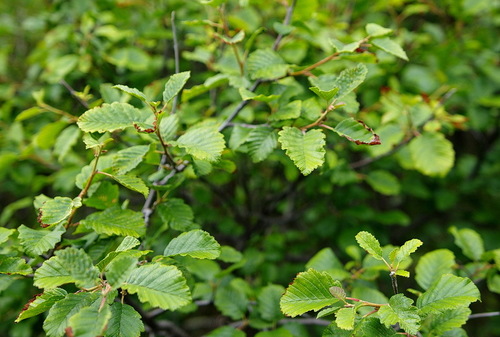
A deciduous tree with a single trunk. It grows to 8-24 m high. It has a shallow spreading crown. The tree is normally a pyramid shape. The bark is grey and corky. The leaves are alternate and simple. They have large and small teeth along the edge. The leaves are dark green and 12 cm long by 10 cm across. They are heart shaped at the base. The leaf stalk is stout and hairy and reddish in colour. The flowers are yellow catkins. The female flowers are small and male flowers are long. Male are 7.5 cm long, yellow and drooping. Female ones are very small and red. The nuts project out the end of the green bract. The edges of the bract bend backwards. The nut is edible.
Edible Uses
The seed can be eaten raw or cooked and is rich in oil. Its flavour is as good as that of C. avellana, the common hazelnut. The seed ripens in mid to late autumn and will likely need protection from squirrels. Stored unshelled in a cool place, nuts keep for at least 12 months. An edible oil is also obtained from the seed.
Traditional Uses
The nuts are edible.
This uses section is brief — help expand it
Medicinal Uses
The seeds are tonic.
Known Hazards
None known
Distribution
It is a temperate plant. It is native to S.W. Asia and S.E. Europe. It will grow on many soils. It can stand hard frost when dormant. It does well when winters are cold and summers are hot. It is very drought resistant. It grows naturally in shady mountain forests. It can tolerate air pollution. In the Himalayas it grows between 1,600-3,300 m altitude. It suits hardiness zones 4-8. Arboretum Tasmania.
Where It Grows
Afghanistan, Albania, Armenia, Asia, Australia, Azerbaijan, Balkans, Bosnia, Britain, Bulgaria, Canada, Caucasus, China, Europe, Georgia, Germany, Greece, Himalayas, India, Iran, Italy, Macedonia, Mediterranean, Middle East, North America, Pakistan, Romania, Russia, Slovenia, Tasmania, Turkey*, Türkiye, USA, Yugoslavia,
Cultivation
An easily grown plant, it succeeds in most soils, but is in general more productive of seeds when grown on soils of moderate fertility. It does less well in rich heavy soils or poor ones. Does well in a loamy soil. Very suitable for an alkaline soil, but it dislikes very acid soils. Tolerates a pH in the range 5.3 to 7.3. Once established, this is a very drought resistant tree. It does not produce suckers. Plants are fairly wind tolerant. A very ornamental tree. Members of this genus bear transplanting well and can be easily moved even when relatively large. The Turkish hazel is occasionally cultivated for its edible seed. This species is also useful in hybridizing with C. avellana in order to develop superior fruiting cultivars. Corylus species are considered medium to fast-growing, reaching a height of about 3 to 6 meters (10 to 20 feet) within 5 to 10 years, depending on the specific variety and growing conditions. Hazelnuts are typically harvested in late summer to early autumn, when the nuts have matured and fallen from the trees. Hazels flower in late winter to early spring, with male catkins producing pollen before the female flowers emerge. Most Corylus species are not self-fertile and require cross-pollination from another variety to produce nuts. Corylus colurna is self-fertile.
Propagation
Seed is best sown as soon as it is harvested in autumn in a cold frame, germinating in late winter or spring. Stored seed should be pre-soaked in warm water for 48 hours, then given 2 weeks of warm stratification followed by 3–4 months of cold stratification; it germinates in 1–6 months at 20°C. When large enough to handle, prick seedlings out into individual pots and grow on in a cold frame or sheltered spot outdoors through their first winter, then plant out in late spring or early summer. Layering in autumn is easy and takes about 6 months.
Other Uses
Hazels work well in agroforestry systems as hedging, windbreaks, or for erosion control, and can be intercropped with other plants to benefit soil health and biodiversity. The wood is firm, durable, and moderately hard, and is used for furniture and turnery. An oil is obtained from the seed. Hazels produce wind-pollinated catkins that are not rich in nectar but do provide pollen that some insects utilise. The nuts are a valuable food source for birds, small mammals, and insects, and dense foliage provides shelter and nesting habitat, with leaf litter supporting a variety of organisms. Rough bark and dense foliage also offer overwintering sites for invertebrates.
Production
Budded trees produce nuts in 4-5 years.
Other Information
It is a cultivated plant.
Notes
There are about 15 Corylus species.
Synonyms
Also Known As
Bhotia badam, Bhutiabadam, Byzantine hazel, Cobnuts, Constantinople nut, Datvitkhila, Ge bija, Kapasi, Thangi, Trazel, Turkish filbert, Turkish nuts, Umi, Urni, Vilayati poo, Virin
References (29)
- Ambasta, S.P. (Ed.), 2000, The Useful Plants of India. CSIR India. p 142
- Bodkin, F., 1991, Encyclopedia Botanica. Cornstalk publishing, p 287
- Brouk, B., 1975, Plants Consumed by Man. Academic Press, London. p 217
- Bussman, R. W., et al, 2021, Unity in diversity—food plants and fungi of Sakartvelo (Republic of Georgia), Caucasus. Journal of Ethnobiology and Ethnomedicine (2021) 17:72 p 7
- Coombes, A.J., 2000, Trees. Dorling Kindersley Handbooks. p 127
Show all 29 references Hide references
- Cundall, P., (ed.), 2004, Gardening Australia: flora: the gardener's bible. ABC Books. p 422
- Dobriyal, M. J. R. & Dobriyal, R., 2014, Non Wood Forest Produce an Option for Ethnic Food and Nutritional Security in India. Int. J. of Usuf. Mngt. 15(1):17-37
- Etherington, K., & Imwold, D., (Eds), 2001, Botanica's Trees & Shrubs. The illustrated A-Z of over 8500 trees and shrubs. Random House, Australia. p 232
- Flora of Pakistan. www.eFloras.org
- Flowerdew, B., 2000, Complete Fruit Book. Kyle Cathie Ltd., London. p 198
- Harris, E & J., 1983, Field Guide to the Trees and Shrubs of Britain. Reader's Digest. p 69
- Hedrick, U.P., 1919, (Ed.), Sturtevant's edible plants of the world. p 220
- Heywood, V. H. & Zohary, D.,1995, A Catalogue of the Wild Relatives of Cultivated Plants Native to Europe. Flora Mediterranea 5 - 1995, p 383
- Hibbert, M., 2002, The Aussie Plant Finder 2002, Florilegium. p 74
- http://en.hortipedia.com
- Lyle, S., 2006, Discovering fruit and nuts. Land Links. p 157
- Negi, P. S. & Subramani, S. P., 2015, Wild Edible Plant Genetic Resources for Sustainable Food Security and Livelihood of Kinnaur District, Himachal Pradesh, India, International Journal of Conservation Science. 6 (4): 657-668
- Plants for a Future, The Field, Penpol, Lostwithiel, Cornwall, PL22 0NG, UK. http://www.scs.leeds.ac.uk/pfaf/
- Postman, J. D., et al, 2012, Recent NPGS Coordinated Expeditions in the Trans-Caucasus Region to Collect Wild Relatives of Temperate Fruit and Nut Crops. In Acta Horticulturae Number 948 p 191-198
- Redzic, S. J., 2006, Wild Edible Plants and their Traditional Use in the Human Nutrition in Bosnia-Herzegovina. Ecology of Food and Nutrition, 45:189-232
- Sfikas, G., 1984, Trees and shrubs of Greece. Efstathiadis Group. Athens. p 134
- Singh, H.B., Arora R.K.,1978, Wild edible Plants of India. Indian Council of Agricultural Research, New Delhi. p 81
- Small, E., 2009, Top 100 Food Plants. The world's most important culinary crops. NRC Research Press. p 264
- USDA, ARS, National Genetic Resources Program. Germplasm Resources Information Network - (GRIN). [Online Database] National Germplasm Resources Laboratory, Beltsville, Maryland. Available: www.ars-grin.gov/cgi-bin/npgs/html/econ.pl (10 April 2000)
- van Wyk, B., 2005, Food Plants of the World. An illustrated guide. Timber press. p 153
- Wickens, G.E., 1995, Edible Nuts. FAO Non-wood forest products. FAO, Rome. p 118
- Wiersema, J. H. & Leon, B., 2013, World Economic Plants. A Standard Reference CRC Press. 2nd Ed. p 203
- World Checklist of Useful Plant Species 2020. Royal Botanic Gardens, Kew
- Zeven, A. C. & de West, J. M. J., 1982, Dictionary of cultivated plants and their regions of diversity. Wageningen. p 89