Commiphora caerulea
B. D. Burtt
Blue-bark commiphora
iNaturalist· cc-by-nc
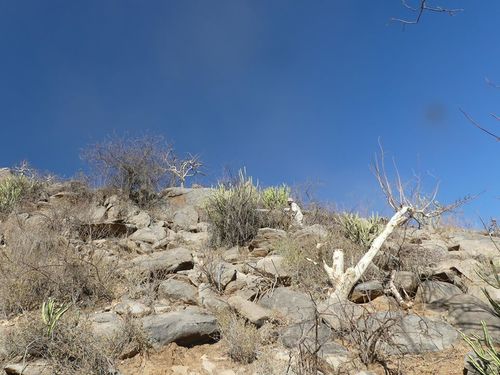
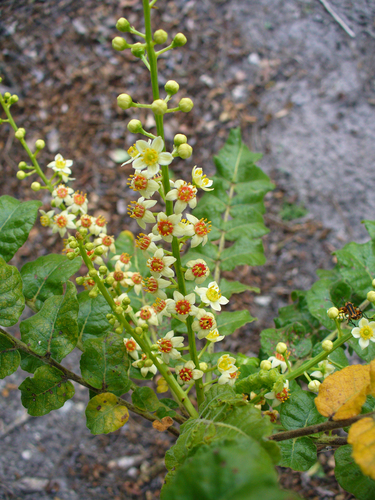
(c) BenJee, some rights reserved (CC BY-NC), uploaded by BenJee
iNaturalist· cc-by-nc
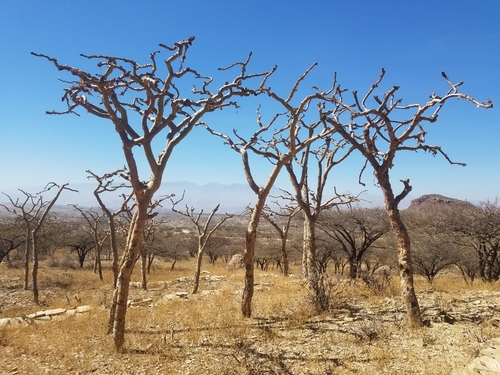
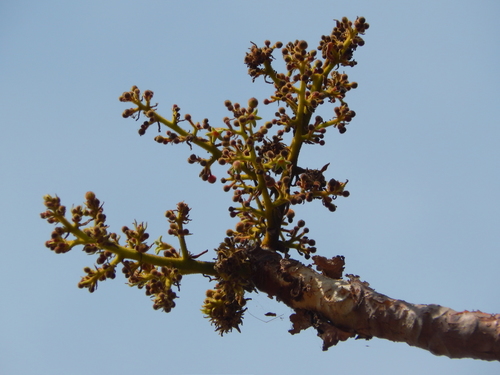
(c) Erwin Sieben, some rights reserved (CC BY-NC)
Description
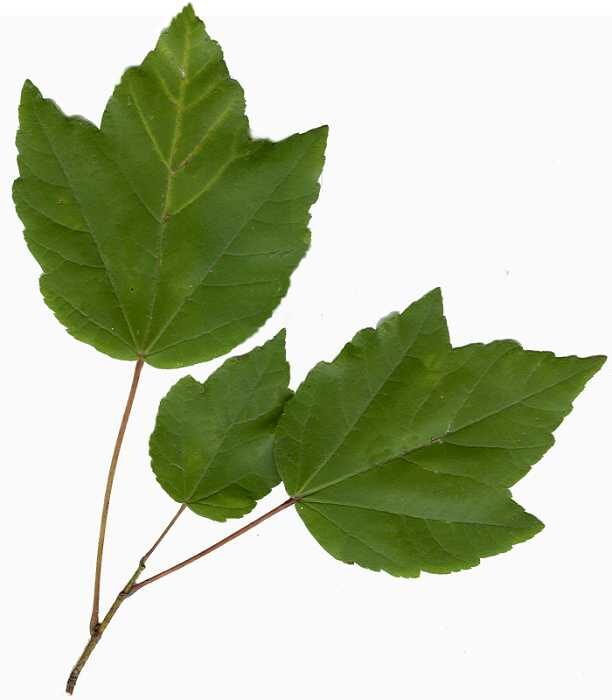
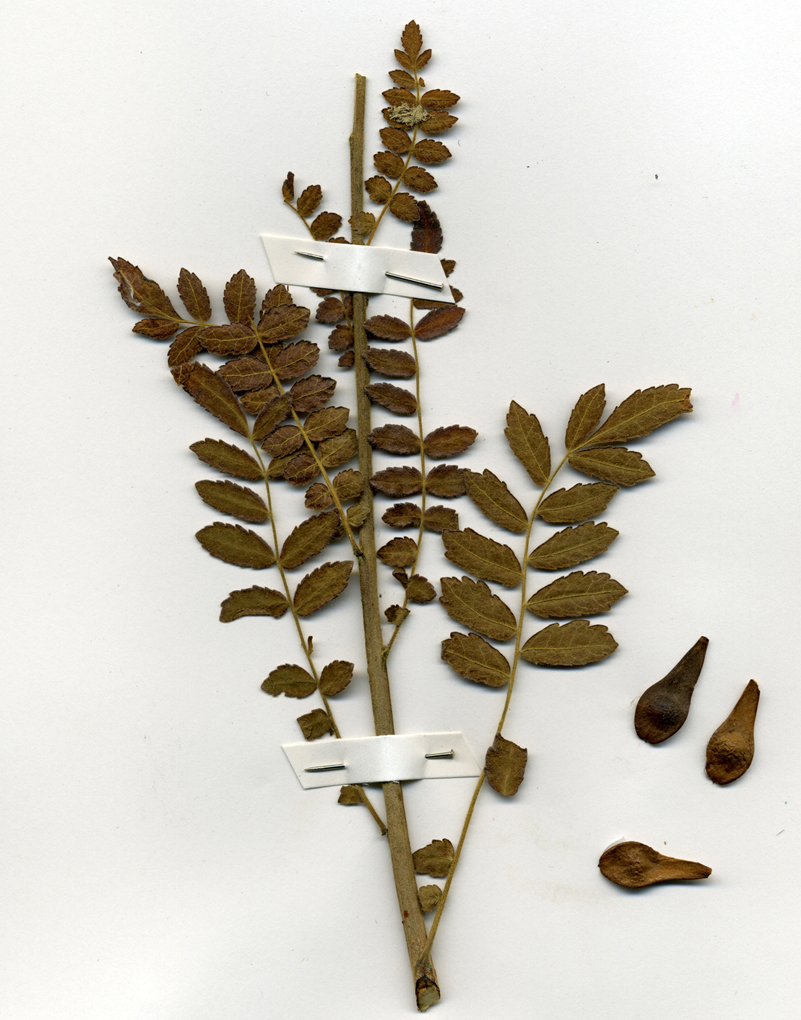
A deciduous tree. It has clean stems. It grows up to 13 m high. The bark is smooth and succulent and blue in colour. The leaves have 3 leaflets or there are 2 pairs of leaflets and one at the end. The leaflets are oblong and 8 cm long by 4.7 cm wide. The edges of the leaves are wavy or toothed. The flowers are small and greenish-yellow. They occur either singly or in small clusters. The fruit are almost round and 1.5 cm across. It has a thin layer of pulp.
Edible Uses
The young roots are chewed for their juices.
Traditional Uses
The young roots are chewed for juices.
This uses section is brief — help expand it
Distribution
A tropical plant. It grows on thicketed ravines and rocky hill slopes.
Where It Grows
Africa, East Africa, Malawi, Mozambique, Southern Africa, Tanzania, Zimbabwe,
Notes
There are about 165 Commiphora species.
Also Known As
Wému
References (5)
- Exell, A.W. et al, (Ed), 1963, Flora Zambesiaca Vol 2 Part 1 Crown Agents, London. p 281
- Lim, T. K., 2015, Edible Medicinal and Non Medicinal Plants. Volume 9, Modified Stems, Roots, Bulbs. Springer p 26
- NEWMAN, 1970,
- Palgrave, K.C., 1996, Trees of Southern Africa. Struik Publishers. p 359
- Peters, C. R., O'Brien, E. M., and Drummond, R.B., 1992, Edible Wild plants of Sub-saharan Africa. Kew. p 72