Cochlospermum gillivraei
Benth.
Kapok bush, False Kapok, Wild Cotton
iNaturalist· cc-by-nc-sa
(c) Patrick Keogh, some rights reserved (CC BY-NC-SA)
iNaturalist· cc-by-nc
(c) Russell Cumming, some rights reserved (CC BY-NC), uploaded by Russell Cumming
iNaturalist· cc-by-nc
(c) Ed Parker, some rights reserved (CC BY-NC), uploaded by Ed Parker
Summary
Source: WikipediaCochlospermum gillivraei is a tree in the family Bixaceae, with the common name kapok. It is native to Northern Australia.
Description
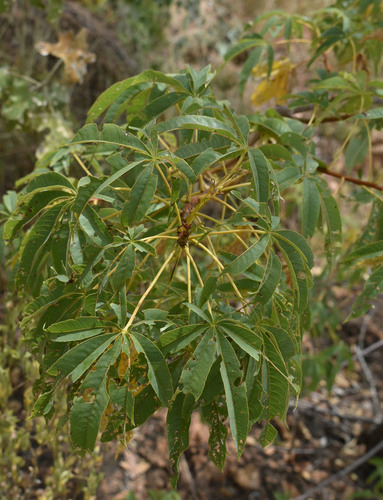
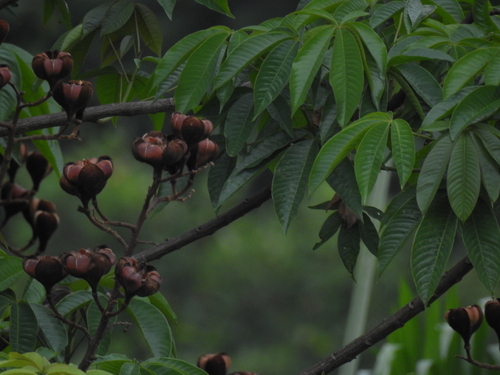
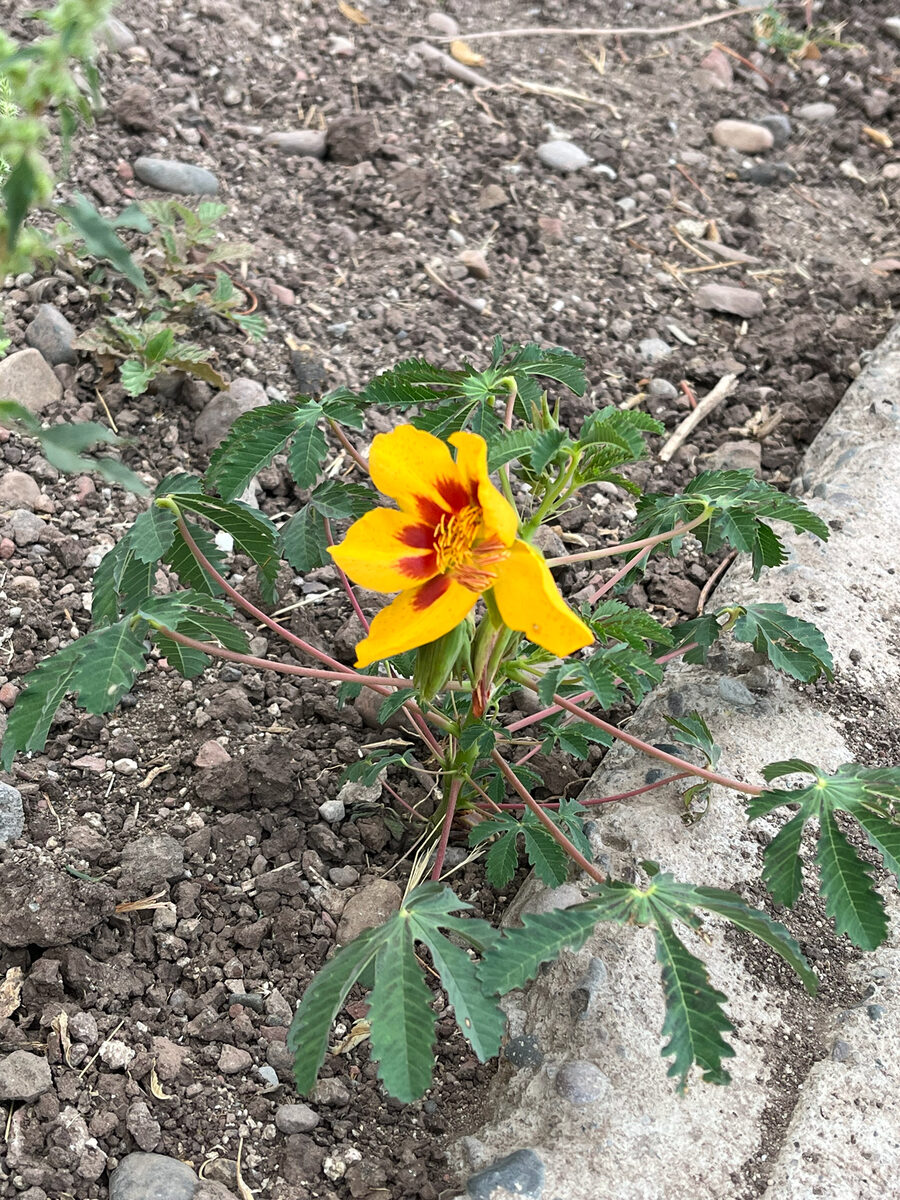
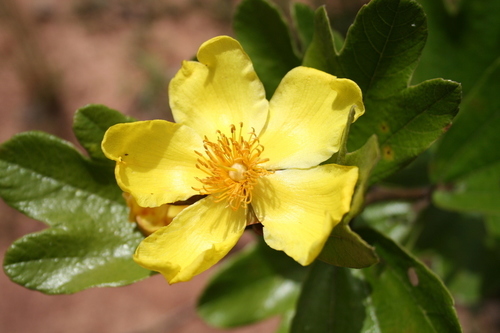
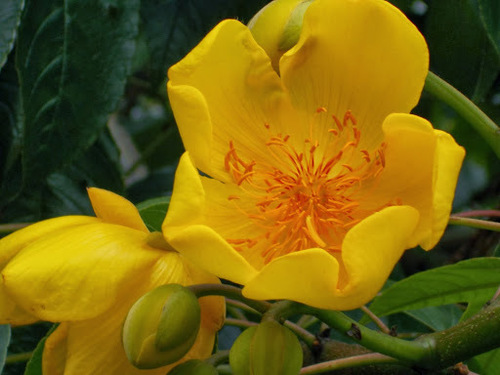
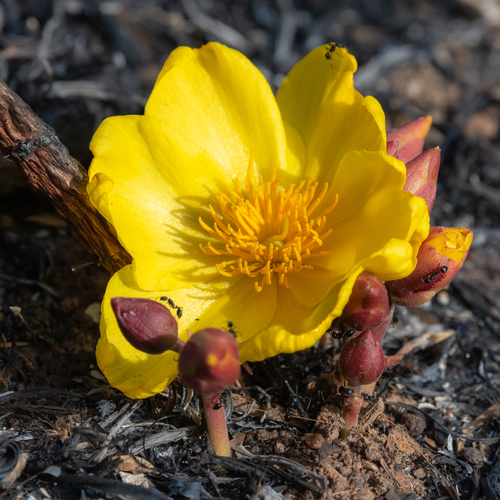
A tree 3-10 m high. It loses its leaves during the year. It can be without leaves for several months during the dry season. The leaves are deeply lobed. There are 5-7 oval lobes. The leaves are dark green and smooth. They are 5-7 cm long by 8-10 cm wide. The flowers are bright yellow. They appear before the new leaves. They have 5 open petals. Flowers are about 10 cm across. They occur in groups at the ends of small branches. The fruit is a capsule which is oval and 8 cm long. It splits open when ripe to release black seeds.
Edible Uses
The flower petals are eaten raw, and the tap roots of young plants are roasted and eaten.
Traditional Uses
The flower petals are eaten raw. The tap roots of young plants are roasted and eaten.
This uses section is brief — help expand it
Distribution
A tropical plant. It suits tropical, subtropical and warm temperate locations. It grows in stony places in drier regions. It needs well-drained soil and a sunny position. In north Queensland it grows from sea level to 600 m altitude. It is damaged by frost or drought.
Where It Grows
Australia*, Papua New Guinea, PNG,
Cultivation
Plants are grown from seed. Seeds take up to 3 months to germinate. The seeds are separated from the woolly fibres and soaked for 24 hours before sowing.
Notes
There are about 20 Cochlospermum species. Also put in the family Cochlospermaceae.
Nutrition
| Part | Moisture | kJ | kcal | Protein | Vit A | Vit C | Iron | Zinc |
|---|---|---|---|---|---|---|---|---|
| Root | 81.2 | — | — | 3.5 | — | 6 | — | — |
Synonyms
References (18)
- Barwick, M., 2004, Tropical and Subtropical Trees. A Worldwide Encyclopedic Guide. Thames and Hudson p 124
- Bodkin, F., 1991, Encyclopedia Botanica. Cornstalk publishing, p 269
- Calvert, G., 2010, The Burdekin Delta Tree Guide. Lower Burdekin Landcare Association., Inc., Ayr p 57
- Cherikoff V. & Isaacs, J., The Bush Food Handbook. How to gather, grow, process and cook Australian Wild Foods. Ti Tree Press, Australia p 198
- Cooper, W. and Cooper, W., 2004, Fruits of the Australian Tropical Rainforest. Nokomis Editions, Victoria, Australia. p 91
Show all 18 references Hide references
- Croft, J.R., in Henty, E.E., (Ed.), 1981, Handbooks of the Flora of Papua New Guinea, Melbourne University Press, p 28
- Cronin, L., 1989, The Concise Australian Flora. Reed. p 168
- Elliot, W.R., & Jones, D.L., 1984, Encyclopedia of Australian Plants suitable for cultivation. Vol 3. Lothian. p 54
- Fl. austral. 1:106. 1863
- Flora of Australia, Volume 8, Lecythidales to Batales, Australian Government Publishing Service, Canberra (1982) p 86
- Hinton, B & B., 1982, A Wilderness in Bloom. Wildflowers of tropical Australia. p 26
- Jones D, L, 1986, Ornamental Rainforest Plants in Australia, Reed Books, p 208
- Lazarides, M. & Hince, B., 1993, Handbook of Economic Plants of Australia, CSIRO. p 62
- Low, T., 1991, Wild Food Plants of Australia. Australian Nature FieldGuide, Angus & Robertson. p 145
- Scarth-Johnson, V., 2000, National Treasures. Flowering Plants of Cooktown and Northern Australia. Vera Scarth-Johnson Gallery Association. Cooktown, Australia. p 78
- Tiwi Plants and Animals. 2001, Aboriginal flora and fauna knowledge from Bathurst and Melville Islands, northern Australia. Northern Territory Botanical Bulletin; No. 24 p 40
- Townsend, K., 1994, Across the Top. Gardening with Australian Plants in the tropics. Society for Growing Australian Plants, Townsville Branch Inc. p 137
- Townsend, K., 1999, Field Guide to Plants of the Dry Tropics. Society for Growing Australian Plants, Townsville Branch Inc. p 35