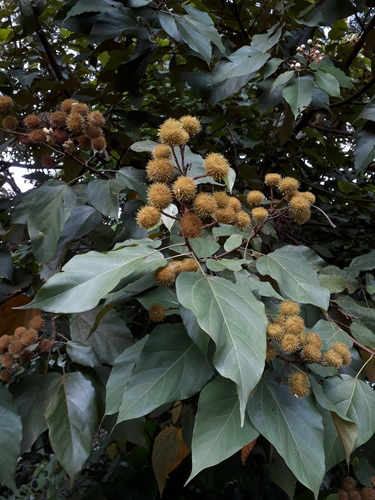
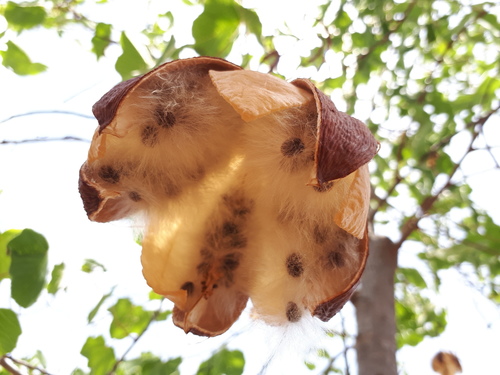
Cochlospermum palmatifidum - (DC.) Byng & Christenh.
(DC.) Byng & Christenh.
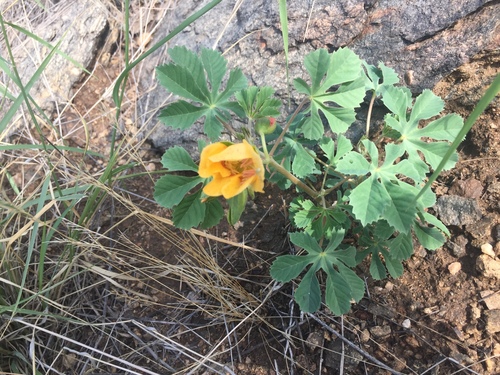
Arizona Yellowshow
gbif· cc-by-nc
krystellls
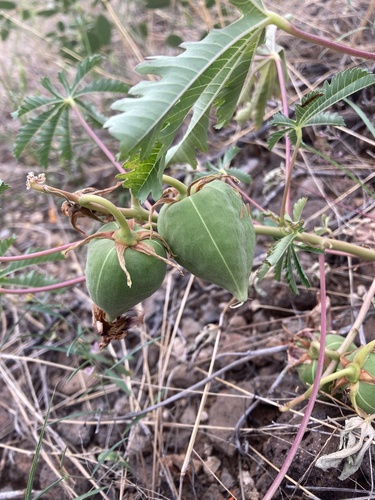
gbif· cc-by-nc
krystellls
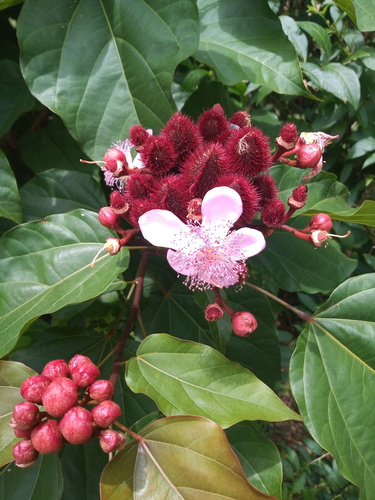
gbif· cc-by
Rodrigo Osvaldo Borbon Vázquez
Description
Cochlospermum palmatifidum is a PERENNIAL growing to 0.6 m (2ft) by 0.8 m (2ft 7in) at a medium rate. See above for USDA hardiness. It is hardy to UK zone 9 and is not frost tender. The flowers are pollinated by Bees, Insects. It is noted for attracting wildlife. Suitable for: light (sandy) and medium (loamy) soils, prefers well-drained soil and can grow in nutritionally poor soil. Suitable pH: mildly acid, neutral and basic (mildly alkaline) soils. It cannot grow in the shade. It prefers dry or moist soil and can tolerate drought.
Edible Uses
Arizona yellowshow is a traditional food plant of the Seri and other native peoples of northwestern Mexico. Almost every part of the plant can be used, including the roots, leaves, flowers, immature fruits, and seeds. The roots are the most important edible part, forming a substantial and reliable food source. They are thick, white, and covered with thin, weakly attached brown skins. Their flavor is mild and pleasantly earthy, reminiscent of parsnips with a unique yellow show character. The roots are fully chewable, even when older, and produce a sweet, aromatic broth when simmered, making them ideal for soups or stews. Roots can be gathered any time the aboveground parts are visible, from early summer to late autumn. The leaves can be eaten fresh, but are better cooked as potherbs. They have a spinach-like taste with a slightly mucilaginous texture, which becomes more appealing when boiled. The cooking water produces a thick, mildly flavorful broth. Leafstalks and stems are tough and fibrous, but the blades are tender and easily chewable. Leaves appear early in summer after rains and persist into late autumn. The flowers are among the best-tasting parts of the plant. Bright orange-yellow, they add color and a touch of sweetness to salads. Unlike the leaves, they are low in mucilage and free of harsh flavors. Blooming mainly between July and September, the flowers close by midday to avoid heat damage. The fruits are hollow, balloon-like capsules. Young fruits, gathered before drying, have a mild flavor reminiscent of green beans with a fruity, incense-like accent. They are best used in stir-fries or as a cooked vegetable. Mature fruits become papery and are suitable only for seed harvest. The seeds are initially white and tender but become reddish- to blackish-brown and shiny as they mature in autumn. While the seeds were not sampled directly for this reference, they were used traditionally as food. Care should be taken not to confuse the elongated seeds of A. palmatifida with the spherical seeds of Amoreuxia gonzalezii (Santa Rita yellowshow), which should not be harvested. Edibility Rating: 4/5 – A versatile desert wild food, with particularly valuable roots and flowers, though the plant is uncommon in the U.S. and more significant in Mexico.
Known Hazards
Care should be taken not to confuse the elongated seeds of A. palmatifida with the spherical seeds of Amoreuxia gonzalezii (Santa Rita yellowshow), which should not be harvested.
Distribution
Found primarily in northwestern Mexico and barely extending into southern Arizona.
Where It Grows
Arizona, Colombia, Costa Rica, El Salvador, Guatemala, Honduras, Mexico Central, Mexico Gulf, Mexico Northeast, Mexico Northwest, Mexico Southeast, Mexico Southwest, New Mexico, Nicaragua
Cultivation
Cochlospermum palmatifidum (Mexican yellowshow; often treated in Cochlospermum or closely allied) grows as a herbaceous perennial from a tuberous root, usually about 30–80 cm tall with a similar or slightly greater spread when established; foliage dies back in winter and returns with warmth and rain. Its large, bright yellow flowers are adapted for insect pollination, especially native bees: they’re showy, open, and nectar/pollen rich, and are visited by medium to large bees (and sometimes other insects) which act as the primary pollinators rather than wind. Growing Conditions: Sun: Requires full sun. Soil: Prefers sandy or rocky soils with good drainage. Moisture: Drought-adapted; emerges after summer rains and thrives with seasonal moisture. Growth Habit: Herbaceous perennial arising from large underground roots; aboveground growth is seasonal. Habitat: Found primarily in northwestern Mexico and barely extending into southern Arizona. Common in sandy soils, washes, and desert slopes. Growth is strongly tied to the summer monsoon cycle.
Propagation
Seed.
Synonyms
Also Known As
Arizona yellowshow, Mexican yellowshow, saiya, or zaya (Amoreuxia palmatifida Moc. & Sessé ex DC.).