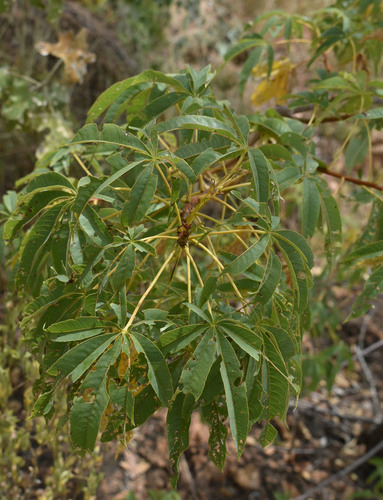
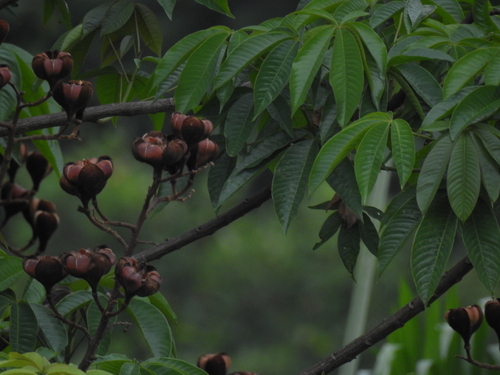
Cochlospermum planchonii
Hook. f. ex Planch.
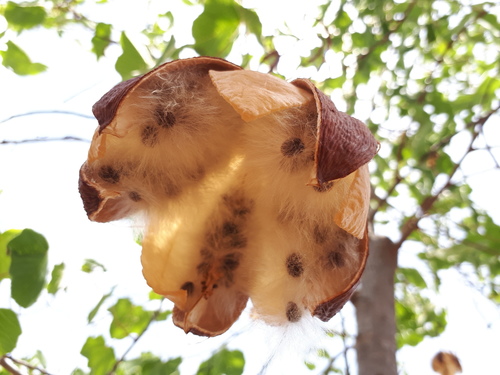
iNaturalist· cc-by-nc-sa
(c) Marco Schmidt, some rights reserved (CC BY-NC-SA)
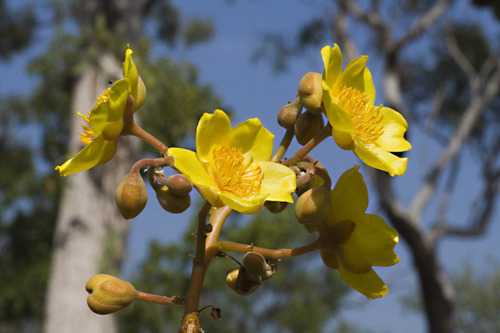
iNaturalist· cc-by-nc
(c) AMADOU BAHLEMAN FARID, some rights reserved (CC BY-NC)
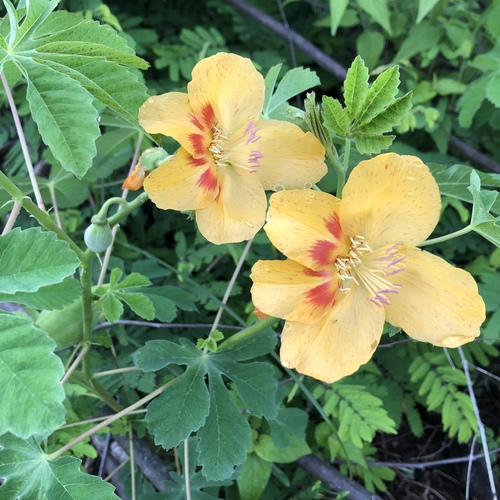
iNaturalist· cc-by-nc
(c) AMADOU BAHLEMAN FARID, some rights reserved (CC BY-NC)
Description
A small tropical shrub reaching up to 2.5 m tall, found in wooded grassland and savannah environments. It grows in both well-watered and arid conditions.
Edible Uses
The roots are eaten and added to soups, used for coloring dairy-like preparations, and serve as an oil substitute. Fruits are also edible.
Traditional Uses
The roots are eaten and added to soups. They are used for colouring and dairy-like preparations. It is a substitute for oil.
This uses section is brief — help expand it
Medicinal Uses
A root-decoction is drunk as a treatment for gonorrhoea. The plant (?root) is used as an anti-venom. The leaves are used as a treatment against dysentery. An extract of the plant (part not stated) is said to control menstruation.
Distribution
A tropical plant. It grows in wooded grassland and savannah. It can grow in arid places.
Where It Grows
Africa, Benin, Burkina Faso, Cameroon, Central Africa, Côte d'Ivoire, Ghana, Guinea, Guinée, Guinea-Bissau, Ivory Coast, Nigeria, Senegal, Sierra Leone, West Africa,
Propagation
Seed - Division of rhizomes?
Other Uses
The roots are the source of a yellow dye. Indigo is sometimes added in order to obtain green shades. The stem-bark yields a fibre which is used for making string and rope. The seeds are threaded and used as beads.
Notes
There are about 20 Cochlospermum species. Also put in the family Cochlospermaceae.
Also Known As
Abololodji, Bundola, Djandere, Mezinho-grande, N'dribala, Omronlugboko
References (9)
- Achigan-Dako, E, et al (Eds), 2009, Catalogue of Traditional Vegetables in Benin. International Foundation for Science.
- Dansi, A., et al, 2008, Traditional leafy vegetables and their use in the Benin Republic. Genet Resour Crop Evol (2008) 55:1239–1256
- Food Composition Tables for use in Africa FAO http://www.fao.org/infoods/directory No. 788
- Jardin, C., 1970, List of Foods Used In Africa, FAO Nutrition Information Document Series No 2.p 68
- Roger, D. D., et al, 2012, Nutritional properties of “Bush Meals” from North Cameroon’s Biodiversity. Advances in Applied Science Research, 2012, 3 (3):1482-1493
Show all 9 references Hide references
- Royal Botanic Gardens, Kew (1999). Survey of Economic Plants for Arid and Semi-Arid Lands (SEPASAL) database. Published on the Internet; http://www.rbgkew.org.uk/ceb/sepasal/internet [Accessed 10th April 2011]
- Segnon, A. C. and Achigan-Dako, E. G., 2014, Comparative analysis of diversity and utilization of edible plants in arid and semi-arid areas in Benin. Journal of Ethnobiology and Ethnomedicine. 10:80
- Vivien, J., & Faure, J.J., 1996, Fruitiers Sauvages d'Afrique. Especes du Cameroun. CTA p 133
- World Checklist of Useful Plant Species 2020. Royal Botanic Gardens, Kew