Citrus x jambhiri
Lush.
Citronelle, Rough Lemon
iNaturalist· cc-by-nc
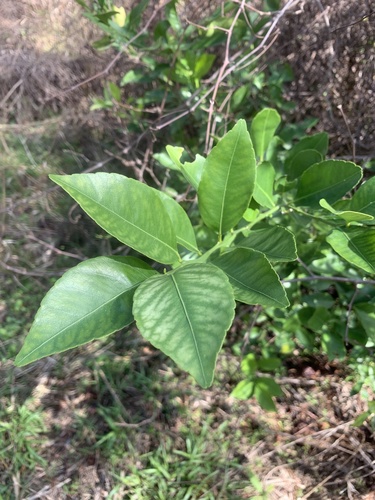
(c) Matt Reala, some rights reserved (CC BY-NC)
iNaturalist· cc-by-nc
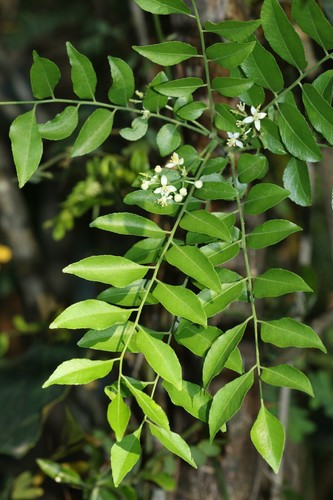
(c) Ricky Taylor, some rights reserved (CC BY-NC)
iNaturalist· cc-by-nc
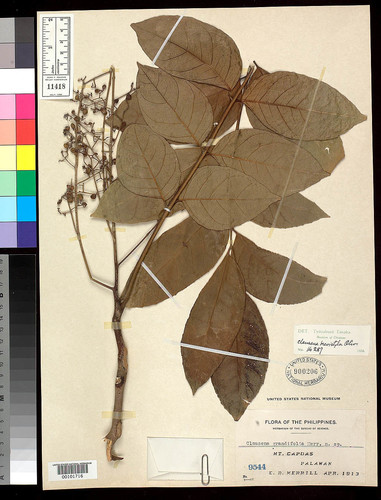
(c) Ricky Taylor, some rights reserved (CC BY-NC)
Description
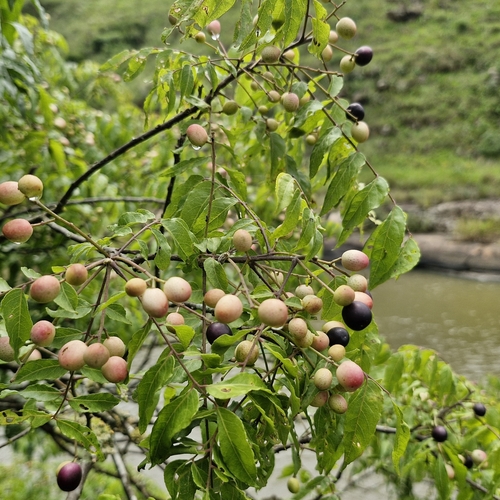
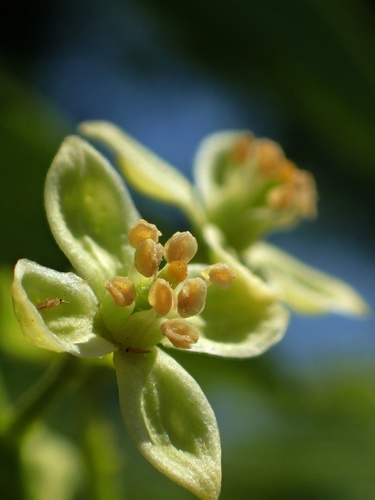
It is probably a hybrid between lemon and citron. A small tree. It grows 5 m high. The branches have stiff, stout spines. These can be 2 cm long. The leaves have a lemon scent. The leaf stalk is 3-10 mm long. It has a slight channel but no wings. The leaf blade is narrowly oval and 7-11 cm long by 3.5-6 cm wide. There are teeth around the edge. The flowers can be clustered or occur singly. The sepals are 1-1.5 mm long and the petals 1.5 cm long. They are white. The fruit is almost round or oval and 10 cm long. It is yellow. It has a thick, rough skin with gland dots on it. There is a cone shaped lump at the end.
Edible Uses
The thick rind is used for making jams and flavoring, while the fruit is occasionally eaten fresh. Young fruits are pickled.
Traditional Uses
The skin or rind is used for making jams and for flavouring. The fruit is occasionally eaten. The young fruit are used for pickles.
This uses section is brief — help expand it
Known Hazards
None mentioned in available data.
Distribution
It is a tropical and subtropical plant. It suits hardiness zones 9-12. It is cold hardy and will grow on clay soils.
Where It Grows
Asia, Australia, Bangladesh, Hawaii, India, Norfolk Island, Northeastern India, South America, Suriname, USA,
Cultivation
It is often grown from seeds.
Notes
There are 20 Citrus species. Several hybrids have been formed. This is probably a hybrid between Citrus medica and Citrus reticulata. The name is probably Citrus x jambhiri.
Also Known As
Bush lemon, Citrinolle, Jambhiri, Jamburi, Jatti khatti, Khatti, Mazoe lemon, Ramser, Ser, Rough lemmon, Shohmyndong, Thaisa maikhri, Wild lemon
References (13)
- Etherington, K., & Imwold, D., (Eds), 2001, Botanica's Trees & Shrubs. The illustrated A-Z of over 8500 trees and shrubs. Random House, Australia. p 215
- Facciola, S., 1998, Cornucopia 2: a Source Book of Edible Plants. Kampong Publications, p 215
- Flora of Australia Volume 49, Oceanic Islands 1, Australian Government Publishing Service, Canberra. (1994) p 253
- Hibbert, M., 2002, The Aussie Plant Finder 2002, Florilegium. p 67
- Indian Forester 36:342. 1910
Show all 13 references Hide references
- Kar, A., et al, 2013, Wild Edible Plant Resources used by the Mizos of Mizoram, India. Kathmandu University Journal of Science, Engineering and Technology. Vol. 9, No. 1, July, 2013, 106-126
- Lazarides, M. & Hince, B., 1993, Handbook of Economic Plants of Australia, CSIRO. p 61
- Lyle, S., 2006, Discovering fruit and nuts. Land Links. p 134
- Medhi, P. & Borthakur, S. K., 2012, Phytoresources from North Cachur Hills of Assam -3: Edible plants sold at Hflong market. Indian Journal of Natural Products and Resources. 3(1) pp 84-109
- Medhi, P., Sarma, A and Borthakur, S. K., 2014, Wild edible plants from the Dima Hasao district of Assam, India. Pleione 8(1): 133-148
- Morton, J., 1987, Fruits of Warm Climates.
- Partha, P., 2014, Ethnobotany of the Laleng (Patra) Community in Bangladesh. Journal of Pharmacognosy and Phytochemistry. 2(6):173-184
- Sharma, B.B., 2005, Growing fruits and vegetables. Publications Division. Ministry of Information and broadcasting. India. p 37