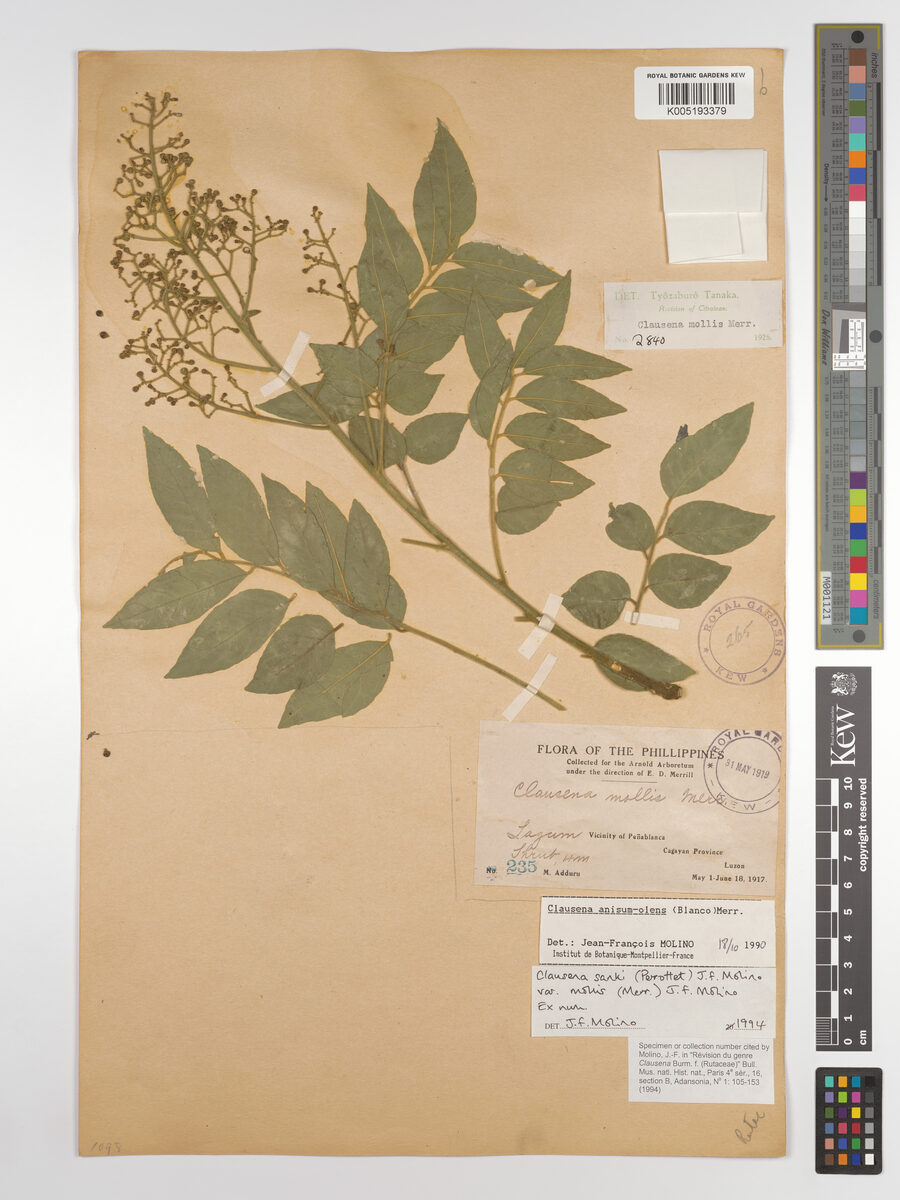
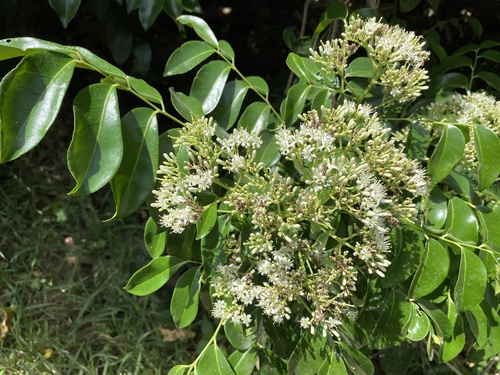
Ruta chalepensis
L.
Mediterranean Aleppo rue
iNaturalist· cc0
no rights reserved, uploaded by Mattia Aaron Miroddi
iNaturalist· cc-by
(c) zebedeugalinha, some rights reserved (CC BY)
Summary
Source: WikipediaRuta chalepensis is a species of flowering plant in the Rutaceae family known by the common name fringed rue. It is native to the Mediterranean and is found elsewhere as an introduced species. It is a perennial herb growing up to 80 centimeters tall. The leaves are compound, each divided into several segments which are subdivided into smaller leaflets. The inflorescence is a cluster of flowers, each with four or five bright yellow petals with rolled, fringed edges. The fruit is a textured capsule which is divided into pointed lobes. In traditional herbal medicine, the plant is used as for a number of ailments, such as fever and inflammation. R. chalepensis is the original source of the chemical compound chalepensin.
Description
It is like rue, Ruta graveolens, but is a more green and lax plant. It grows 70 cm tall. The flowers are smaller and the petals are bright yellow. They have a fringe of long hairs. The capsule has pointed lobes.
Edible Uses
The leaves are used as a condiment.
Traditional Uses
The aerial parts are used to flavour liqueurs. The leaves are used to flavour salads and stews. They are added to lamb and beef sausages. They are also used in omelettes. The leaves are used for herbal tea.
Medicinal Uses
The plant is abortifacient, anthelmintic, emmenagogue, and ophthalmic. A decoction has been used in the treatment of paralysis, coughs, and stomach aches. Heated leaves have been placed inside the ear to treat earache.
Distribution
It is a Mediterranean climate plant. It grows in dry rocky places. In Argentina it grows from sea level to 1,200 m above sea level.
Where It Grows
Africa, Andorra, Argentina, Asia, Chile, Cuba, Dominican Republic, Egypt, Europe*, Haiti, India, Italy, Jordan, Mediterranean, Middle East, North Africa, Palestine, Sao Tome and Principe, South America, Spain, Syria, Tunisia, Uruguay, West Indies,
Cultivation
Succeeds in any good open soil. This species is not hardy in the colder areas of the country, it tolerates temperatures down to between -5 and -10°c. The bruised foliage releases a somewhat foetid smell like wet fur, but with slightly sweeter undertones. Sold in local markets. This report probably refers to its use as a medicinal plant. Plants in this genus are notably resistant to honey fungus.
Propagation
Sow seed in spring in a greenhouse. Prick seedlings out into individual pots once large enough to handle and grow on in the greenhouse through at least their first winter. Plant out into permanent positions in late spring or early summer after the last expected frosts. Take cuttings of half-ripe wood in July or August in a frame.
Other Uses
An essential oil obtained from the leaves is used in perfumery and as a food flavouring.
Other Information
It is cultivated.
Notes
There are 8 Ruta species. It is used in medicine.
Synonyms
Also Known As
Arudu, Aruvadam, Arvada, Chedi, Egyptian rue, Ermul, Faijen, Fringed rue, Ispunol, Naga dali soppu, Nagadhali, Pisarum, Ruda, Ruta, Sadab, Satapa, Satari, Serdapa, Simesdanu, Sithab
References (16)
- Ali-Shtayeh, M. S., et al, 2008, Traditional knowledge of wild edible plants used in Palestine (Northern West Bank): A comparative study. J Ethnobiol Ethnomed. 4: 13
- Al-Qura'n, S. A., 2010, Ethnobotanical and Ecological Studies of Wild Edible Plants in Jordan. Libyan Agriculture Research Center Journal International 1(4):231-243
- Ambasta S.P. (Ed.), 2000, The Useful Plants of India. CSIR India. p 536
- Blamey, M and Grey-Wilson, C., 2005, Wild flowers of the Mediterranean. A & C Black London. p 122
- Bonet, M. A. & Valles, J., 2002, Use of non-crop food vascular plants in Montseny biosphere reserve (Catalonia, Iberian Peninsula). International Journal of Food Sciences and Nutrition (2002) 53, 225–248
Show all 16 references Hide references
- Facciola, S., 1998, Cornucopia 2: a Source Book of Edible Plants. Kampong Publications, p 221
- Malezas Comestibles del Cono Sur, INTA, 2009, Buernos Aires
- Mant. pl. 1:69. 1767
- Oran, S. A. S., 2015, Selected Wild Aromatic Plants in Jordan. International Journal of Medicinal Plants. Photon 108 (2015) 686-699
- Pieroni, A., 1999, Gathered wild food plants in the Upper Valley of the Serchio River (Garfagnana), Central Italy. Economic Botany 53(3) pp 327-341
- Plants of Haiti Smithsonian Institute http://botany.si.edu/antilles/West Indies
- Rigat, M et al, 2009, Ethnobotany of Food Plants in the High River Ter Valley (Pyrenees, catalonia, Iberian Peninsula): Non-Crop Food Vascular Plants and Crop Food Plants with medicinal Properties. Ecology of Food and Nutrition, 48:303-327
- Tardio, J., et al, Ethnobotanical review of wild edible plants in Spain. Botanical J. Linnean Soc. 152 (2006), 27-71
- van Wyk, B., 2005, Food Plants of the World. An illustrated guide. Timber press. p 332
- World Checklist of Useful Plant Species 2020. Royal Botanic Gardens, Kew
- Zeven, A. C. & de West, J. M. J., 1982, Dictionary of cultivated plants and their regions of diversity. Wageningen. p 118