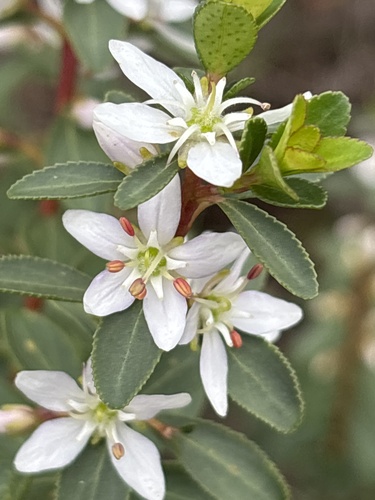
Ruta montana
(L.) L.
iNaturalist· cc-by
(c) zebedeugalinha, some rights reserved (CC BY)
iNaturalist· cc-by
(c) zebedeugalinha, some rights reserved (CC BY)
iNaturalist· cc-by-nc
(c) João Valença, some rights reserved (CC BY-NC)
Summary
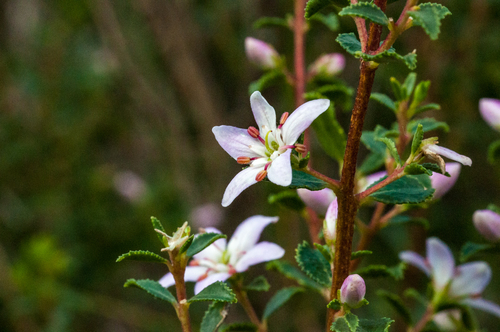
Ruta montana is a compact evergreen shrub reaching only 0.3 m (1 ft) in height, hardy to UK zone 7. Year-round foliage; hermaphrodite pollinated by insects. Tolerates light sandy, medium loamy, and heavy clay soils, preferring well-drained conditions and poor soils. Grows in semi-shade or full sun, adapting to dry or moist soil and drought.
Description
Ruta montana is a compact evergreen shrub reaching only 0.3 m (1 ft) in height, hardy to UK zone 7. Year-round foliage; hermaphrodite pollinated by insects. Tolerates light sandy, medium loamy, and heavy clay soils, preferring well-drained conditions and poor soils. Grows in semi-shade or full sun, adapting to dry or moist soil and drought.
Edible Uses
The leaves are used as a condiment.
Medicinal Uses
None known.
Distribution
It is a Mediterranean plant.
Where It Grows
Europe, Spain,
Propagation
Seed is best sown as soon as ripe in a cold frame, but can also be sown in early to mid spring in a cold frame. Prick seedlings out into individual pots once large enough to handle and grow on in the greenhouse through their first winter. Plant out into permanent positions in late spring or early summer after the last expected frosts. Take cuttings of young shoots in late spring, or half-ripe wood cuttings in July or August in a frame — both root very easily. Layering can be done in early summer; old plants often self-layer.
Other Uses
An essential oil from the leaves is used in perfumery and as a food flavouring.
Synonyms
Also Known As
Ruda
References (1)
- Blanco-Salas, J., et al, 2019, Wild Plants Potentially Used in Human Food in the Protected Area “Sierra Grande de Hornachos” of Extremadura (Spain). Sustainability 2019, 11, 456