Ruta graveolens
L.
Rue
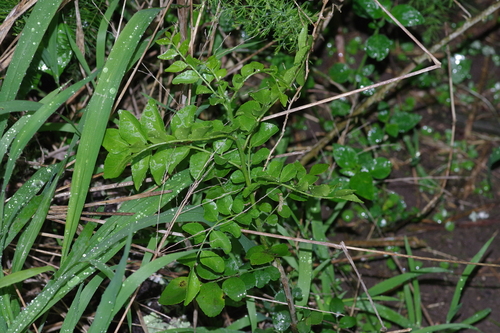
iNaturalist· cc-by-nc
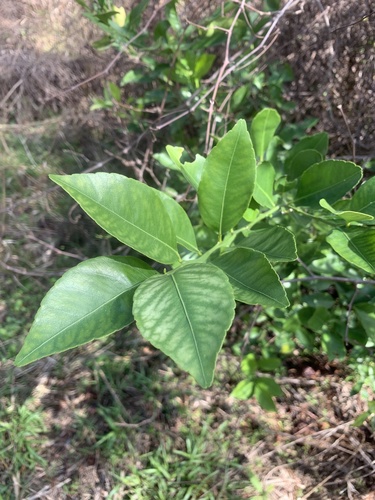
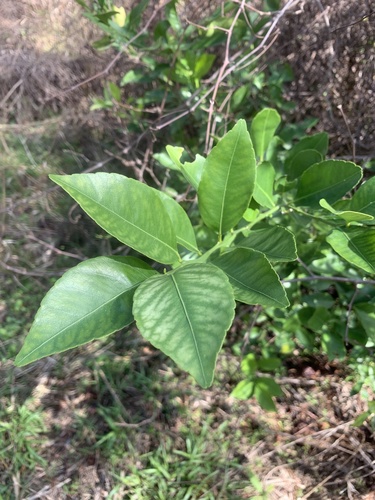
(c) owenmoorhead, some rights reserved (CC BY-NC), uploaded by owenmoorhead
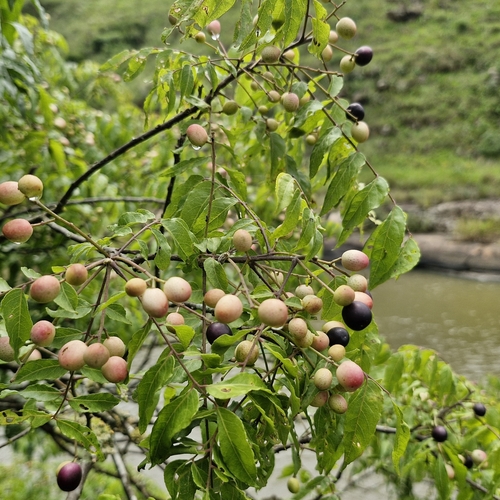
iNaturalist· cc-by-nc
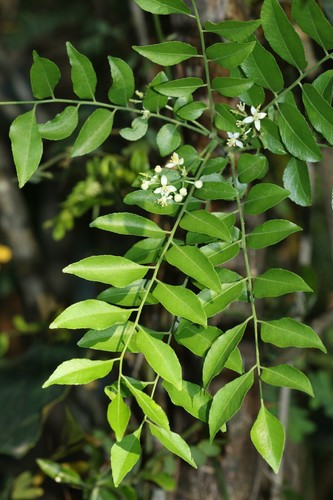
(c) Platon Kleanthidis, some rights reserved (CC BY-NC)
iNaturalist· cc-by-sa
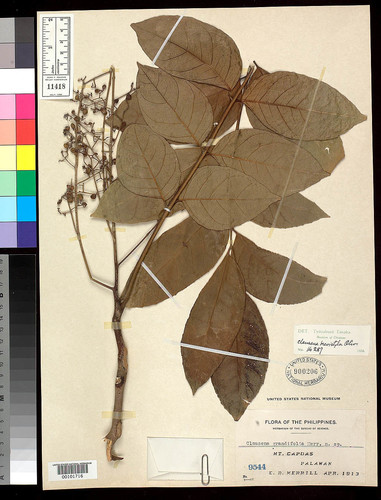
(c) Brian du Preez, some rights reserved (CC BY-SA), uploaded by Brian du Preez
Summary
Source: WikipediaRuta graveolens, commonly known as rue, common rue, ruda, arruda or herb-of-grace, is a species of the genus Ruta grown as an ornamental plant and herb. It is native to the Mediterranean. It is grown throughout the world in gardens, especially for its bluish leaves, and sometimes for its tolerance of hot and dry soil conditions. It is also cultivated as a culinary herb, and to a lesser extent as an insect repellent and incense.
Description
A small shrub. It keeps growing from year to year. It grows 60-90 cm high and 60-75 cm wide. The branches are woody. The stems and leaves are waxy. The leaves are blue-green. They are finely divided and the leaflets are rounded. They have wavy edges. They have a strong aroma. The flowers are greenish-yellow. There are 4-5 petals with hairy edges. The fruit are capsules with 4 lobes and glands dotted over them.
Edible Uses
The leaves can be eaten raw or used as a seasoning. Occasionally added to salads, the flavour is strong and bitter; the leaves are strongly aromatic and slightly toxic, so should only be used in small quantities. The leaves contain rutin, which has a beneficial effect on the circulatory system. They can also be brewed into a tea.
Traditional Uses
The leaves are bitter and pungent and used as a potherb. They are minced and used to flavour foods and pickled. It is used to flavour sausage meat and stuffings. They are brewed into tea. The seeds are used in the preparation of palm wine. They are used in spices. It is used in some drinks. It is used to flavour Italian brandy. CAUTION: It is poisonous in large doses. It can cause skin irritation in sensitive people.
Medicinal Uses
Rue has a long history as a domestic remedy, particularly valued for strengthening the eyes. It contains flavonoids, notably rutin, that reduce capillary fragility, which may account for this reputation. Large doses are toxic and the plant can cause miscarriages, so internal use requires caution. The whole herb is abortifacient, anthelmintic, antidote, antispasmodic, carminative, emetic, emmenagogue, expectorant, haemostatic, ophthalmic, rubefacient, strongly stimulant, mildly stomachic, and uterotonic. The tips of fresh shoots are the most medicinally active part; they should be gathered before flowering and can be used fresh or dried. An infusion is used for hysterical affections, coughs, and flatulence. The plant juice has been used for earache, and chewing a leaf or two is said to quickly relieve giddiness, nervous headaches, and palpitations. An alkaloid in the plant is abortifacient, anti-inflammatory, and antispasmodic. A homeopathic remedy is prepared from the fresh herb harvested in early summer just before flowering, and is used for eye strain, headache, and sprains.
Known Hazards
Rue is generally safe if consumed in small amounts as a herb to flavor food. Rue extracts are mutagenic and hepatotoxic. Large doses can cause violent gastric pain, vomiting, liver damage, and death. This is due to a variety of toxic compounds in the plant's sap. It is recommended to only use small amounts in food, and to not consume it excessively. It should be strictly avoided by pregnant women, as it can be an abortifacient and teratogen. Toxicity with large ingestions can cause multiorgan failure, significant electrolyte derangements and hemodynamic instability requiring hemodialysis. While the specific mechanism of toxicity isn't known, the coumarin-like chalepesin is suspected. Containing psoralen, a furanocoumarin that intercalates in the DNA of dermal cells, rue can cause photodermatitis of ultraviolet light-exposed skin. Thus exposure to common rue, or herbal preparations derived from it, can cause severe phytophotodermatitis, which results in burn-like blisters on the skin. The mechanism of action is currently unknown.
Distribution
A temperate plant. It is frost hardy. It suits hardiness zones 5-9. In Hobart Botanical gardens.
Where It Grows
Africa, Albania*, Algeria, Andorra, Asia, Australia, Austria, Balkans, Belgium, Bulgaria*, Britain, Canada, Canary Is., Central America, China, Czech Republic, Cuba, East Africa, Ecuador, Ethiopia, Europe, France, Germany, Greece, Guatemala, Hawaii, Hungary, India, Indonesia, Italy, Lithuania, Macedonia, Malaysia, Mediterranean, Mexico, Myanmar, Netherlands, North Africa, North America, Norway, Pacific, Paraguay, Romania, Scandinavia, SE Asia, Serbia, Singapore, Slovenia, South Africa, Southern Africa, South America, Spain, Switzerland, Tasmania, Turkey, Türkiye, Ukraine, USA, Venezuela, Vietnam, West Indies, West Timor, Yugoslavia,
Cultivation
Succeeds in any soil but is hardier in a poor dry soil. Prefers an open sunny position. Prefers a partially shaded sheltered dry position but succeeds in full sun. Prefers a well-drained or rocky soil. Likes some lime in the soil. Established plants are drought tolerant. Hardy to about -10°c, possibly to lower temperatures when it is grown in a dry soil. Often cultivated as a culinary and medicinal herb, there are some named varieties. The bruised leaves have a pleasant orange-like fragrance. It is one of the most pleasant herbs to inhale. Rue releases its scent in a remarkable way. The essential oil is contained in a cavity immediately beneath the surface of the leaf, above which is a thin layer of cells pierced by a cavity in the middle. The cells swell up and bend inwards, pressing on the essential oil beneath, which is driven to the surface of the leaf and there released. Rue is a poor companion plant for many other species, growing badly with sage, cabbage and sweet basil. It is a good companion for roses and raspberries. Plants in this genus are notably resistant to honey fungus. Rue leaves can be harvested throughout the growing season, but the best time is late spring to early summer, just before flowering. Rue typically flowers in late spring to early summer, usually between May and July (Northern Hemisphere). Rue is a relatively slow-growing plant, taking about 2 to 3 years to establish fully and reach maturity. Rue is generally self-fertile.
Propagation
Seed is best sown as soon as ripe in a cold frame, but can also be sown in early to mid spring in a cold frame. Prick seedlings out into individual pots once large enough to handle and grow on in the greenhouse through their first winter. Plant out in late spring or early summer after the last expected frosts. Take cuttings of young shoots in late spring, or half-ripe wood cuttings in July or August in a frame — both root very easily. Layering can be done in early summer; old plants often self-layer.
Other Uses
Rue can be used as a companion plant to repel pests through its strong scent, and is especially useful planted near roses and raspberries. The growing or dried plant deters insects, and the dried herb placed in a linen cupboard repels moths. The growing plant is also said to repel cats. A red dye is obtained from the plant. An essential oil from the leaves and young shoots is used in perfumery and as a food flavouring. The plant was formerly used as a strewing herb. For ground cover, plants can be set about 45cm apart each way and trimmed back in spring to keep them bushy. Rue flowers are rich in nectar and pollen, attracting bees and beneficial insects. Its structure can also provide shelter for invertebrates such as predatory wasps.
Other Information
It is cultivated.
Notes
There are 8 Ruta species. It is used in medicine. It is mentioned in the Bible.
Synonyms
Also Known As
Aruda, Chou cao, Duan aroda, Gaun inggu, Godong minggu, Herb of Grace, Ruda comun, Ruta, Sadal, Tena Adam, Thada-paha, Thaw-ma-le-ta, Vinska rutica, Weinraute
References (35)
- Ambasta S.P. (Ed.), 2000, The Useful Plants of India. CSIR India. p 536
- Bianchini, F., Corbetta, F., and Pistoia, M., 1975, Fruits of the Earth. Cassell. p 206
- Blamey, M and Grey-Wilson, C., 2005, Wild flowers of the Mediterranean. A & C Black London. p 122
- Bodkin, F., 1991, Encyclopedia Botanica. Cornstalk publishing, p 897
- Bonet, M. A. & Valles, J., 2002, Use of non-crop food vascular plants in Montseny biosphere reserve (Catalonia, Iberian Peninsula). International Journal of Food Sciences and Nutrition (2002) 53, 225–248
Show all 35 references Hide references
- Bremness, L., 1994, Herbs. Collins Eyewitness Handbooks. Harper Collins. p 124
- Brickell, C. (Ed.), 1999, The Royal Horticultural Society A-Z Encyclopedia of Garden Plants. Convent Garden Books. p 919
- Burnie, G & Fenton-Smith, J., 1999, A Grower's Guide to Herbs. Murdoch Books. p 60
- Cheifetz, A., (ed), 1999, 500 popular vegetables, herbs, fruits and nuts for Australian Gardeners. Random House p 153
- Cundall, P., (ed.), 2004, Gardening Australia: flora: the gardener's bible. ABC Books. p 1288
- Esperanca, M. J., 1988. Surviving in the wild. A glance at the wild plants and their uses. Vol. 2. p 186
- Facciola, S., 1998, Cornucopia 2: a Source Book of Edible Plants. Kampong Publications, p 221
- Foo, J.T.S.(ed), 1996, A Guide to Common Vegetables. Singapore Science Foundation. p 128
- Hedrick, U.P., 1919, (Ed.), Sturtevant's edible plants of the world. p 585
- Heywood, V.H., Brummitt, R.K., Culham, A., and Seberg, O. 2007, Flowering Plant Families of the World. Royal Botanical Gardens, Kew. p 287
- Hibbert, M., 2002, The Aussie Plant Finder 2002, Florilegium. p 282
- http://www.botanic-gardens-ljubljana.com/en/plants
- Joyce, D., 1998, The Garden Plant Selector. Ryland, Peters and Small. p 158
- Kew Plants of the World Online
- Kiple, K.F. & Ornelas, K.C., (eds), 2000, The Cambridge World History of Food. CUP p 434
- Kybal, J., 1980, Herbs and Spices, A Hamlyn Colour Guide, Hamlyn Sydney p 172
- Lord, E.E., & Willis, J.H., 1999, Shrubs and Trees for Australian gardens. Lothian. p 260
- Molla, A., Ethiopian Plant Names. http://www.ethiopic.com/aplants.htm
- Morley, B. & Everard, B., 1970, Wild Flowers of the World. Ebury press. Plate 35
- Peters, C. R., O'Brien, E. M., and Drummond, R.B., 1992, Edible Wild plants of Sub-saharan Africa. Kew. p 178
- Plants for a Future database, The Field, Penpol, Lostwithiel, Cornwall, PL22 0NG, UK. http://www.scs.leeds.ac.uk/pfaf/
- Purseglove, J.W., 1968, Tropical Crops Dicotyledons, Longmans. p 494
- Sp. pl. 1:383. 1753
- Staples, G.W. and Herbst, D.R., 2005, A tropical Garden Flora. Bishop Museum Press, Honolulu, Hawaii. p 510
- Tardio, J., et al, Ethnobotanical review of wild edible plants in Spain. Botanical J. Linnean Soc. 152 (2006), 27-71
- van Wyk, B., 2005, Food Plants of the World. An illustrated guide. Timber press. p 332
- Wiersema, J. H. & Leon, B., 2013, World Economic Plants. A Standard Reference CRC Press. 2nd Ed. p 602
- World Checklist of Useful Plant Species 2020. Royal Botanic Gardens, Kew
- www.wildediblefood.com
- Zeven, A. C. & de West, J. M. J., 1982, Dictionary of cultivated plants and their regions of diversity. Wageningen. p 118