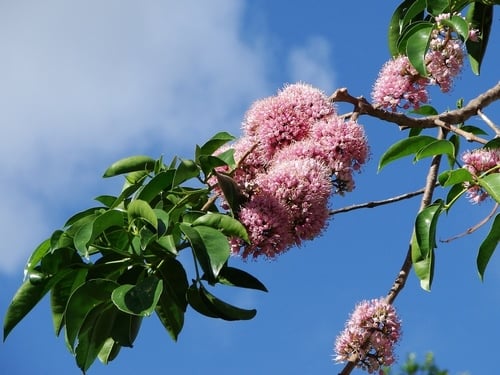
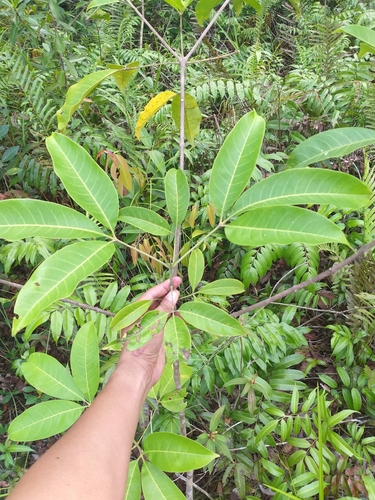
Citrus aurantiifolia
(Christm.) Swingle
Lime
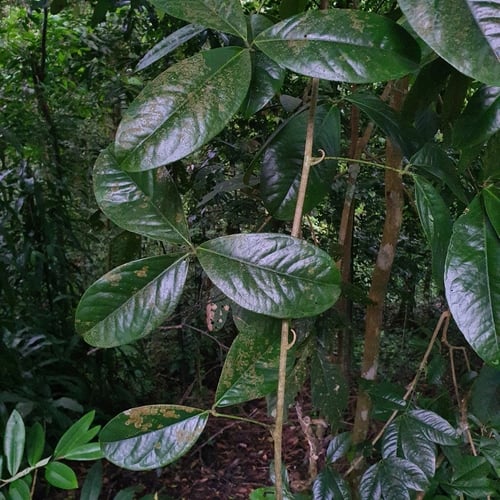
iNaturalist· cc-by-nc
(c) blassrico, some rights reserved (CC BY-NC)
iNaturalist· cc-by-nc
(c) rociodelmar_21, some rights reserved (CC BY-NC)
iNaturalist· cc-by-nc
(c) Leticia OS, some rights reserved (CC BY-NC)
Summary
Source: WikipediaAn evergreen tree growing to 6 m tall by 4 m wide at a medium rate. Hardy to UK zone 10. Self-fertile and noted for attracting wildlife. Adapts to light sandy, medium loamy, and heavy clay soils, preferring well-drained conditions. Suitable for mildly acid and neutral soils, tolerating very acid and very alkaline soils. Requires full sun and prefers moist soil.
Description
A small much branched evergreen tree. It grows up to 5-6 m tall with short sharp spines. It spreads to 3 m across. The leaves are small and dark green. There are narrow wings on the leaf stalk. The leaf blade is about 5 cm long by 3 cm wide and oval. They have a sweet smell when crushed. There is a thorn at the base of each leaf. (Thorn free kinds are known). The flowers are yellowish white. They are 2.5 cm across and have 5 petals. The flowers are produced in the leaf axils or at the ends of branches. The fruit is small, round 3-4 cm across and become pale orange to yellow when ripe. They are thin skinned. The flesh of the fruit is green. West Indian limes with larger, better fruit also occur. There are several named cultivated varieties.
Edible Uses
The fruit — ovate and 3–6cm in diameter — is eaten raw, cooked, or used as a flavouring. Thin-skinned, very acid, juicy, and fragrant, it is mainly used to add flavour and as a garnish. Its rich flavour and acidity make it a favourite in hot and spicy dishes, used fresh or in pickles and sauces. Limes can also be made into jams, marmalades, jellies, and juices (usually combined with other fruits), and dried limes are widely used in Persian cuisine. The chopped peel is used to make a sweetmeat. Leaves are sometimes added to soups and used as a condiment in Javanese dishes.
Traditional Uses
They are mainly used for juice and drinks. They are preserved in syrup and made into jam, jelly and marmalade. They can be used in pickles. It is used as a coagulant in the manufacture of soft cheeses. The chopped peel can be made into a sweetmeat with milk and coconut. The minced leaves are eaten with roast meat. They are also added to soups.
Medicinal Uses
The lime is an aromatic, astringent, cooling herb, with various parts — leaves, fruit, peel, and essential oils — used medicinally. An infusion of the leaves treats minor complaints such as bilious headaches and colds. Leaves combined with Renealmia guianensis leaves are drunk to induce abortion; combined with leaves of Begonia glabra and Ocimum campechianum, they make a bath for very hot feet. The fruit juice treats 'viccis', a fever causing sleepiness and uncontrollably relaxed digestive muscles. Juice is added to preparations for treating diarrhoea, chest colds, and fevers, and mixed with grated garlic and water as a remedy for snakebite. Applied externally, juice cleanses wounds, is mixed with oil and rubbed on the stomach to relieve sagging muscles of the sexual organs, and is used for ground itch and dandruff. The root is anthelmintic and contraceptive, used for haemorrhages and venereal disease; boiled roots mixed with alcohol are drunk to abort a foetus up to six weeks old.
Distribution
A tropical plant. They need a warm climate and are most common in coastal regions in the lowland tropics. They grow from sea level to 2200 m altitude in Papua New Guinea. They suit humid areas and can survive in poor soils. Light to medium well drained soils are best. It is drought and frost tender. In Hobart Botanical gardens. It grows in Nepal to about 1800 m altitude. It can grow in alkaline soil. It suits hardiness zones 11-12.
Where It Grows
Africa, Andes, Asia*, Australia, Bangladesh, Barbados, Benin, Bolivia, Brazil, British Indian Ocean Terr., BIOT, Cambodia, Cameroon, Cape Verde, Caribbean, Caroline Islands, Central Africa, Central African Republic, CAR, Central America, China, Chuuk, Colombia, Cook Islands, Costa Rica, Côte d'Ivoire, Cuba, Dominica, Dominican Republic, East Africa, East Timor, Ecuador, Egypt, Ethiopia, Europe, Fiji, France, French Polynesia, FSM, Ghana, Guam, Guyana, Haiti, Hawaii, Himalayas, India, Indochina, Indonesia, Iran, Italy, Ivory Coast, Kenya, Kiribati, Laos, Madagascar, Malawi, Malaysia*, Maldives, Marquesas, Mediterranean, Mexico, Micronesia, Middle East, Myanmar*, Nauru, Nepal, Nicaragua, Niger, Niue, North Africa, North America, Northeastern India, Oman, Pacific, Pakistan, Palau, Palestine, Papua New Guinea, PNG, Peru, Philippines, Pohnpei, Puerto Rico, Rotuma, Sahel, Samoa, Sao Tome and Principe, SE Asia, Senegal, Solomon Islands, Somalia, South Africa, Southern Africa, South America, Spain, Sri Lanka, Suriname, Tahiti, Taiwan, Tanzania, Tasmania, Thailand, Timor-Leste, Tokelau, Tonga, Tuvalu, Uganda, USA, Vanuatu, Vietnam, West Africa, West Indies,
Cultivation
They are often grown from seed but are better if grafted. Plants can be grown by cuttings. A spacing of 4-5 metres is suitable. When grown from seed, several shoots may develop from the one seed, which means the seedlings may be identical to the parent.
Propagation
Sow fresh seed in containers as soon as ripe, after thoroughly rinsing. Sow stored seed in containers as soon as possible. Germination usually takes place within 2–3 weeks at 13°C. Seedlings are prone to damping off and must be watered carefully and kept well ventilated. Seed is usually polyembryonic — two or more seedlings arise from each seed, genetically identical to the parent and typically free of any virus present in the parent. Prick out into individual pots when large enough to handle, and grow on until at least 10cm tall before planting into permanent positions. Half-ripe cuttings can be taken in July–August in a frame; this species roots easily from cuttings. Air layering is also suitable.
Other Uses
The lime is well adapted for growing as a hedge, forming dense thickets if left undisturbed, and spreading readily from stout vertical root shoots. It can be established easily from seed or cuttings. An essential oil from the peel, known as lime oil, is a good source of citral and is used in perfumes, soaps, chewing gum, food, and sweets. A separate essential oil known as lime-leaf oil is obtained from the leaves. A semi-drying oil from the seed is used in soap making.
Production
Trees can start producing fruit quickly. They fruit in 5-6 years. They normally produce fruit all the year round. Fruit drop when mature. Black limes are sun dried limes. They are 2.5-4 cm across.
Other Information
Moderately common in coastal areas of Papua New Guinea. It is a cultivated food plant.
Notes
There are 20 Citrus species. Several hybrids have been formed.
Nutrition
| Part | Moisture | kJ | kcal | Protein | Vit A | Vit C | Iron | Zinc |
|---|---|---|---|---|---|---|---|---|
| Fruit - raw | 91 | 133 | 32 | 0.7 | 4 | 40 | 0.25 | 0.1 |
Synonyms
Also Known As
Ambu, Angy, Arunam, Besenta, Chanh, Chanh ta, Chulukzapa, Dayap, Dehi, Derem, Elumichai, Erumichinaraham, Hindehi, Jambiri, Jeruk nipis, Jeruk sambal, Kagati, Kaghzi nimbu, Kaghzinimbu, Kagji-nemi, Karer, Key lime, Khatalimbu, Kro'ch chma, Laihpawma, Laim, Laranja-lima, Lawihkri, Laimi, Laini, Lemmetje, Lemon riri'i, Lima-da-persia, Limau asam, Limbe, Limon criollo, Limon mexicana, Lunboa, Maksun-ting, Manao, Mdimu, Moli laimi, Nabbu kaghdi, Nimbe, Nimma, Obulimawa, Patinebu, Peren, Pohon jeruk nipis, Rimo, Shalawi, Shauk-cho, Somma nao, Suan Ningmeng, Sweet lime, Te raim, Thanbaya-cho, Thesikkai, Tsioha, Tumeng, West Indian Lime
References (119)
- AAK, 1980, Bertanam Pohon Buah-buahan. Penerbitan Yayasan Kanisius, Jogyakarta. p 37
- AAK, 1994, Jeruk, Penerbit Kanisius, Jogyakarta. p 200
- Abbiw, D.K., 1990, Useful Plants of Ghana. West African uses of wild and cultivated plants. Intermediate Technology Publications and the Royal Botanic Gardens, Kew. p 42
- Alexander, D.M., Scholefield, P.B., Frodsham, A., 1982, Some tree fruits for tropical Australia. CSIRO, Australia. p 49
- Ambasta, S.P. (Ed.), 2000, The Useful Plants of India. CSIR India. p 127
Show all 119 references Hide references
- Anderson, E. F., 1993, Plants and people of the Golden Triangle. Dioscorides Press. p 206
- Arora, R. K., 2014, Diversity in Underutilized Plant Species - An Asia-Pacific Perspective. Bioversity International. p 62
- Ashton, M. S., et al 1997, A Field Guide to the Common Trees and Shrubs of Sri Lanka. WHT Publications Ltd. pdf p 344
- Bajpai, O., et al, 2015, Tree species of the Himalayan Terai region of Uttar Pradesh, India: a checklist. Check List 11(4): 1718
- Barwick, M., 2004, Tropical and Subtropical Trees. A Worldwide Encyclopedic Guide. Thames and Hudson p 117
- Bekele-Tesemma A., Birnie, A., & Tengnas, B., 1993, Useful Trees and Shrubs for Ethiopia. Regional Soil Conservation Unit. Technical Handbook No 5. p 150
- Bennett, B. C., 1990, Useful Plants of Amazonian Ecuador. US Agency for International Development. Fifth Progress Report. New York Botanical Gardens. p 39
- Bernal, R., et al, (Eds), 2016, Catalogo de Plantas y Liquenes de Colombia, Volumen 2, Magnoliaceae a Zygophyllaceae. Universidad Nacional de Colombia. p 2558
- Bernholt, H. et al, 2009, Plant species richness and diversity in urban and peri-urban gardens of Niamey, Niger. Agroforestry Systems 77:159-179
- Bhatia, H., et al, 2018, Traditionally used wild edible plants of district Udhampur, J&K, India. Journal of Ethnobiology and Ethnomedicine (2018) 14:73
- Blench, R., 2004, Fruits and Arboriculture in the Indo-Pacific Region. Indo-Pacific Prehistory Association Bulletin 24. (Taipei Papers Volume 2) p 36
- Bodkin, F., 1991, Encyclopedia Botanica. Cornstalk publishing, p 261
- Bremness, L., 1994, Herbs. Collins Eyewitness Handbooks. Harper Collins. p 47
- Brouk, B., 1975, Plants Consumed by Man. Academic Press, London. p 308
- Burkill, H. M., 1985, The useful plants of west tropical Africa, Vol. 4. Kew.
- Burkill, I.H., 1966, A Dictionary of the Economic Products of the Malay Peninsula. Ministry of Agriculture and Cooperatives, Kuala Lumpur, Malaysia. Vol 1 (A-H) p 570
- Cameron, J.W. & Soost, R.K., 1979, Citrus, in Simmonds, N.W., (ed), Crop Plant Evolution. Longmans. London. p 261
- Chatterjee, A. S., 1997, Fruit Trees in Cambodian Home Gardens. Trainers' training manual. Home garden series No.3 p 39
- Cheifetz, A., (ed), 1999, 500 popular vegetables 215
- Das, T. & Das, A. K., 2005, Inventorying plant biodiversity in homegardens: A case study in Barak Valley, Assam, North East India. CURRENT SCIENCE, VOL. 89, NO. 1, 10 JULY 2005
- Ethnobotany of Karbis. Chapter 4 in p 107
- Flora of Pakistan. www.eFloras.org
- Franklin, J., Keppel, G., & Whistler, W., 2008, The vegetation and flora of Lakeba, Nayau and Aiwa Islands, Central Lau Group, Fiji. Micronesica 40(1/2): 169–225, 2008
- French, B.R., 1986, Food Plants of Papua New Guinea, A Compendium. Asia Pacific Science Foundation p 223
- French, B.R., 2010, Food Plants of Solomon Islands. A Compendium. Food Plants International Inc. p 226
- Furusawa, T., et al, 2014, Interaction between forest biodiversity and people's used of forest resources in Roviana, Solomon Islands: implications for biocultural conservation under socioeconomic changes. Journal of Ethnobiology and Ethnomedicine, 10:10
- Goode, P., 1989, Edible Plants of Uganda. FAO p 27
- Hearne, D.A., & Rance, S.J., 1975, Trees for Darwin and Northern Australia. AGPS, Canberra p 45
- Hemphill, I, 2002, Spice Notes. Macmillan. p 76
- Jardin, C., 1970, List of Foods Used In Africa, FAO Nutrition Information Document Series No 2.p 128
- John, L., & Stevenson, V., 1979, The Complete Book of Fruit. Angus & Robertson p 175
- J. Wash. Acad. Sci. 3:465. 1913 "aurantifolia"
- Katende, A.B., Birnie, A & Tengnas B., 1995, Useful Trees and Shrubs for Uganda. Identification, Propagation and Management for Agricultural and Pastoral Communities. Technical handbook No 10. Regional Soil Conservation Unit, Nairobi, Kenya. p 184
- Kebebew, M. & Leta, G., 2016, Wild Edible Plant Bio-diversity and Utilization System in Nech Sar National Park, Ethiopia. International Journal of Bio-resource and Stress Management 2016, 7(4):885-896
- Khan, D. & Shaukat, S.S., 2006, The Fruits of Pakistan: Diversity, Distribution, Trends of Production and Use. Int. J. Biol. Biotech., 3(3):463-499
- Khanal, R., et al, 2014, Documenting abundance and use of underutilized plant species in the mid hill region of Nepal. ECOPRINT 21: 63-71, 2014
- Kiple, K.F. & Ornelas, K.C., (eds), 2000, The Cambridge World History of Food. CUP p 1802
- Lazarides, M. & Hince, B., 1993, Handbook of Economic Plants of Australia, CSIRO. p 60
- Lorenzi, H., Bacher, L., Lacerda, M. & Sartori, S., 2006, Brazilian Fruits & Cultivated Exotics. Sao Paulo, Instituto Plantarum de Estuados da Flora Ltda. p 527
- Lyle, S., 2006, Discovering fruit and nuts. Land Links. p 135
- Macmillan, H.F. (Revised Barlow, H.S., et al) 1991, Tropical Planting and Gardening. Sixth edition. Malayan Nature Society. Kuala Lumpur. p 276
- Mahony, D., 1991, Trees of Somalia. A Field Guide for Development Workers. Oxfam Research Paper 3. p 9
- Manandhar, N.P., 2002, Plants and People of Nepal. Timber Press. Portland, Oregon. p 156
- Martin, M.A., 1971, Introduction L'Ethnobotanique du Cambodge. Centre National de la Recherche Scientifique. Paris.
- Mbuya, L.P., Msanga, H.P., Ruffo, C.K., Birnie, A & Tengnas, B., 1994, Useful Trees and Shrubs for Tanzania. Regional Soil Conservation Unit. Technical Handbook No 6. p 176
- Medhi, P. & Borthakur, S. K., 2012, Phytoresources from North Cachur Hills of Assam -3: Edible plants sold at Hflong market. Indian Journal of Natural Products and Resources. 3(1) pp 84-109
- Miguel, E., et al, 1989, A checklist of the cultivated plants of Cuba. Kulturpflanze 37. 1989, 211-357
- Miller, A. G., Morris, M. & Stuart-Smith, S., 1988, Plants of Dhofar. The Southern Region of Oman, Traditional, Economic and Medicinal Uses. Sultanate of Oman. p 246
- Molla, A., Ethiopian Plant Names. http://www.ethiopic.com/aplants.htm
- Morley, B. & Everard, B., 1970, Wild Flowers of the World. Ebury press. Plate 119
- Morton, J. F., 1987, Fruits of Warm Climates. Wipf & Stock Publishers p 168
- Mulherin, J., 1994, Spices and natural flavourings. Tiger Books, London. p 102
- Ochse, J. J. et al, 1931, Vegetables of the Dutch East Indies. Asher reprint. p 645
- Omawale, 1973, Guyana's edible plants. Guyana University, Georgetown p 28
- Pascual-Mendoza, S. et al, 2021, Traditional knowledge of edible plants in an indigenous community in the Sierra Norte of Oaxaca, Mexico. Plant Biosystems - An International Journal Dealing with all Aspects of Plant Biology
- Peekel, P.G., 1984, (Translation E.E.Henty), Flora of the Bismarck Archipelago for Naturalists, Division of Botany, Lae, PNG. p 278, 274
- Phon, P., 2000, Plants used in Cambodia. © Pauline Dy Phon, Phnom Penh, Cambodia. p 158
- Plants of Haiti Smithsonian Institute http://botany.si.edu/antilles/West Indies
- Priyadi, H., et al, Five hundred plant species in Gunung Halimun Salak National Park West Java. A checklist including Sundanese names, distribution and use. CIFOR, FFPRI, SLU p 64
- PROSEA handbook Volume 13 Spices. p 275
- PROSEA (Plant Resources of South East Asia) handbook, Volume 2, 1991, Edible fruits and nuts.
- Purseglove, J.W., 1968, Tropical Crops Dicotyledons, Longmans. p 499
- Rajapaksha, U., 1998, Traditional Food Plants in Sri Lanka. HARTI, Sri Lanka. p 422
- Rashid, H. E., 1977, Geography of Bangladesh. Westview. p 343 (As Citrus acida)
- Roa, J. A. G. & Boada, D. S. G., 2018, Fundación para el Fortalecimiento de la Fruticultura y Plantas Alimenticias no Convencionales en Colombia.
- Ruiters-Welcome, A. K., 2019, Food plants of southern Africa. Ph.D. thesis. Univ. of Johannesburg p 98
- Salako, V. K. et al, 2013, Home gardens: an assessment of their biodiversity and potential contribution to conservation of threatened species and crop wild relatives in Benin. Genet Resour Crop Evol
- Schuler, S., (Ed.), 1977, Simon & Schuster's Guide to Trees. Simon & Schuster. No. 191
- Segura, S., et al, 2018, The edible fruit species in Mexico. Genet Resour Crop Evol (2018) 65:1767–1793
- Seidemann J., 2005, World Spice Plants. Economic Usage, Botany, Taxonomy. Springer. p 105
- Selvam, V., 2007, Trees and shrubs of the Maldives. RAP Publication No. 2007/12 p 62
- Small, E., 2009, Top 100 Food Plants. The world's most important culinary crops. NRC Research Press. p 327
- Solomon, C., 2001, Encyclopedia of Asian Food. New Holland. p 220
- Staples, G.W. and Herbst, D.R., 2005, A tropical Garden Flora. Bishop Museum Press, Honolulu, Hawaii. p 503
- Styger, E., et al, 1999, Indigenous fruit trees of Madagascar: potential components of agroforestry systems to improve human nutrition and restore biological diversity. Agroforestry Systems 46: 289-310
- Sujanapal, P., & Sankaran, K. V., 2016, Common Plants of Maldives. FAO & Kerala FRI, p 83
- Sukarya, D. G., (Ed.) 2013, 3,500 Plant Species of the Botanic Gardens of Indonesia. LIPI p 200
- Sukenti, K., et al, 2016, Ethnobotanical study on local cuisine of the Sasak tribe in Lombok Island, Indonesia. Journal of Ethnic Foods. 3 (2016) 189-200 p 198
- Suwardi, A. B., et al, 2020, Ethnobotany and conservation of indigenous edible fruit plants in South Aceh, Indonesia. Biodiversitas Vol. 21, No. 5, pp 1850-1860
- Tankard, G., 1990, Tropical fruit. An Australian Guide to Growing and using exotic fruit. Viking p 58
- Tate, D., 1999, Tropical Fruit. Archipelago Press. Singapore. p 46
- Teron, R. & Borthakur, S. K., 2016, Edible Medicines: An Exploration of Medicinal Plants in Dietary Practices of Karbi Tribal Population of Assam, Northeast India. In Mondal, N. & Sen, J.(Ed.) Nutrition and Health among tribal populations of India. p 155
- Thaman, R.R., 1976, The Tongan Agricultural System, University of the South Pacific, Suva, Fiji. p 388
- Thaman, R. R., 1987, Plants of Kiribati: A listing and analysis of vernacular names. Atoll Research Bulletin No. 296
- Thaman, R. R, 2016, The flora of Tuvalu. Atoll Research Bulletin No. 611. Smithsonian Institute p 112
- Timyan, J., 1996, Bwa Yo: Important Trees of Haiti. SE Consortium for International Development. Washington. p 100
- Topp, J. M. W., 1988, An Annotated Check List of the Flora of Diego Garcia, British Ocean Territory. Atoll Research Bulletin No. 313
- Tsering, J., et al, 2017, Ethnobotanical appraisal on wild edible plants used by the Monpa community of Arunchal Pradesh. Indian Journal of Traditional Knowledge. Vol 16(4), October 2017, pp 626-637
- USDA, ARS, National Genetic Resources Program. Germplasm Resources Information Network - (GRIN). [Online Database] National Germplasm Resources Laboratory, Beltsville, Maryland. Available: www.ars-grin.gov/cgi-bin/npgs/html/econ.pl (10 April 2000)
- Valder, P., 1999, The Garden Plants of China. Florilegium. p 247
- van Wyk, B., 2005, Food Plants of the World. An illustrated guide. Timber press. p 137
- Vasquez, R. and Gentry, A. H., 1989, Use and Misuse of Forest-harvested Fruits in the Iquitos Area. Conservation Biology 3(4): 350f
- Vickery, M.L. and Vickery, B., 1979, Plant Products of Tropical Africa, Macmillan. p 43
- Vivien, J., & Faure, J.J., 1996, Fruitiers Sauvages d'Afrique. Especes du Cameroun. CTA p 297
- Walter, A. & Lebot, V., 2007, Gardens of Oceania. ACIAR Monograph No. 122. p 130
- Whistler, W. A., 1988, Ethnobotany of Tokelau: The Plants, Their Tokelau Names, and Their Uses. Economic Botany 42(2): 155-176
- Wiersema, J. H. & Leon, B., 2013, World Economic Plants. A Standard Reference CRC Press. 2nd Ed. p 179
- Young, J., (Ed.), 2001, Botanica's Pocket Trees and Shrubs. Random House. p 250
- Zaldivar, M. E., et al, 2002, Species Diversity of Edible Plants Grown in Homegardens of Chibehan Amerindians from Costa Rica. Human Ecology, Vol. 30, No. 3, pp. 301-316005, A tropical Garden Flora. Bishop Museum Press, Honolulu, Hawaii. p 503
- Tankard, G., 1990, Tropical fruit. An Australian Guide to Growing and using exotic fruit. Viking p 58
- Tate, D., 1999, Tropical Fruit. Archipelago Press. Singapore. p 46
- Thaman, R.R., 1976, The Tongan Agricultural System, University of the South Pacific, Suva, Fiji. p 388
- USDA, ARS, National Genetic Resources Program. Germplasm Resources Information Network - (GRIN). [Online Database] National Germplasm Resources Laboratory, Beltsville, Maryland. Available: www.ars-grin.gov/cgi-bin/npgs/html/econ.pl (10 April 2000)
- Valder, P., 1999, The Garden Plants of China. Florilegium. p 247
- van Wyk, B., 2005, Food Plants of the World. An illustrated guide. Timber press. p 137
- Vickery, M.L. and Vickery, B., 1979, Plant Products of Tropical Africa, Macmillan. p 43
- Vivien, J., & Faure, J.J., 1996, Fruitiers Sauvages d'Afrique. Especes du Cameroun. CTA p 297
- Walter, A. & Lebot, V., 2007, Gardens of Oceania. ACIAR Monograph No. 122. p 130
- Welcome, A. K. & Van Wyk, B.-E., 2019, An inventory and analysis of the food plants of southern Africa. South African Journal of Botany 122 (2019) 136–179
- Whistler, W. A., 1988, Ethnobotany of Tokelau: The Plants, Their Tokelau Names, and Their Uses. Economic Botany 42(2): 155-176
- Young, J., (Ed.), 2001, Botanica's Pocket Trees and Shrubs. Random House. p 250
- Zaldivar, M. E., et al, 2002, Species Diversity of Edible Plants Grown in Homegardens of Chibehan Amerindians from Costa Rica. Human Ecology, Vol. 30, No. 3, pp. 301-316
- Zawiah, N. & Othaman, H., 2012, 99 Spesies Buah di FRIM. Institut Penyelidikan Perhutanan Malaysia. p 82
- Zeven, A. C. & de West, J. M. J., 1982, Dictionary of cultivated plants and their regions of diversity. Wageningen. p 62