Citrus japonica cv margarita
(Lour.) Swingle
Kumquat, Oval kumquat
iNaturalist· cc-by-nc
(c) 桃子, some rights reserved (CC BY-NC)
Summary
Source: WikipediaCitrus japonica, the round kumquat, Marumi kumquat, or Morgani kumquat, is a species of citrus fruit in the genus Citrus. It was first described by Carl Peter Thunberg in 1780 as Fortunella japonica. C. japonica is a native species in southern China.
Description
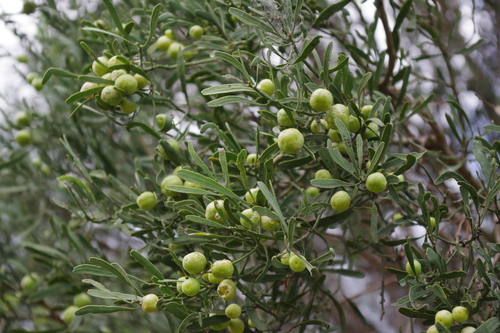
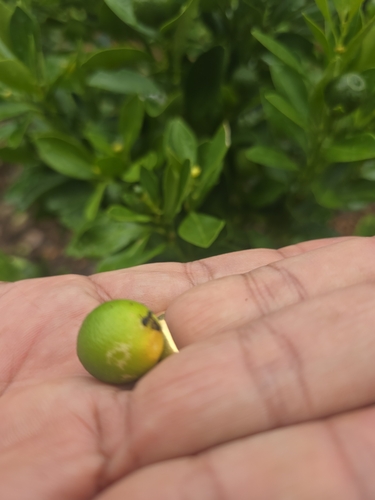
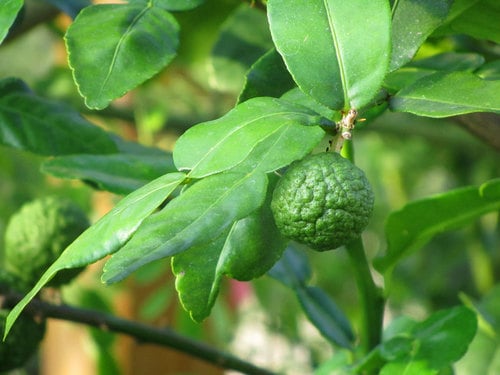
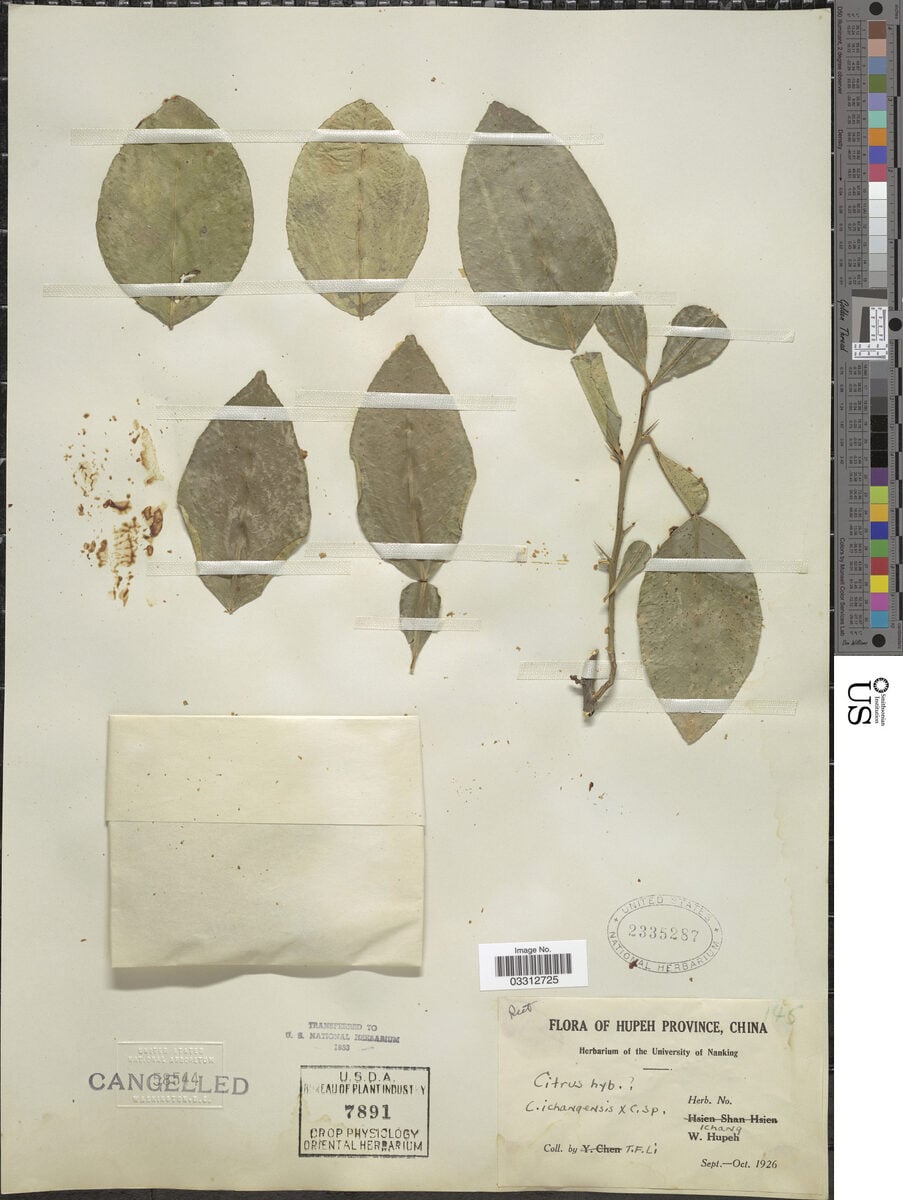
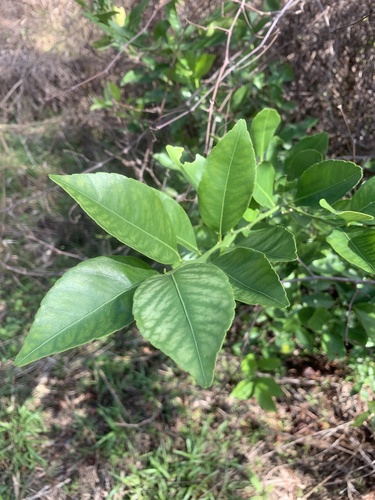
An evergreen shrub up to 4 m high. It spreads to 2 m across. The stem is slender and branching. It has a rounded crown. It has spiny branches and shiny oval leaves with pointed tips. The leaves are leathery. Flowers are white with 5 petals. They occur singly and have a perfume. Fruit are very small and about 2.5 cm across. They are divided into only 3-6 sections. There are 2-5 seeds.
Edible Uses
The ripe fruit can be eaten fresh with skin and all (seeds removed). The fruit are also pickled, preserved in syrup, pickled in vinegar, and made into marmalade, sauces, jellies, and jams.
Traditional Uses
The ripe fruit can be eaten fresh, skin and all. (The seeds are removed) The fruit are often pickled or used in jam. They are preserved in syrup and pickled in vinegar. They are made into marmalade, sauces and jellies.
Distribution
It suits subtropical locations. It grows from sea level to at least 1150 m altitude in the tropics. It is cold tolerant. When dormant it can stand frosts, but not when in leaf. It cannot tolerate drought. It prefers well drained soils in an open sunny position. They cannot stand water-logging. They do best with a pH of 5 to 6. They cease growth when temperatures fall below 13°C. It suits hardiness zones 9-10.
Where It Grows
Africa, Asia, Australia, Brazil, Britain, Cameroon, Central Africa, China, Europe, Hawaii, India, Indochina, Israel, Japan, Mediterranean, Middle East, Morocco, North Africa, Pacific, Papua New Guinea, PNG, Philippines, Puerto Rico, SE Asia, South America, Suriname, Taiwan, USA, Vietnam, West Indies,
Cultivation
Plants are grown from seeds or by grafting. They can also be grown from cuttings. Seed need to be sown fresh. Plants can be trimmed as a hedge.
Production
Fruiting is seasonal. The season tends to be December to May in the southern hemisphere. The fruit improve in flavour if allowed to stay on the tree after ripening.
Other Information
It is a cultivated food plant. Occasionally grown in Papua New Guinea. These plants have been hybridised to give limequats and orangequats.
Notes
Fruit (Dry weight) Water: 0 Calories: 356 Protein: 5.2 Fat: 2.5 Carbohydrate: 89 Fibre: 10 Ash: 3.3 Calcium: 240 Phosphorus: 300 Iron: 5.5 Sodium: 835 Potassium: 1172 Vitamin A: 1000 Thiamine: 0.74 Riboflavin: 0.4 Niacin: 4.2 Vitamin C: 305 Source: [218] Notes: The figures given here are the median of a range given in the report. The Fortunella's will probably be renamed Citrus. There are 5 Fortunella species.
Synonyms
Also Known As
Chantu, Chu tsu, Geumgam, Jin Ju, Nagami, Nagamil kumquat, Shan Kam Kit Tsz
References (29)
- Altschul, S.V.R., 1973, Drugs and Foods from Little-known Plants. Notes in Harvard University Herbaria. Harvard Univ. Press. Massachusetts. no. 1947
- Ambasta, S.P. (Ed.), 2000, The Useful Plants of India. CSIR India. p 227
- Arora, R. K., 2014, Diversity in Underutilized Plant Species - An Asia-Pacific Perspective. Bioversity International. p 72 (As Fortunella margarita)
- Bodkin, F., 1991, Encyclopedia Botanica. Cornstalk publishing, p 477
- Cundall, P., (ed.), 2004, Gardening Australia: flora: the gardener's bible. ABC Books. p 383 (As Citrus japonica)
Show all 29 references Hide references
- Elevitch, C.R.(ed.), 2006, Traditional Trees of the Pacific Islands: Their Culture, Environment and Use. Permanent Agriculture Resources, Holualoa, Hawaii. p 265
- Facciola, S., 1998, Cornucopia 2: a Source Book of Edible Plants. Kampong Publications, p 220
- French, B.R., 1986, Food Plants of Papua New Guinea, A Compendium. Asia Pacific Science Foundation p 292
- Hibbert, M., 2002, The Aussie Plant Finder 2002, Florilegium. p 103
- Hu, Shiu-ying, 2005, Food Plants of China. The Chinese University Press. p 501
- Jardin, C., 1970, List of Foods Used In Africa, FAO Nutrition Information Document Series No 2.p 138
- John, L., & Stevenson, V., 1979, The Complete Book of Fruit. Angus & Robertson p 169
- J. Wash. Acad. Sci. 5:167, 170. 1915
- Kiple, K.F. & Ornelas, K.C., (eds), 2000, The Cambridge World History of Food. CUP p 1798
- Lazarides, M. & Hince, B., 1993, Handbook of Economic Plants of Australia, CSIRO. p 116
- Little, E. L., et al, 1974, Trees of Puerto Rico and the Virgin Islands. USDA Handbook 449. Forestry Service. p 326 (As Fortunella margarita)
- Lorenzi, H., Bacher, L., Lacerda, M. & Sartori, S., 2006, Brazilian Fruits & Cultivated Exotics. Sao Paulo, Instituto Plantarum de Estuados da Flora Ltda. p 599
- Lyle, S., 2006, Discovering fruit and nuts. Land Links. p 213
- Morton, J. F., 1987, Fruits of Warm Climates. Wipf & Stock Publishers p 183
- Mulherin, J., 1994, Spices and natural flavourings. Tiger Books, London. p 107
- Plants for a Future database, The Field, Penpol, Lostwithiel, Cornwall, PL22 0NG, UK. http://www.scs.leeds.ac.uk/pfaf/
- PROSEA (Plant Resources of South East Asia) handbook, Volume 2, 1991, Edible fruits and nut. p 169
- Purseglove, J.W., 1968, Tropical Crops Dicotyledons, Longmans. p 494
- Seidemann J., 2005, World Spice Plants. Economic Usage, Botany, Taxonomy. Springer. p 158 (As Fortunella)
- Song, M., et al, 2013, Traditional knowledge of wild edible plants in Jeju Island, Korea. Indian Journal of Traditional Knowledge. 12(2) pp 177-194 (As Fortunella)
- Staples, G.W. and Herbst, D.R., 2005, A tropical Garden Flora. Bishop Museum Press, Honolulu, Hawaii. p 507 (Drawing)
- USDA, ARS, National Genetic Resources Program. Germplasm Resources Information Network - (GRIN). [Online Database] National Germplasm Resources Laboratory, Beltsville, Maryland. Available: www.ars-grin.gov/cgi-bin/npgs/html/econ.pl (10 April 2000)
- Valder, P., 1999, The Garden Plants of China. Florilegium. p 251
- van Wyk, B., 2005, Food Plants of the World. An illustrated guide. Timber press. p 197