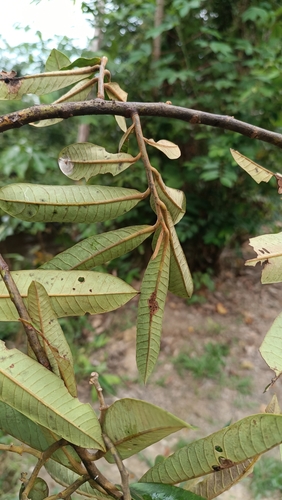
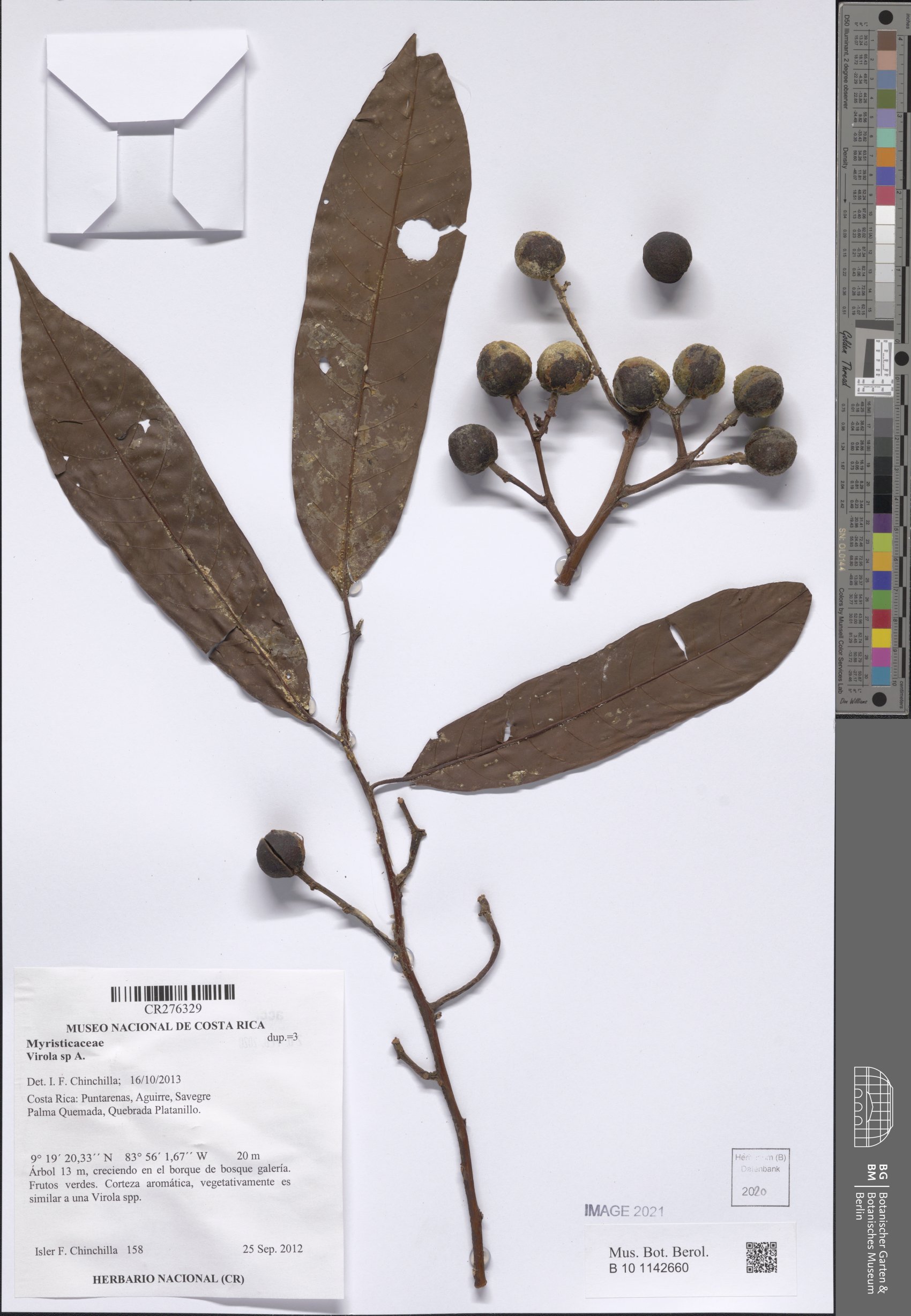
Otoba parvifolia
(Markgr.) A. H. Gentry
Small leaf otoba
iNaturalist· cc-by-nc
(c) humbertomendozacifuentes, some rights reserved (CC BY-NC)
iNaturalist· cc-by-nc
(c) humbertomendozacifuentes, some rights reserved (CC BY-NC)
iNaturalist· cc-by-nc
(c) humbertomendozacifuentes, some rights reserved (CC BY-NC)
Description
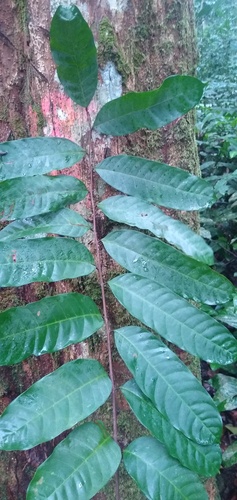
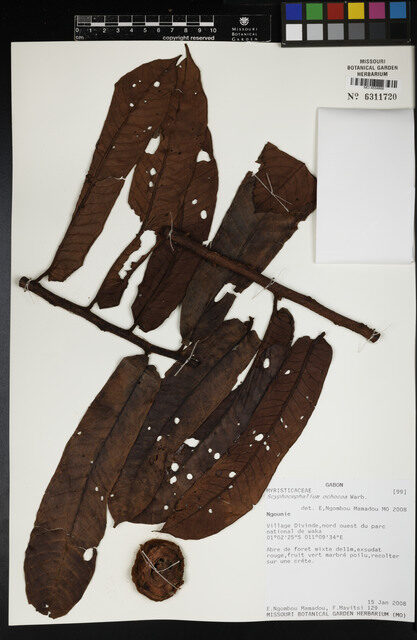
A tropical tree in the Myristicaceae family.
This description is brief — help expand it
Edible Uses
The aril or fleshy layer surrounding the seeds is eaten.
Traditional Uses
The aril or fleshy layer around the seeds is eaten.
This uses section is brief — help expand it
Medicinal Uses
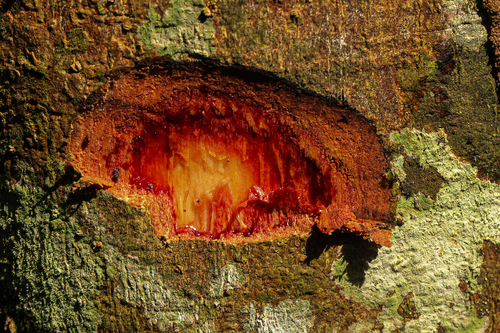
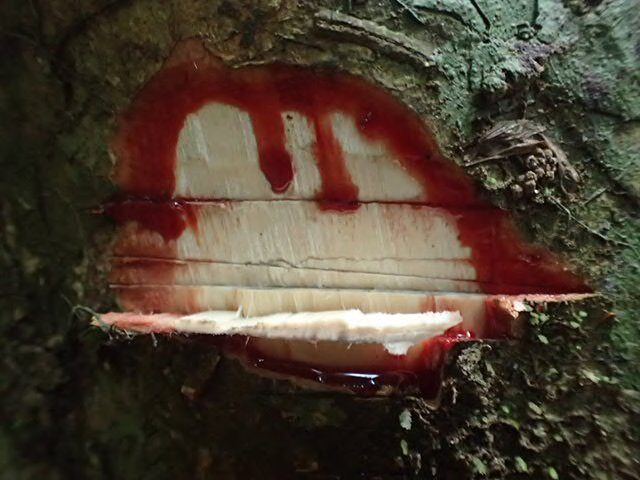
The plant (part not specified) is used in the treatment of diarrhoea. The bark and bright red resin are crushed and rubbed on the skin as a treatment for the bites of mites and fungal infections.
Distribution
It is a tropical plant.
Where It Grows
Amazon, Andes, Bolivia, Brazil, Central America, Colombia, Ecuador, Panama, South America, Venezuela,
Other Uses
The heartwood is brown; it is not clearly differentiated from the sapwood, which is also brown. The texture is medium; the grain straight; lustre is bright; and ther is no distinctive taste or aroma. It is used for making items such as plywood, furniture components etc. Traditionally it has been used to make canoes, but the wood rots within three months.
Synonyms
Also Known As
Aguanillo, Ayepebe, Chihishikuihi, Cuapa, Cumala colorada, Eyeteme, Gabon, Jigua, Macis, Mamilla, Moscadeira, Noz-moscada, Pintana negra, Sangre blanca, Sangrito, Shashafiacco, Taua, Ucuuba, Ucuuba-branca, Ucuuba-vermelho
References (4)
- Grandtner, M. M. & Chevrette, J., 2013, Dictionary of Trees, Volume 2: South America: Nomenclature, Taxonomy and Ecology. Academic Press p 466
- Kermath, B. M., et al, 2014, Food Plants in the Americas: A survey of the domesticated, cultivated and wild plants used for Human food in North, Central and South America and the Caribbean. On line draft. p 596
- Lopez-Diago, D. & Garcia, N., 2021, Wild edible fruits of Colombia. Biota ColomBiana 22 (2) p 44
- Roa, J. A. G. & Boada, D. S. G., 2018, Fundación para el Fortalecimiento de la Fruticultura y Plantas Alimenticias no Convencionales en Colombia.