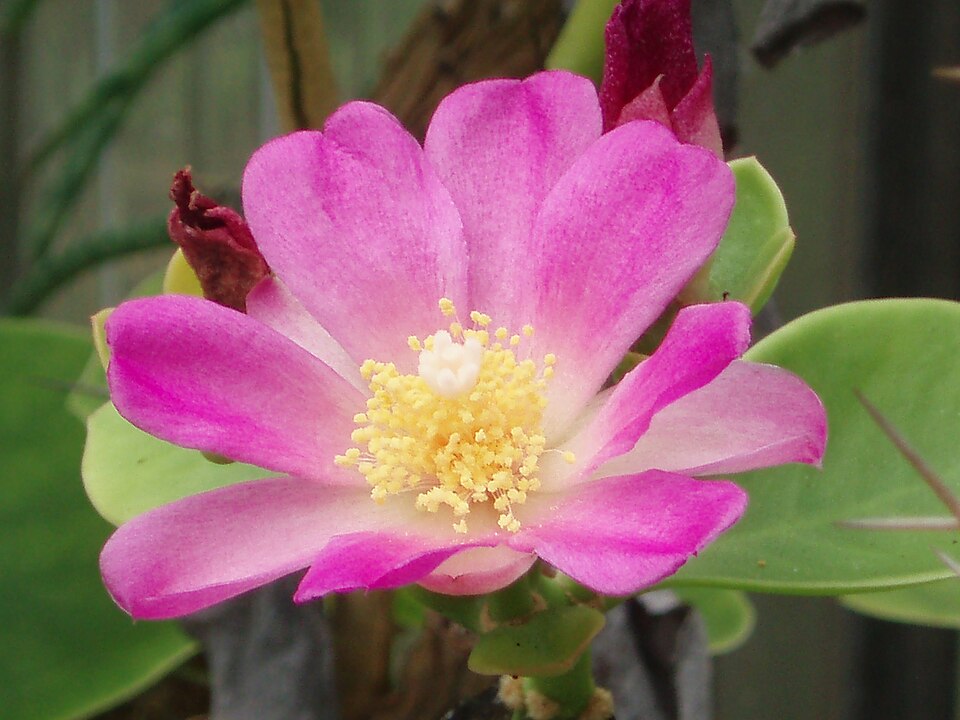
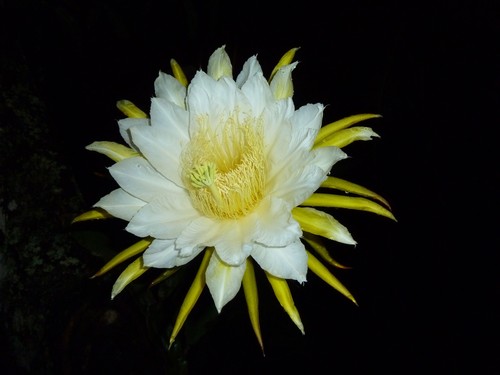
Harrisia fragrans
Small ex Britton & Rose
Caribbean apple cactus, Fragrant prickly-apple
iNaturalist· cc-by-nc
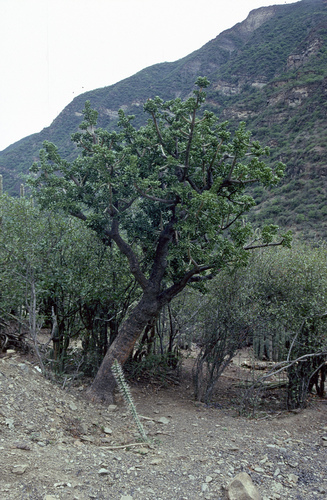
(c) Moses J. Michelsohn, some rights reserved (CC BY-NC)
iNaturalist· cc-by-nc
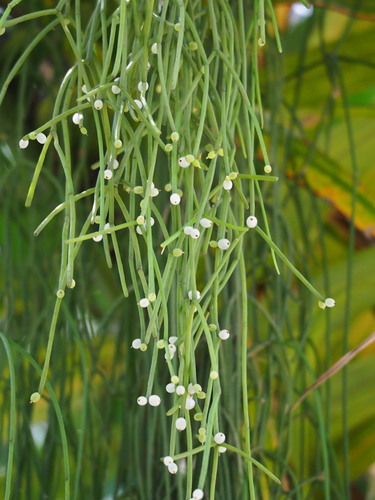
(c) jlange, some rights reserved (CC BY-NC)
iNaturalist· cc-by-nc
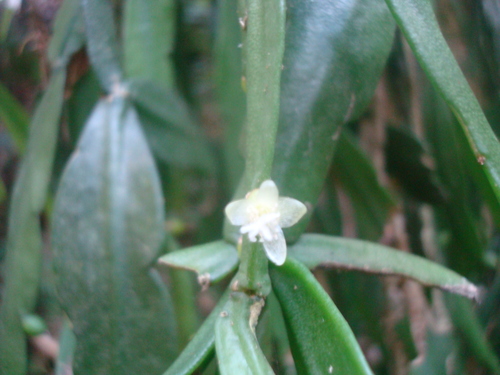
(c) sonyaguidry, some rights reserved (CC BY-NC)
Summary
Source: WikipediaHarrisia fragrans is a rare species of cactus known by the common name fragrant prickly apple. It is endemic to Florida, where it is known only from St. Lucie County. The plant's habitat has been almost completely consumed by development, leading to its rarity. It is a federally listed endangered species of the United States.
Description
A cactus with stems 3-5 m long. They can be climbing. They have 10-12 ribs. There are 9-13 spines in each group. They are 2-4 cm long and have yellow tips. The flower tube is 18-20 cm long. The fruit are oval and 6 cm wide and orange to red when mature.
Edible Uses
Fruit - raw. The red to yellow, globose fruit is 4 - 6cm long, with spines according to one report, free of spines according to another. Harrisia fruits generally contain a sweet, edible, white pulp with hundreds to thousands of tiny seeds embedded in the pulp.
Distribution
It is a subtropical plant.
Where It Grows
North America, USA,
Cultivation
The genus Harrisia is found in semi-arid tropical to subtropical regions of the Americas, growing in both the northern and southern hemispheres. There is usually a dry season at the cooler part of the year that can last up to 6 months. Annual precipitation is generally around 500 - 1,200mm. In the northernmost part of its range, in Florida, and in its southwestern range in Argentina and Bolivia, it experiences occasional freezing temperatures, and in cultivation light frosts (1-2 per year) experienced by species in Florida, seemed well-tolerated and not detrimental. The flowers open of a night time and are sweetly scented to attract bats and moths.
Propagation
Seed - usually germinates quickly and well without pre-treatment, though fresh seed may have a short dormancy of up to 8 weeks, Washing the seed in water prior to sowing can shorten germination time. The seed sometimes germinates whilst still in the fruit. Cuttings. Vegetative reproduction is frequent in nature when stems break and detach from the parent plant. The stems can proceed to produce roots along tissue nearest to the ground and produce a new plant.
Synonyms
References (1)
- Kermath, B. M., et al, 2014, Food Plants in the Americas: A survey of the domesticated, cultivated and wild plants used for Human food in North, Central and South America and the Caribbean. On line draft. p 405