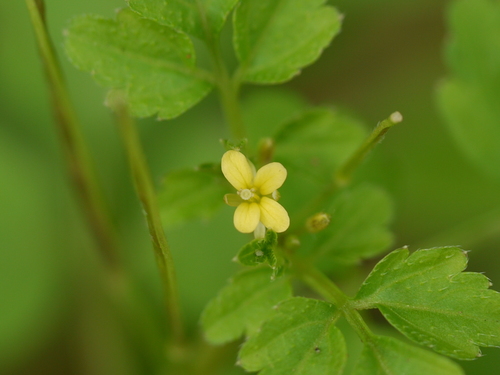
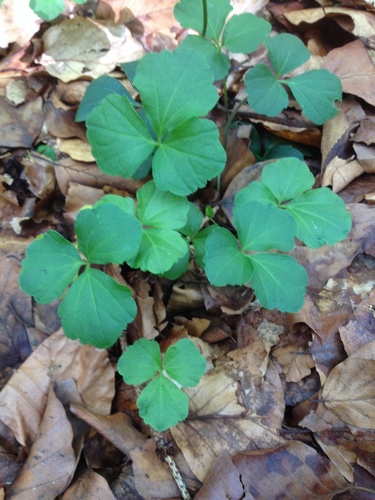
Caulanthus glaucus
S. Watson
iNaturalist· cc-by
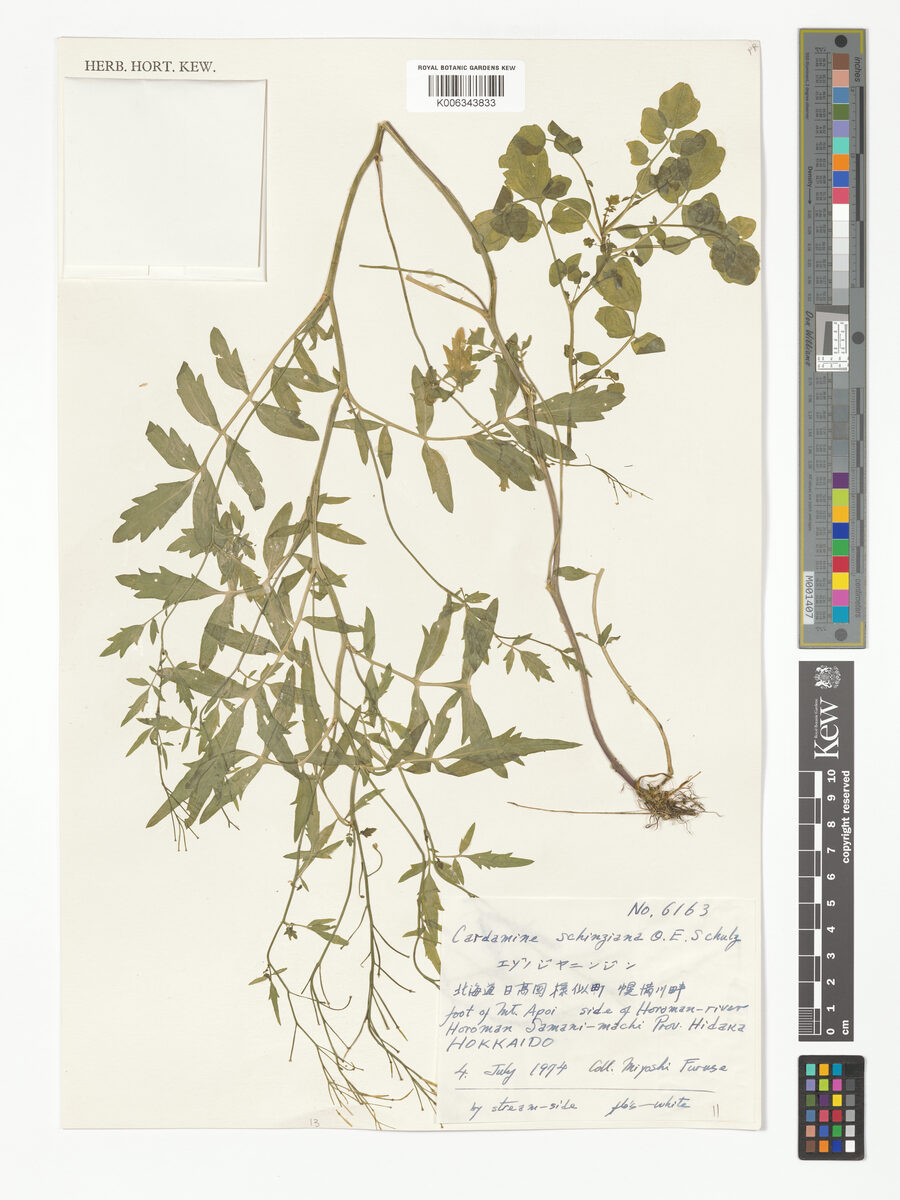
(c) Jim Morefield, some rights reserved (CC BY)
iNaturalist· cc-by
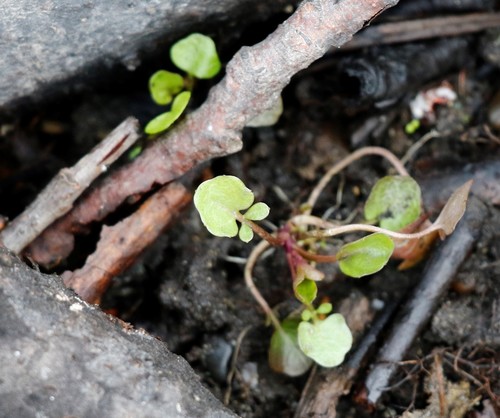
(c) Matt Berger, some rights reserved (CC BY)
iNaturalist· cc-by
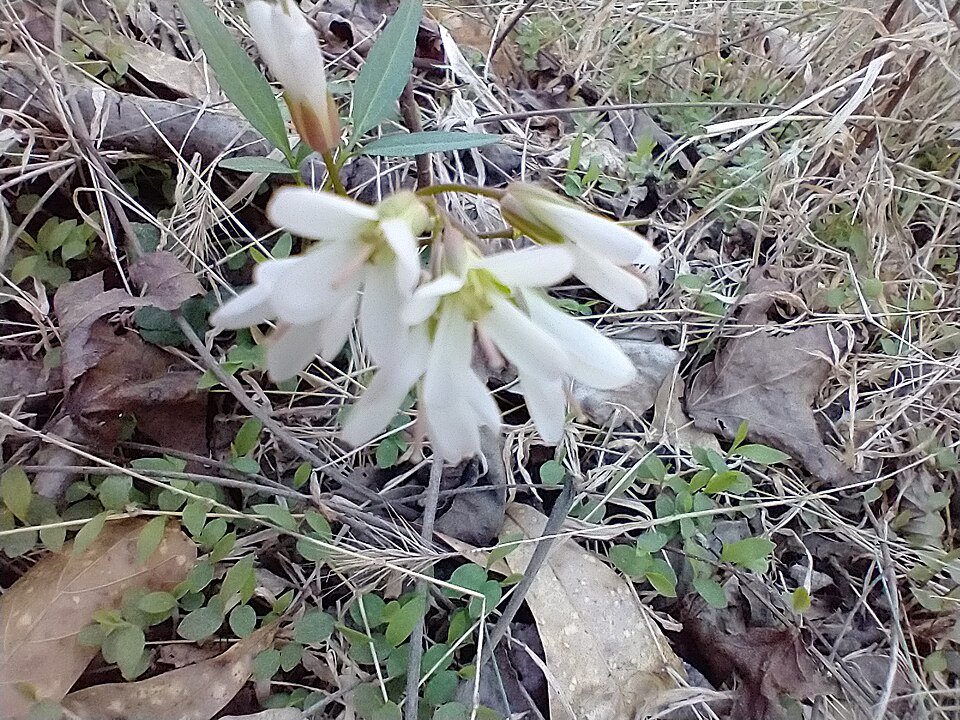
(c) Matt Berger, some rights reserved (CC BY)
Summary
Source: WikipediaCaulanthus glaucus is a species of flowering plant in the family Brassicaceae known by the common names glaucous wild cabbage, bigleaf wildcabbage, and limestone jewelflower. It is native to southern Nevada and adjacent parts of eastern California and Mojave Desert sky islands, where it grows in open, rocky habitat in the desert mountains.
Description
A perennial reaching 0.6 meters tall by 0.3 meters wide. Hardy to UK zone 6. Hermaphroditic. Grows in light sandy, medium loamy, and heavy clay soils with mildly acidic to basic pH. Can tolerate semi-shade or full sun and prefers moist soil. Dusty glaucous foliage and deep-rooted habit suit harsh desert habitats. Flowers April to May with seed development following shortly; leaves persist through early growing season with stems drying in summer.
Edible Uses
Literature indicates that leaves and possibly seeds are edible in broadly the same manner as other wild cabbages, but because this species is uncommon with a narrow range, it has no practical value as a food resource and should not be foraged. Specific flavour data is extremely limited. Based on its close relationship to thickstem wild cabbage, any edible use would almost certainly require thorough cooking of the leaves to reduce harsh flavours and emetic compounds. Given its rarity, no harvest is recommended. The plant flowers in spring, typically April to May, with siliques developing shortly after. Leaves are present from early spring through the main growing season; stems dry down in summer. Timing varies with winter and early spring moisture levels. There is little if any specific ethnobotanical record for this species; references to wild cabbages in Native Californian use records likely refer to more common species rather than this narrow endemic.
Traditional Uses
The leaves are cooked and eaten.
This uses section is brief — help expand it
Medicinal Uses
None known
Known Hazards
Even if chemically similar to other wild cabbages, the combination of potential accumulation of soil salts and metals and its rarity means that this species should not be considered a food plant. Ethical foraging practice dictates leaving it untouched.
Distribution
It is a temperate plant.
Where It Grows
US. USA. California, Nevada.
Cultivation
Growing Conditions: This species occurs on barren, rocky or gravelly slopes and ridges in mountainous terrain of the Silver Peak Range and nearby areas. It prefers open, sunny, well-drained, nutrient-poor substrates, often where few other forbs thrive. Soils are often calcareous or otherwise mineral-rich, contributing to the dense, glaucous leaf coating. Habitat & Range: Dusty wild cabbage is endemic to southwestern Nevada and adjacent parts of California, in scattered, geographically limited populations. It is a true local specialty of the central Great Basin mountain ranges, rarely encountered outside a few isolated locations. Size & Landscape Performance: Plants typically reach 30–90 cm tall with a spread of 20–40 cm, depending on site conditions. In a garden, if ever cultivated, it would present as a medium-sized, blue-green desert perennial with modest ornamental appeal. Hardiness is likely within USDA Zones 5–8, but the species’ conservation status and narrow range argue against horticultural collection from the wild. Cultivation (Horticulture): There is no notable horticultural tradition of cultivating C. glaucus. Any legitimate cultivation should be done only from legally obtained, ex-situ conservation seed, in collaboration with conservationists. Culturally and ethically, this is a plant to protect, not to promote for edible use. Pests & Problems: In its natural setting, it experiences occasional herbivory and environmental stress but persists in small, stable populations. The main “problem” for the species is habitat disturbance; from a plant-health perspective it is well adapted to harsh mountain conditions. Cultivar/Selection Notes: No cultivars are known. Any future ex-situ work would be conservation-driven, not for flavour or yield. Identification & Habit: This species is an upright perennial 30–90 cm tall with uninflated stems and thick, leathery, glaucous leaves. Leaves are alternate, not forming basal rosettes, with lower leaves lance-ovate, fleshy, long-stalked and strongly dusty (blue-gray) on both surfaces. Upper leaves are similar but smaller and sessile or shortly stalked, with entire or finely toothed margins. The inflorescences are open racemes of urn-shaped calyces enclosing yellowish or purplish petals. The cylindrical siliques are 7–14 cm long, straight or slightly curved, and spreading to ascending. As with other Caulanthus species, the overall look is of a desert cabbage with urn-shaped flower buds, but the stems lack the striking inflation of C. crassicaulis.
Propagation
Propagation is by seed, as with other wild cabbages, though this should be restricted to conservation efforts. The species does not produce vegetative offsets and does not spread by rhizomes.
Other Uses
As a flowering mustard, it provides nectar and pollen to generalist insect pollinators, primarily bees and flies. Its glaucous foliage and deep-rooted habit allow it to occupy harsh habitats, contributing to local floral diversity and providing structure and resources in otherwise sparse plant communities.
Synonyms
Also Known As
Streptanthus glaucus. Dusty Wild Cabbage, Bigleaf Wild Cabbage (Caulanthus glaucus)
References (1)
- Kermath, B. M., et al, 2014, Food Plants in the Americas: A survey of the domesticated, cultivated and wild plants used for Human food in North, Central and South America and the Caribbean. On line draft. p 199