Descurainia incana subsp. insica
(Engelm.) Kartesz & Dandhi
Mountain tansy mustard
iNaturalist· cc-by-nc
(c) Greg Pappas, some rights reserved (CC BY-NC), uploaded by Greg Pappas
iNaturalist· cc-by-nc
(c) Beth Corbin, some rights reserved (CC BY-NC), uploaded by Beth Corbin
iNaturalist· cc0
no rights reserved, uploaded by Cecelia Alexander
Summary
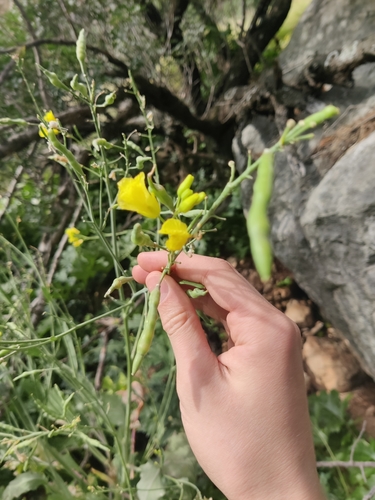
Source: WikipediaDescurainia incana is a species of flowering plant in the mustard family known by the common name mountain tansymustard. It is native to much of North America, including most of Canada, the western United States, and Baja California. It is known from many types of habitat. It is a biennial herb with a slender, greenish, often hairy stem sometimes exceeding a meter tall. The leaves are narrowly to widely oval in shape, the lower ones lobed and sometimes compound, the upper generally unlobed. The mustardlike inflorescence is a series of developing fruits beneath an elongating cluster of small bright yellow flowers. The fruit is a thin, pointed silique up to 2 centimeters long.
Description
A herb in the mustard family (Brassicaceae) that grows in temperate regions. In California, it is found between 1,000–3,400 m above sea level.
This description is brief — help expand it
Edible Uses
The seeds are parched and ground before eating.
Traditional Uses
The seeds are parched and ground and eaten.
This uses section is brief — help expand it
Distribution
It is a temperate plant. In California it grows between 1,000-3,400 m above sea level.
Where It Grows
America, North America, USA,
Synonyms
References (2)
- Anderson, M. K., 2012, Edible Seeds and Grains of California Tribes and the Klamath Tribe of Oregon in the Phoebe Apperson Hearst Museum of Anthropology Collections, University of California, Berkeley. USDA p 41
- Kermath, B. M., et al, 2014, Food Plants in the Americas: A survey of the domesticated, cultivated and wild plants used for Human food in North, Central and South America and the Caribbean. On line draft. p 301
More from Brassicaceae
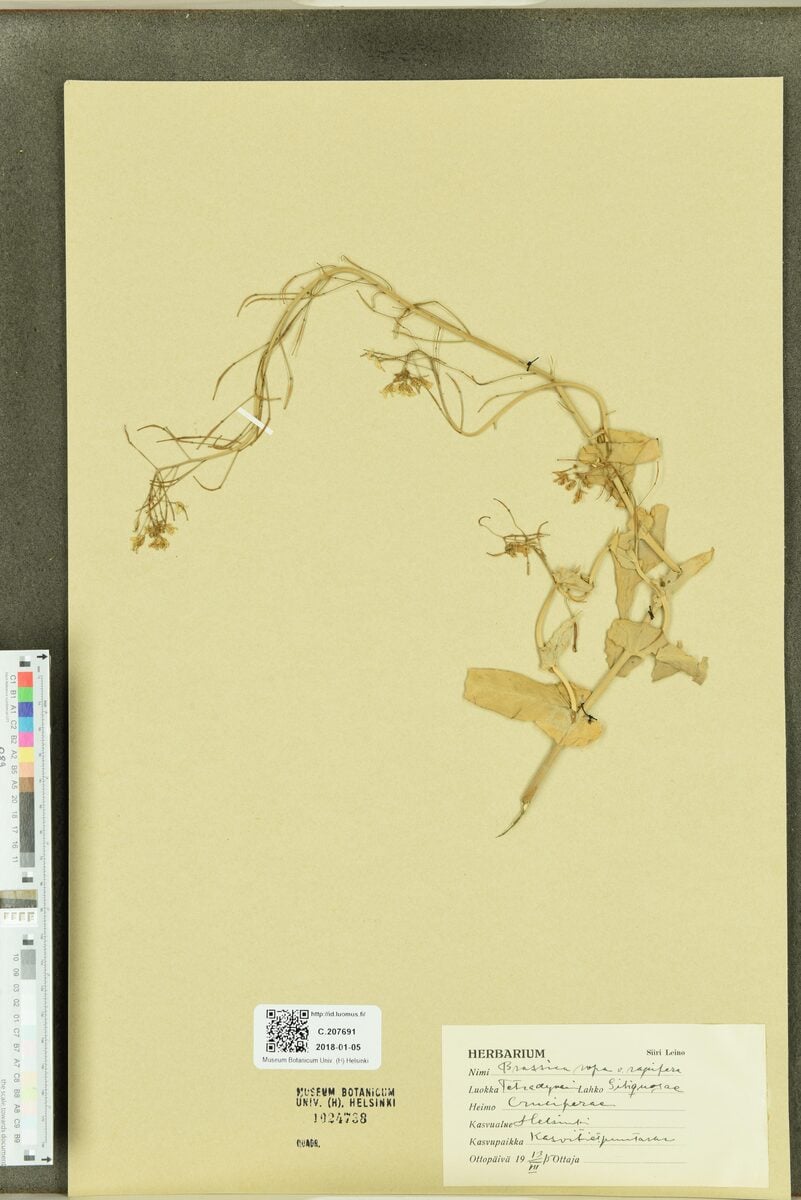
Brassica rapa subsp. rapifera
Japanese turnip
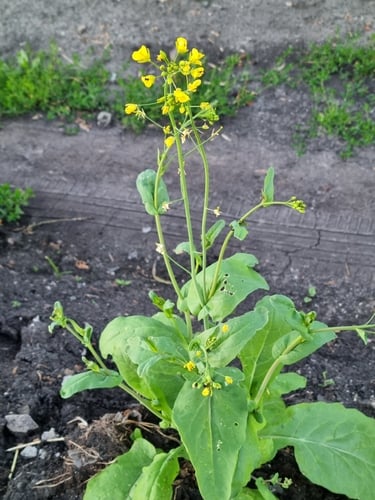
Brassica rapa subsp. trilocularis
Indian colza, Seti sarisha, Yellow Colza, Yellow sarson
Brassica rapa trilocularis - (Roxb.)Hanelt.
Indian Colza
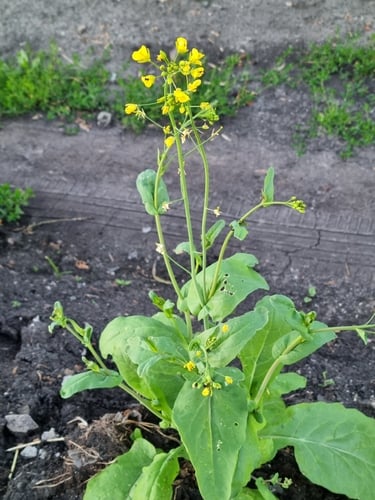
Brassica rapa var. japonica
Potherb mustard, Japanese mustard
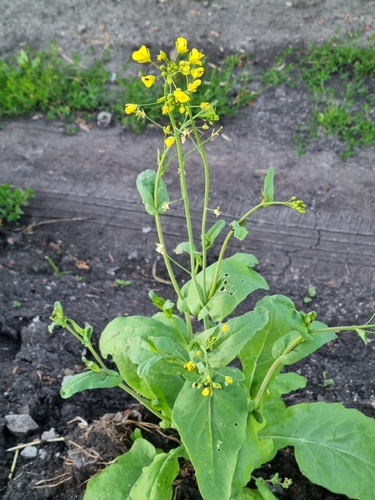
Brassica rapa var. pekinensis x Brassica rapa var. perviridis
Senposai, Oriental greens, Japanese greens
Brassica rupestris
Wild leafy kale