Ficus altissima
Blume
Lofty tree, Council tree
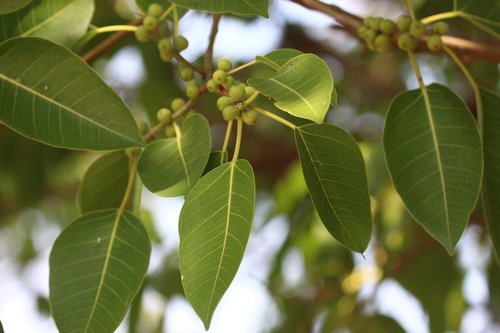
iNaturalist· cc-by-nc
(c) Shin-Ming Ku, some rights reserved (CC BY-NC)
iNaturalist· cc-by-nc
(c) Shin-Ming Ku, some rights reserved (CC BY-NC)
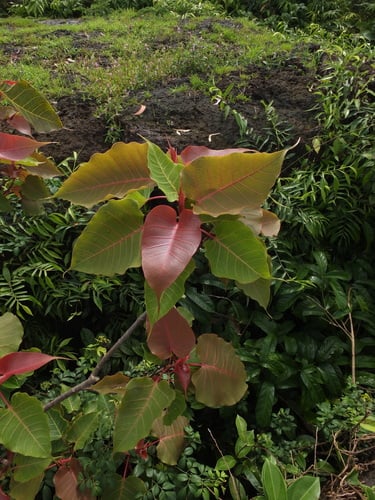
iNaturalist· cc-by-nc
(c) Shin-Ming Ku, some rights reserved (CC BY-NC)
Summary
Source: WikipediaFicus altissima, commonly known as the council tree and lofty fig, is a species of flowering plant, a fig tree in the family Moraceae. It is a large, stately evergreen hemiepiphyte and is native to southeastern Asia.
Description
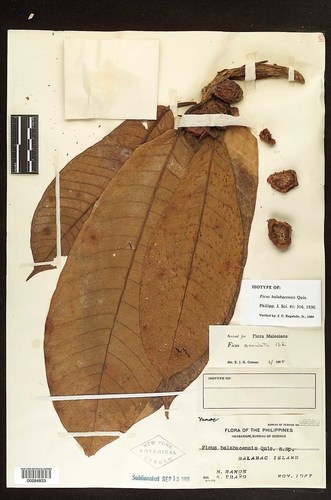
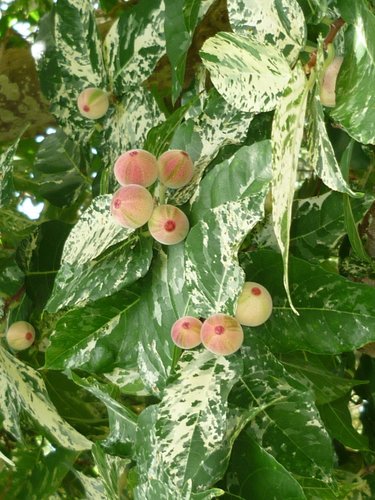
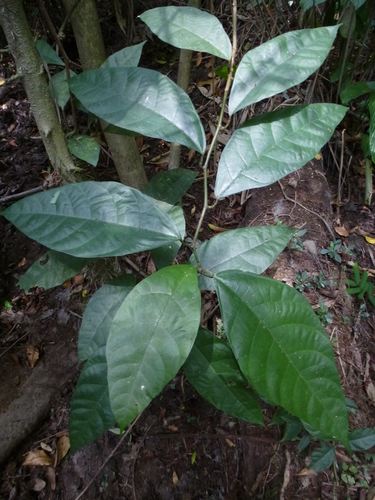
A fig. It is a large tree. The trunk has buttresses. It grows 30 m tall and has a spreading crown. It is a stranger fig starting attached to other plants then sending down roots to allow the tree to grow independently. The bark is smooth and grey. The leaves are alternate and narrowly oval. They are 10 cm long by 4 cm wide. The flowers occur singly or in pairs in the axils of leaves. The fruit or figs are orange-red and 2.5 cm long. They have many seeds.
Edible Uses
Young leaf buds are blanched and then boiled with pork, and the fruit can be eaten.
Traditional Uses
The young leaf buds are blanched and then boiled with pork.
This uses section is brief — help expand it
Distribution
It is a tropical plant. In Yunnan.
Where It Grows
Andamans, Asia, China, Himalayas, Indochina, Indonesia, Laos, Malaysia, Myanmar, Nepal, North America, Northeastern India, Philippines, SE Asia*, Sikkim, Thailand, USA, Vietnam,
Cultivation
This species seems to be confined mainly to the higher elevations in the cooler, northerly part of its range, yet it is found in both lowland and mountainous areas in the more tropical southern part of its range, such as in Java, where it is not uncommon. A fast-growing tree. Fig trees have a unique form of fertilization, each species relying on a single, highly specialized species of wasp that is itself totaly dependant upon that fig species in order to breed. The trees produce three types of flower; male, a long-styled female and a short-styled female flower, often called the gall flower. All three types of flower are contained within the structure we usually think of as the fruit. The female fig wasp enters a fig and lays its eggs on the short styled female flowers while pollinating the long styled female flowers. Wingless male fig wasps emerge first, inseminate the emerging females and then bore exit tunnels out of the fig for the winged females. Females emerge, collect pollen from the male flowers and fly off in search of figs whose female flowers are receptive. In order to support a population of its pollinator, individuals of a Ficus spp. Must flower asynchronously. A population must exceed a critical minimum size to ensure that at any time of the year at least some plants have overlap of emmission and reception of fig wasps. Without this temporal overlap the short-lived pollinator wasps will go locally extinct.
Other Uses
A latex is obtained from the trunk and stems. It can be used to make a rubber, but this is of lower quality than the rubber obtained from Ficus elastica. The fibrous bark is used for cordage. The tree is planted as a pioneer species in northern Thailand in reforestation projects to restore native woodland - it is planted in degraded woodland and open areas in a mix with various other species that all have the ability to grow fast; produce dense, weed-suppressing crowns; and attract seed-dispersing wildlife, particularly birds and bats.
Also Known As
Da qing shu, Hai mee, Niza nihao, Nyaung-peinne, Paleng, Palu
References (4)
- Balkrishna, A., et al, 2022, Indigenous Uses of Plants among Forest-dependent Communities of Seijosa, Arunachal Pradesh. International Journal of Economic Plants 2022, 9(1):064-080
- Natuhara, Y., et al, 2011, Uses of trees in paddy fields in Champasak Province, Southern Lao PDR. Landscape and Ecological Engineering. p 7
- Shi, Y. et al, 2014, An ethnobotanical study of the less known wild edible figs (genus Ficus) native to Xishuangbanna Southwest China. Journal of Ethnobiology and Ethnomedicine. 10:68
- World Checklist of Useful Plant Species 2020. Royal Botanic Gardens, Kew