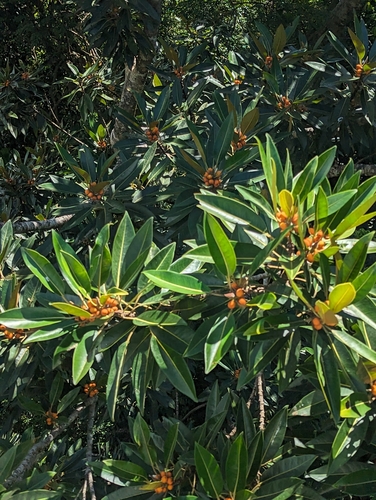
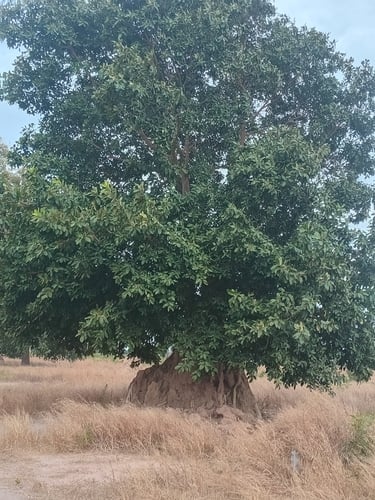
Brosimum utile
(H. B. Kunth.) Oken
Cow tree
iNaturalist· cc-by-nc
(c) Leonardo Álvarez-Alcázar, some rights reserved (CC BY-NC), uploaded by Leonardo Álvarez-Alcázar
iNaturalist· cc-by-nc
(c) Leonardo Álvarez-Alcázar, some rights reserved (CC BY-NC), uploaded by Leonardo Álvarez-Alcázar
iNaturalist· cc-by-nc
(c) Marvin López M., some rights reserved (CC BY-NC), uploaded by Marvin López M.
Summary
Source: WikipediaBrosimum utile (Kunth), also called Galactodendron, Pittier (= B. galactodendron) is a plant species in the family Moraceae.
Description
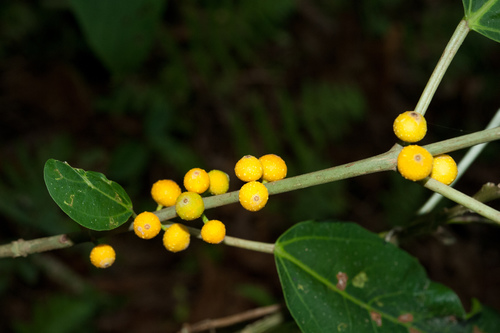
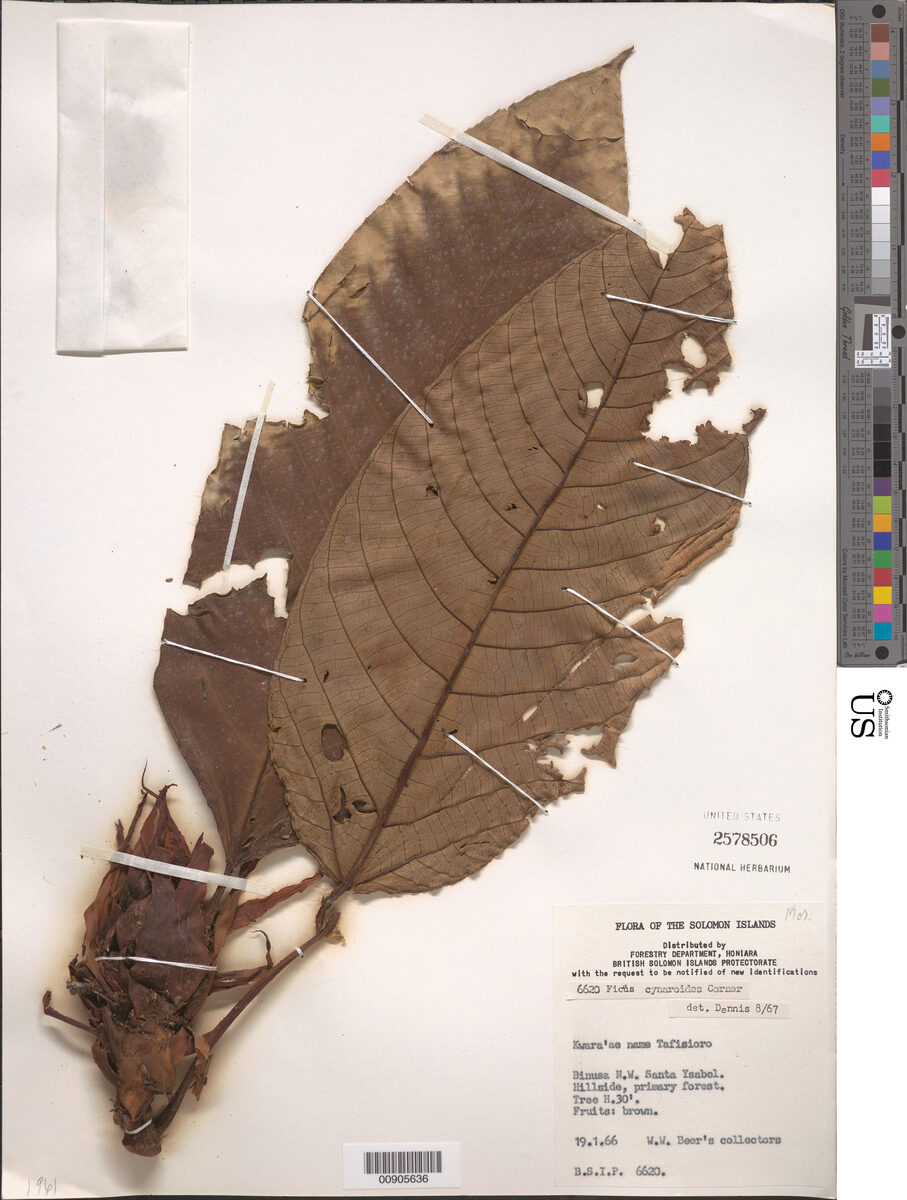
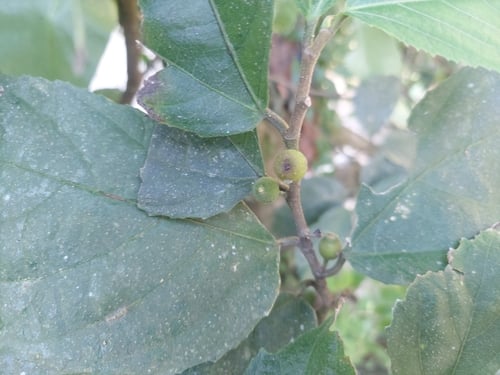
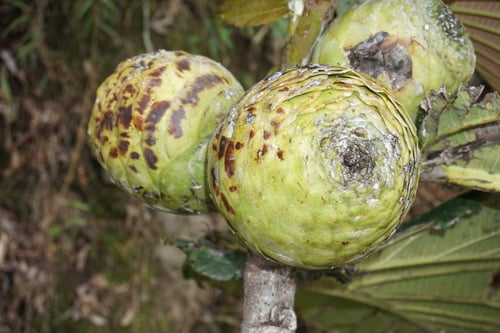
A tall tree. It grows 35 m high. The bark is thick. When the bark is cut a nutritious milky sap flows out. The leaves are thick and leathery. They are 10-20 cm long and narrowly oval and taper to the tip. The fruit are made up of several fused together. There are one or two seeds.
Edible Uses
Edible Parts: Fruit Sap Seed Edible Uses: Drink Milk A nutritious, milky sap, or latex, flows out of incisions made in the bark. The nourishing white liquid, which is slightly viscous and resinous, is consumed like milk. The sap is also said to taste like cream when fresh and is sometimes used to lighten coffee. It can also be used to create a 'cheese' that is made from the thread-like curds that form on the surface of the liquid when it is exposed to the air. The latex has been used as a base for chewing gum. The fleshy fruit with the nutritious seeds are eaten boiled and salted.
Traditional Uses
The sap is eaten. It can be used to make a cheese-like food. The latex is also used for chewing gum. The seeds are eaten raw or roasted. The fruit are eaten raw or cooked.
Medicinal Uses
Analgesic Antitussive The latex is used as an analgesic and is drunk as a medication for colds and whooping cough.
Distribution
A tropical plant. It grows in lowland and lower mountain wet forests. It grows in the dense forest.
Where It Grows
Amazon, Bolivia, Brazil, Central America, Colombia, Costa Rica, Ecuador, French Guiana, Guianas, Guyana, Honduras, India, Mexico, Panama, Peru, South America*, Sri Lanka, Suriname, USA, Venezuela, Vietnam,
Propagation
Seed - Greenwood cuttings.
Other Uses
Fibre Furniture Latex Lighting Paper Wood The fibrous bark has been used for making cloth, blankets and sails. The latex is rich in wax-like substances and has been used to make candles. The heartwood is a uniform yellowish white to yellowish brown or light brown with golden shades; it is not distinctly demarcated from the sapwood. The texture is medium; the grain straight to widely and shallowly interlocked; the lustre high; when seasoned there is no odour or taste. The wood is of moderate weight; soft to moderately hard; not very durable, being susceptible to fungi, dry wood borers and termites. It seasons normally, with only a slight risk of checking or distortion; once seasoned it is poorly stable in service. The wood works well with ordinary tools, however they need to be kept sharp otherwise the interlocked grain and the tension wood which is sometimes prevalent can cause fuzzy grain and burning of saws due to pinching; it takes stains and finishes readily; takes nails and screws well; presents no gluing problems. It is used for purposes such as light carpentry, light construction, flooring, furniture components, plywood, particleboard, fibreboard, pulp and paper products, and mouldings. Special Uses Carbon Farming Food Forest
Production
The flow of sap is greatest in the morning.
Other Information
It is also cultivated.
Synonyms
Also Known As
Baco, Cacaolcillo, Camina'jin, Ccovi ne'mba, Cocal, Guaimaro, Margis, Mastate, Palo de Vaca, Posa hui'to, Sande, Sandi, Santi wiki
References (21)
- Barwick, M., 2004, Tropical and Subtropical Trees. A Worldwide Encyclopedic Guide. Thames and Hudson p 60
- Bircher, A. G. & Bircher, W. H., 2000, Encyclopedia of Fruit Trees and Edible Flowering Plants in Egypt and the Subtropics. AUC Press. p 67 (As Brosimum galactodendron)
- Condit, R., et al, 2011, Trees of Panama and Costa Rica. Princeton Field Guides. p 324
- Contr. U.S. Natl. Herb. 20:102. 1918
- Friedman, J., et al, 1993, A Novel Method for Identification and Domestication of Indigenous Useful Plants in Amazonian Ecuador. In Janick, J. (Ed), New crops. Wiley. (As uleti)
Show all 21 references Hide references
- Gilmore, M. P., et al, 2013, The socio-cultural importance of Mauritia flexuosa palm swamps (aguajales) and implications for multi-use management in two Maijuna communities of the Peruvian Amazon. Journal of Ethnobiology and Ethnomedicine 2013, 9:29
- Grandtner, M. M., 2008, World Dictionary of Trees. Wood and Forest Science Department. Laval University, Quebec, Qc Canada. (Internet database http://www.WDT.QC.ca)
- Grandtner, M. M. & Chevrette, J., 2013, Dictionary of Trees, Volume 2: South America: Nomenclature, Taxonomy and Ecology. Academic Press p 74
- Hedrick, U.P., 1919, (Ed.), Sturtevant's edible plants of the world. p 137 (As Brosimum galactodendron)
- Kermath, B. M., et al, 2014, Food Plants in the Americas: A survey of the domesticated, cultivated and wild plants used for Human food in North, Central and South America and the Caribbean. On line draft. p 140
- Kew Plants of the World Online
- Lopez-Diago, D. & Garcia, N., 2021, Wild edible fruits of Colombia. Biota ColomBiana 22 (2) p 43
- Penafield Anchundia, D. D., 2017, Traditional food consumption and its nutritional contribution in Guasaganda, Central Ecuador. PhD Ghent University p 72
- Purseglove, J.W., 1968, Tropical Crops Dicotyledons, Longmans. p 377
- Reis, S. V. and Lipp, F. L., 1982, New Plant Sources for Drugs and Foods from the New York Botanical Garden herbarium. Harvard. p 40
- Roa, J. A. G. & Boada, D. S. G., 2018, Fundación para el Fortalecimiento de la Fruticultura y Plantas Alimenticias no Convencionales en Colombia.
- Segura, S., et al, 2018, The edible fruit species in Mexico. Genet Resour Crop Evol (2018) 65:1767–1793
- Smith, N., Mori, S.A., et al, 2004, Flowering Plants of the Neotropics. Princeton. p 256
- Torre, de la, L., et al, 2008, Enciclopedia de las Plantas Útiles del Ecuador. Herbario QCA. Pontificia Universidad Católica del Ecuador. p 447
- Wiersema, J. H. & Leon, B., 2013, World Economic Plants. A Standard Reference CRC Press. 2nd Ed. p 120
- Zuchowski W., 2007, Tropical Plants of Costa Rica. A Zona Tropical Publication, Comstock Publishing. p 276