Broussonetia papyrifera
(L.) L'Herit ex Vent.
Paper mulberry
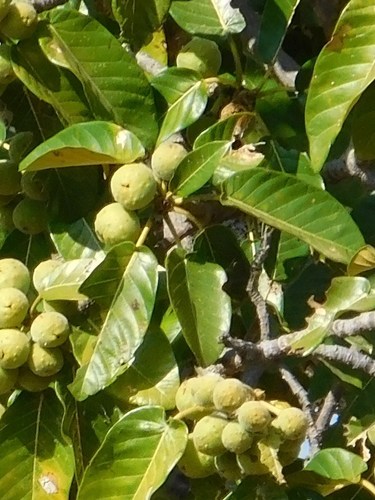
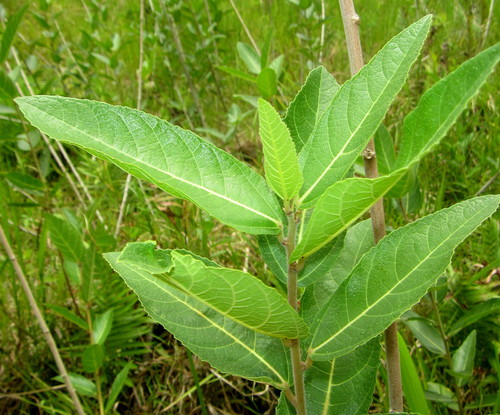
iNaturalist· cc-by-nc
(c) dearufo, some rights reserved (CC BY-NC)
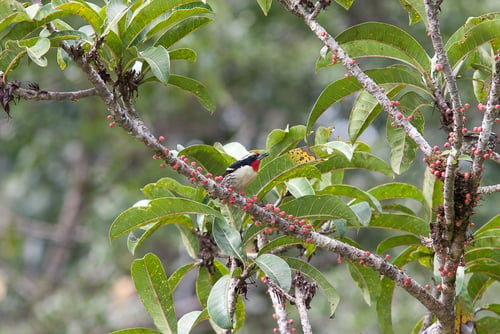
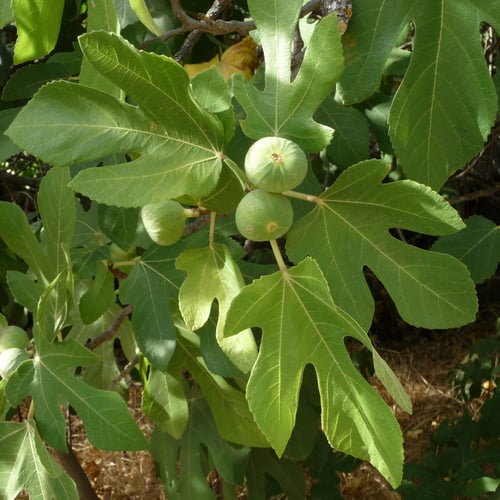
iNaturalist· cc-by-nc
(c) Penlock Chen, some rights reserved (CC BY-NC), uploaded by Penlock Chen
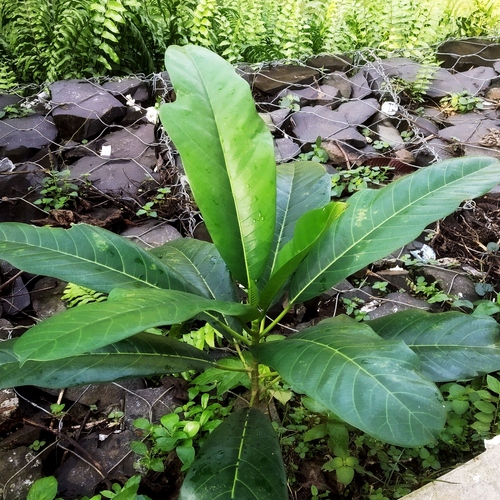
iNaturalist· cc-by-sa
(c) Douglas Goldman, some rights reserved (CC BY-SA), uploaded by Douglas Goldman
Summary
Source: WikipediaMedium-growing deciduous tree reaching 9m tall and wide. Flowers August to September with seeds ripening September to November. Dioecious with male and female flowers on separate plants; both sexes required for seed production. Not self-fertile. Tolerates light sandy, medium loamy, and heavy clay well-drained soils and very acid conditions, with mildly acid to basic pH suitable. Requires full sun and adapts to dry or moist soils and drought. Tolerates atmospheric pollution. Hardy to UK zone 8, frost tender.
Description
Medium-growing deciduous tree reaching 9m tall and wide. Flowers August to September with seeds ripening September to November. Dioecious with male and female flowers on separate plants; both sexes required for seed production. Not self-fertile. Tolerates light sandy, medium loamy, and heavy clay well-drained soils and very acid conditions, with mildly acid to basic pH suitable. Requires full sun and adapts to dry or moist soils and drought. Tolerates atmospheric pollution. Hardy to UK zone 8, frost tender.
Edible Uses
Edible Parts: Flowers Fruit Leaves Edible Uses: Fruit - raw. The fruit comprises a ball about 1.5cm in diameter with numerous small edible fruits protruding - there is not much edible flesh but it has a lovely flavour. Prolonged ingestion is said to weaken the bones. Leaves - cooked. The dried leaf contains 1% calcium carbonate (this report does not mention edibility). Flowers. No more details.
Traditional Uses
The young leaves are lightly cooked and eaten. The fleshy part of the ripe compound fruit is sweet and edible. It is eaten raw. They are added to desserts and conserves. The seeds are also edible. (The bark is also used for making cloth.) CAUTION: Eating a lot of fruit is reported to affect calcium absorption.
Medicinal Uses
Astringent Diaphoretic Diuretic Dysentery Galactogogue Haemostatic Laxative Ophthalmic Skin Stimulant Stomachic Tonic Vulnerary Astringent, diuretic, tonic, vulnerary. The leaf juice is diaphoretic and laxative - it is also used in the treatment of dysentery. It is also poulticed onto various skin disorders, bites etc. The stem bark is haemostatic. The fruit is diuretic, ophthalmic, stimulant, stomachic and tonic. The root is cooked with other foods as a galactogogue.
Distribution
E. Asia - China, Japan, Korea, Myanmar, Thailand, Laos, Cambodia, Vietnam, Malaysia.
Where It Grows
Fruit, Flowers, Leaves, Seeds,
Cultivation
Trees can be grown from seeds or root suckers. Seeds are often not available. Young buds can be removed to give a straight unbranched tree. The seeds take 1-3 months to germinate at 15°C. Stem cuttings can be used.
Propagation
Seed - no pre-treatment is required. Sown in the autumn or spring in a greenhouse, germination usually takes place within 1 - 3 months at 15°c. When large enough to handle, prick the seedlings out into individual pots and grow them on in the greenhouse for at least their first winter, planting them out into their permanent positions in late spring or early summer, after the last expected frosts. Cuttings of half-ripe wood, 8 - 12cm long with a heel, July/August in a frame. High percentage. Cuttings of mature wood of the current season's growth, November in a frame. Root cuttings in winter. Layering in spring.
Other Uses
Fibre Fodder Leather Paper Wood A fibre from the bark is used in making paper, cloth, rope etc. The fibre can be produced by beating strips of bark on a flat surface with a wooden mallet. A very fine cloth can be made in this way, the more the bark is beaten the finer the cloth becomes. Larger sizes can be made by overlapping 2 pieces of bark and beating them together. A leather substitute can also be made from the bark. When used for making paper branches are harvested after the leaves have fallen in the autumn, they are steamed and the fibres stripped off. In humid areas this can be done without steaming the branches. The inner and outer bark are then separated by scraping (or simply peeling in humid areas) and the fibres are cooked for 2 hours with lye before being hand pounded with mallets. The paper varies in colour if the outer and inner barks are used together or separately. Wood - coarse grained, soft, easily worked, light, not very durable. Used for cups, bowls, furniture etc. Its timber does not have high commercial value. Animal feed, fodder, forage: Fodder/animal feed, Invertebrate food for silkworms. Environmental Uses: Agroforestry. Erosion control or dune stabilization. Revegetation. Shade and shelter. Soil improvement. Windbreak. [1d]. Special Uses Carbon Farming
Production
It is fast growing.
Other Information
Moraceae
Notes
A small deciduous tree. It grows up to about 8-15 metres tall. The stem is often surrounded by a ring of suckers. The bark is dark grey. It has very hairy branches and a milky sap. The leaf stalk is 2.3-8 cm long. Leaves are arranged in spirals. The leaves are large, heart shaped and sometimes with 3 lobes. Leaves can be 6-20 cm long by 5-9 cm wide. The leaves are rough on the upper side and woolly underneath. Male and female flowers are produced on separate plants. Male flowers are produced on stout hanging flower stalks up to 7 cm long. These have creamy anthers. Female flowers have slender purple stigmas and are produced in round heads which can be 2 cm across. It has a club shaped pulpy fruit, orange in colour. They are mulberry like and edible. Fruit do not occur on plants in the Pacific as only male trees occur.
Synonyms
Also Known As
Ai masi, Aute, Duong, Gou shu, Goushuguo, Goutao, Gouye, Guo sha, Hiapo, Hwaing-kan-setku, Jangali toot, Kaagda, Lafi, Maisa, Mai-sai-le, Mai-sau, Maisha, Mai-tun-sao, Malaing, Malo, Mamajang, Masa, Ma san, Masi, Me day, Musa, Namas, Na sha er zi, Poh-krasah, Por sa, Rou yang, Sa lae, Tapa cloth tree, Tha-le, Tomune, Tutu, U'a, Ute, Wauke
References (63)
- Polynesian mulberry references Broussonetia papyrifera
- Altschul, S.V.R., 1973, Drugs and Foods from Little-known Plants. Notes in Harvard University Herbaria. Harvard Univ. Press. Massachusetts. no. 678
- Ambasta S.P. (Ed.), 2000, The Useful Plants of India. CSIR India. p 87
- Bajpai, O., et al, 2015, Tree species of the Himalayan Terai region of Uttar Pradesh, India: a checklist. Check List 11(4): 1718
- Barwick, M., 2004, Tropical and Subtropical Trees. A Worldwide Encyclopedic Guide. Thames and Hudson p 61
Show all 63 references Hide references
- Bircher, A. G. & Bircher, W. H., 2000, Encyclopedia of Fruit Trees and Edible Flowering Plants in Egypt and the Subtropics. AUC Press. p 67
- Brickell, C. (Ed.), 1999, The Royal Horticultural Society A-Z Encyclopedia of Garden Plants. Convent Garden Books. p 192
- Brown, Flora of Southeastern Polynesia 3 Dicotyledons p 33
- Cao, Y., et al, 2020, Ethnobotanical study on wild edible plants used by three trans-boundary ethnic groups in Jiangcheng County, Pu’er, Southwest China. Journal of Ethnobiology and Ethnomedicine (2020) 16:66
- Clarke, W.C. & Thaman, R.R., 1993, Agroforestry in the Pacific Islands: Systems for sustainability. United Nations University Press. New York. p 225
- Coombes, A.J., 2000, Trees. Dorling Kindersley Handbooks. p 218
- Cundall, P., (ed.), 2004, Gardening Australia: flora: the gardener's bible. ABC Books. p 260
- Dobriyal, M. J. R. & Dobriyal, R., 2014, Non Wood Forest Produce an Option for Ethnic Food and Nutritional Security in India. Int. J. of Usuf. Mngt. 15(1):17-37
- Elevitch, C.R.(ed.), 2006, Traditional Trees of the Pacific Islands: Their Culture, Environment and Use. Permanent Agriculture Resources, Holualoa, Hawaii. p 171
- Etherington, K., & Imwold, D., (Eds), 2001, Botanica's Trees & Shrubs. The illustrated A-Z of over 8500 trees and shrubs. Random House, Australia. p 142
- Flora of Pakistan. www.eFloras.org
- Franklin, J., Keppel, G., & Whistler, W., 2008, The vegetation and flora of Lakeba, Nayau and Aiwa Islands, Central Lau Group, Fiji. Micronesica 40(1/2): 169–225, 2008
- French, B.R., 1986, Food Plants of Papua New Guinea, A Compendium. Asia Pacific Science Foundation p 321
- Gillaumin, R., 1954, Les Plantes utiles des Nouvelles-Hebrides (fin et complement) In: Journal d'agriculture tropicale et de botanique appliquee Vol. 1, No. 10-12 pp 453-460
- Hani Medicine of Xishuangbanna, 1999, p 419
- Hedrick, U.P.(ed), 1919, Sturtevant’s Edible Plants of the World p 121 (138)
- Hibbert, M., 2002, The Aussie Plant Finder 2002, Florilegium. p 47
- Hide, R., et al, 1979, A checklist of some plants in the territory of the Sinasina Nimai (Simbai Province, Papua New Guinea), with notes on their uses. Department Anthropology, University of Aukland
- Hwang, H., et al, 2013, A Study on the Flora of 15 Islands in the Western Sea of Jeollanamdo Province, Korea. Journal of Asia-Pacific Biodiversity Vol. 6, No. 2 281-310
- Jin, Chen et al, 1999, Ethnobotanical studies on Wild Edible Fruits in Southern Yunnan: Folk Names: Nutritional Value and Uses. Economic Botany 53(1) pp 2-14
- Ju, Y., et al, 2013, Eating from the wild: diversity of wild edible plants used by Tibetans in Shangri-la region, Yunnan, China, Journal of Ethnobiology and Ethno medicine 9:28
- Kang, Y., et al, 2012, Wild food plants and wild edible fungi in two valleys on the Qinling Mountains (Shaanxi, central China) Journal of Ethnobiology and Ethnomedicine; 9:26
- Kiple, K.F. & Ornelas, K.C., (eds), 2000, The Cambridge World History of Food. CUP p 1828
- Krishen P., 2006, Trees of Delhi, A Field Guide. DK Books. p 104
- Kuo, W. H. J., (Ed.) Taiwan's Ethnobotanical Database (1900-2000), http://tk.agron.ntu.edu.tw/ethnobot/DB1.htm
- Liefting, A., et al, Samoan plant names. http://en.wikipedia.org
- Little, E.L., 1980, National Audubon Society Field Guide to North American Trees. Alfred A. Knopf. p 429
- Luo, B., et al, 2019, Wild edible plants collected by Hani from terraced rice paddy agroecosystem in Honghe Prefecture, Yunnan, China. Journal of Ethnobiology and Ethnomedicine 15:56
- Lyle, S., 2006, Discovering fruit and nuts. Land Links. p 95
- Makino,
- Marinelli, J. (Ed), 2004, Plant. DK. p 446
- Martin, F.W. & Ruberte, R.M., 1979, Edible Leaves of the Tropics. Antillian College Press, Mayaguez, Puerto Rico. p 205
- Mot So Rau Dai an Duoc O Vietnam. Wild edible Vegetables. Ha Noi 1994, p 175
- Mozhui, R., et al, 2011, Wild edible fruits used by the tribals of Dimapur district of Nagaland, India. Pleione 5(1): 56 - 64.
- Neal, C.M., 1965, In Gardens of Hawaii, Bishop Museum Press. p
- Parham, B. E. V., 1972, Plants of Samoa. New Zealand Department of Scientific and Industrial Research. Information Series. No. 85 p 134
- Peekel, P.G., 1984, (Translation E.E.Henty), Flora of the Bismarck Archipelago for Naturalists, Division of Botany, Lae, PNG. p 131, 133
- Plants for a Future database, The Field, Penpol, Lostwithiel, Cornwall, PL22 0NG, UK. http://www.scs.leeds.ac.uk/pfaf/
- Plants of Papua New Guinea LAE herbarium record
- Purseglove, J.W., 1968, Tropical Crops:Dicotyledons, Longmans. p 377
- READ
- Recher, P, 2001, Fruit Spirit Botanical Gardens Plant Index. www.nrg.com.au/~recher/ seedlist.html p 5
- Smith, A.C., 1981, Flora Vitiensis Nova, Lawaii, Kuai, Hawaii, Volume 2 p 203
- Staples, G.W. and Herbst, D.R., 2005, A tropical Garden Flora. Bishop Museum Press, Honolulu, Hawaii. p 404 (Drawing)
- Tabl. regn. veg. 3:547. 1799
- Tanaka, T., 1976, Tanaka’s Cyclopedia of Edible Plants of the World. Keigaku. p 108
- Terra, G.J.A., 1973, Tropical Vegetables. Communication 54e Royal Tropical Institute, Amsterdam, p 33
- Valder, P., 1999, The Garden Plants of China. Florilegium. p 267
- Van Sam, H. et al, 2004, Trees of Laos and Vietnam: A Field Guide to 100 Economically or Ecologically Important Species. Blumea 29 (2004) 201-349
- Wang, J. et al, 2013, A Study on the Utilization of Wild Plants for Food in Liangshan Yi Autonomous Prefecture. Plant Diversity and Resources. 35(4): 416-471
- Wealth of India p 230
- World Checklist of Useful Plant Species 2020. Royal Botanic Gardens, Kew
- www.eFloras.org Flora of China
- www.worldagroforestrycentre.org/treedb/
- Xu, You-Kai, et al, 2004, Wild Vegetable Resources and Market Survey in Xishuangbanna, Southwest China. Economic Botany. 58(4): 647-667.
- Yuncker, T. G., 1943, The Flora of Niue Island. Bernice P. Bishop Museum Bulletin 178 p 46
- Yuncker, T.G., 1959, Plants of Tonga, Bernice P. Bishop Museum, Hawaii, Bulletin 220. p 97
- Zizka, G., 1991, Flowering Plants of Easter Island. Palmarum Hortus Francofurtensis