Broussonetia luzonica
(Blanco) Bureau
Philippine spinach
iNaturalist· cc-by-nc
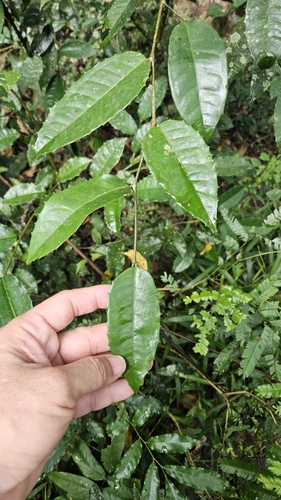
(c) mtntopview, some rights reserved (CC BY-NC)
iNaturalist· cc-by-nc
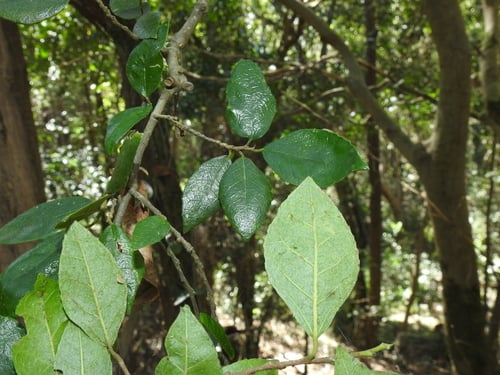
(c) mtntopview, some rights reserved (CC BY-NC)
iNaturalist· cc-by-nc
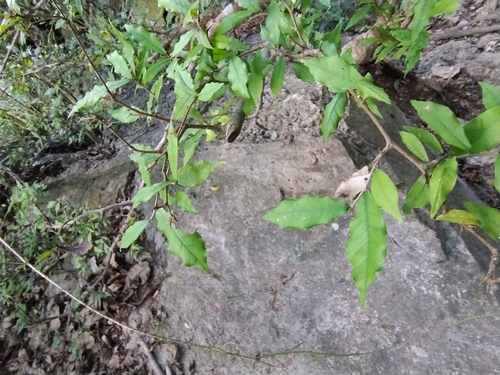
(c) mtntopview, some rights reserved (CC BY-NC)
Description
A medium sized tree. It loses its leaves during the year. It grows 15 m tall and the trunk is 30 cm across. The leaves are alternate, pointed at the tip and rounded at the base. They are 5 to 15 cm long. The lower surface of the leaves is very hairy. The flowers are very small and borne on very long slender spike-like flowering branches.
Edible Uses
The flowers and young leaves are cooked as a vegetable, often boiled and eaten with roasted fish. The ripe fruit is sweet and eaten raw. The plant is considered delicious and is cultivated as a food plant.
Traditional Uses
The flowers and young leaves are cooked and eaten as a vegetable. They are boiled and eaten with roasted fish. The ripe fruit is sweet and eaten raw.
Medicinal Uses
None mentioned.
Distribution
It is a tropical plant. They occur from northern Luzon to Basilan and are common in secondary forests. It thrives in sunny positions. It can grow in soils of average fertility.
Where It Grows
Asia, Hawaii, Pacific, Philippines*, SE Asia, USA,
Cultivation
It can be grown from seeds or from cuttings of mature branches.
Other Information
It is a cultivated food plant. It is considered delicious.
Notes
The Moraceae are mostly in the warm areas of the world.
Synonyms
Also Known As
Alokon, Allukon, Ame, Babayan, Baeg and alukon, Balong-kadios, Himbabao, Himbaba-o, Malambingan, Tuktukgo
References (14)
- Alegado, A. M. & De Guzman, R. B., 2014, Indigenous food crops of the Aetas tribe in the Philippines and their traditional methods of food preparation. in Promotion of Underutilized Indigenous Food Resources for Food Security and Nutrition in Asia and Pacific. FAO. Bangkok p 160
- Arora, R. K., 2014, Diversity in Underutilized Plant Species - An Asia-Pacific Perspective. Bioversity International. p 56 (As Allaeanthus luzonieus)
- Bircher, A. G. & Bircher, W. H., 2000, Encyclopedia of Fruit Trees and Edible Flowering Plants in Egypt and the Subtropics. AUC Press. p 67. Also p 18 (As Allaeanthus glabra)
- Brown, W.H., 1920, Wild Food Plants of the Philippines. Bureau of Forestry Bulletin No. 21 Manila. p 40
- Carig, Elizabeth T., 2020, Guidebook on Native Trees within the Quirino Forest Landscape. Plaridel, Bulacan, St. Andrew Publishing House. p 60
Show all 14 references Hide references
- Food Composition Tables for use in East Asia FAO http://www.fao.org/infoods/directory No. 542 (As Allaeanthus luzonicus)
- Polinag, M. A., 2003, Food from the Wilderness. Department of Environment and Natural Resources. Laguna. (As Allaeanthus luzonicus)
- Maghirang, R. G., et al, 2018. Ethnobotanical Studies of Some Plants Commonly Used as Vegetables in Selected Provinces of the Philippines. Journal of Nature Studies. 17(2), 30-43.
- Martin, F.W. & Ruberte, R.M., 1979, Edible Leaves of the Tropics. Antillian College Press, Mayaguez, Puerto Rico. p 205
- Menisa, A. A., et al, 2012, Survey and characterization of Indigenous Food Plants in Ilocos Norte, Philippines. SEARCA Discussion Paper series No. 2011-2
- Monsalud, M.R., Tongacan, A.L., Lopez, F.R., & Lagrimas, M.Q., 1966, Edible Wild Plants in Philippine Forests. Philippine Journal of Science. p 499 Also p 501 (As Broussonetia luzonicus var. glaber)
- Staples, G.W. and Herbst, D.R., 2005, A tropical Garden Flora. Bishop Museum Press, Honolulu, Hawaii. p 405
- Terra, G.J.A., 1973, Tropical Vegetables. Communication 54e Royal Tropical Institute, Amsterdam, p 19
- World Checklist of Useful Plant Species 2020. Royal Botanic Gardens, Kew (As Allaeanthus luzonicus)