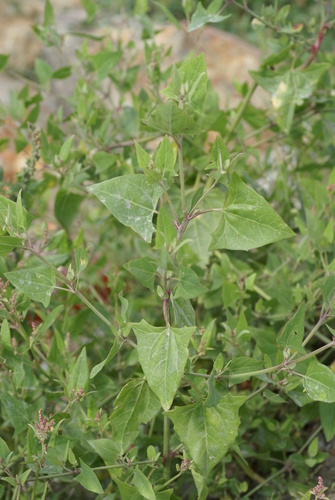
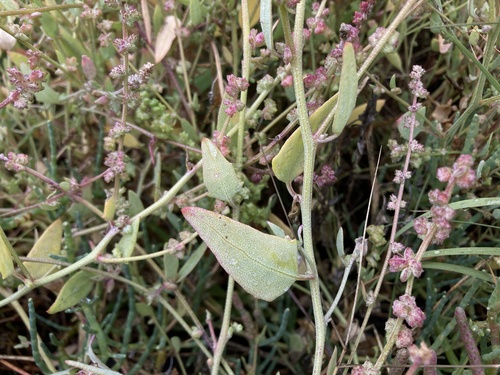
Dysphania botrys
(L.) Mosyakin & Clemants
Jerusalem oak goosefoot
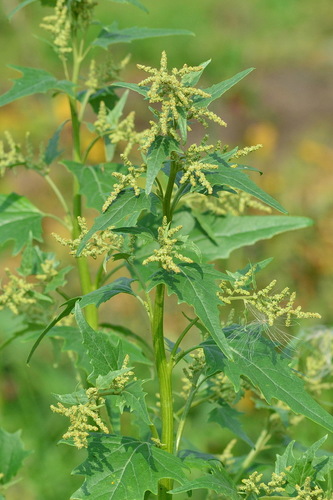
iNaturalist· cc-by-nc
(c) erinh, some rights reserved (CC BY-NC), uploaded by erinh
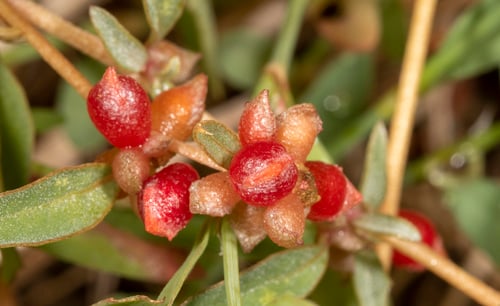
iNaturalist· cc-by-nc
(c) Nate Martineau, some rights reserved (CC BY-NC), uploaded by Nate Martineau
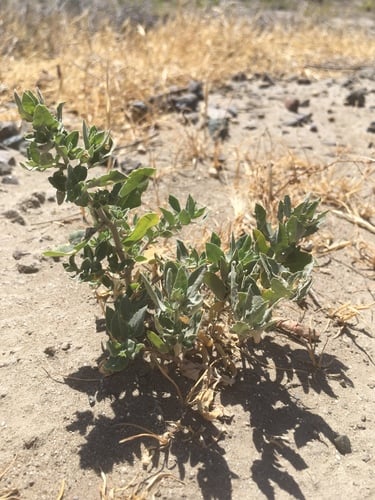
iNaturalist· cc-by-nc
(c) njjturner, some rights reserved (CC BY-NC), uploaded by njjturner
Summary
Source: WikipediaDysphania botrys (syn. Chenopodium botrys), the Jerusalem oak goosefoot, sticky goosefoot or feathered geranium, is a flowering plant in the genus Dysphania (the glandular goosefoots). It is native to the Mediterranean region. Jerusalem oak goosefoot was formerly classed in the genus Ambrosia, with the binomial name Ambrosia mexicana. It is naturalised in the United States and Mexico, the old species synonym deriving from the latter.
Description
An annual herb in the Amaranthaceae family, growing 20-50 cm tall with yellow-green foliage. It is found in warm temperate and subtropical regions.
This description is brief — help expand it
Edible Uses
The leaves are cooked and eaten.
Traditional Uses
The leaves are cooked and eaten.
This uses section is brief — help expand it
Distribution
It is a warm temperate and subtropical plants.
Where It Grows
Africa, Asia, Central Asia, China, Europe, Himalayas, India, Pakistan, North Africa, Tajikistan,
Synonyms
Also Known As
Bathu, Kharawa, Khurpen, Lowar, Sokana
References (5)
- Brevard County Edible Acres
- Khan, A. H., et al, 2023, Traditional foraging for ecological transition? Wild food ethnobotany among three ethnic groups in the highlands of the eastern Hindukush, North Pakistan. Journal of Ethnobiology and Ethnomedicine 19:9
- Masoodi, H. U. R. & Sundriyal, R. C., 2020, Richness of non-timber forest products in Himalayan communities—diversity, distribution, use pattern and conservation status. Journal of Ethnobiology and Ethnomedicine 16:56
- Rana, D., et al, 2019, Ethnobotanical knowledge among the semi-pastoral Gujjar tribe in the high altitude (Adhwari’s) of Churah subdivision, district Chamba, Western Himalaya. Journal of Ethnobiology and Ethnomedicine (2019) 15:10
- www.eFloras.org Flora of China