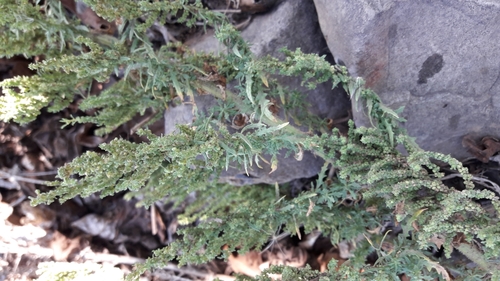
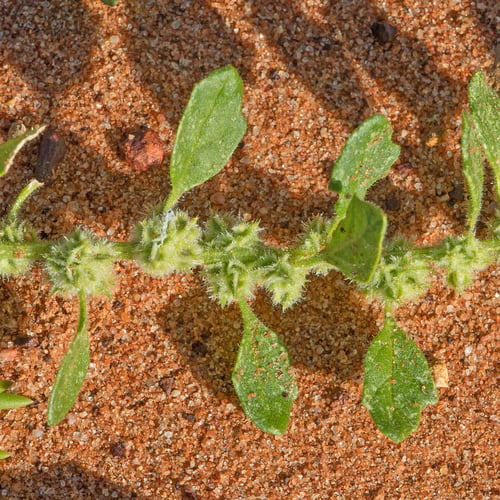
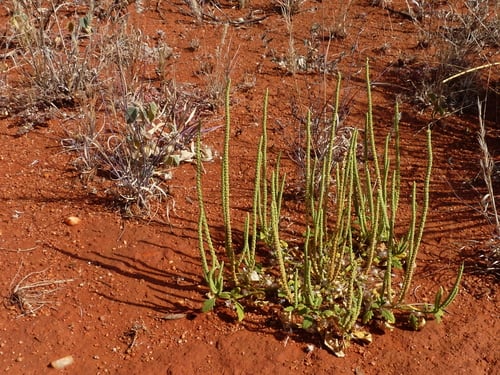
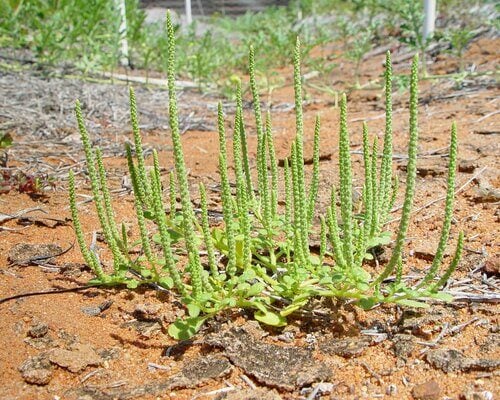
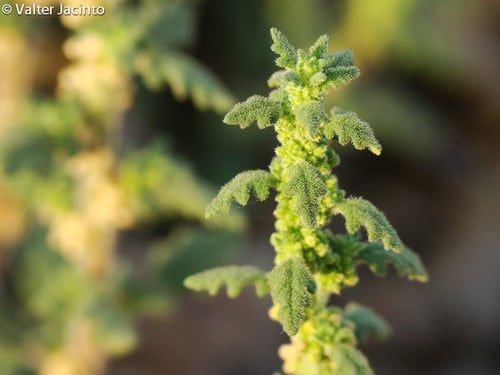
Bassia scoparia - (L.)A.J.Scott.
(L.)A.J.Scott.
Summer Cypress, Burningbush
gbif· cc-by-nc
castlebrinkk
gbif· cc-by-nc
Nick Moore
gbif· cc-by-nc
janelew
Description
Bassia scoparia is a ANNUAL growing to 0.3 m (1ft) at a fast rate. See above for USDA hardiness. It is hardy to UK zone 6 and is not frost tender. It is in flower in September, and the seeds ripen in October. The flowers are pollinated by Wind. Suitable for: light (sandy) and medium (loamy) soils and can grow in nutritionally poor soil. Suitable pH: mildly acid, neutral and basic (mildly alkaline) soils. It cannot grow in the shade. It prefers moist soil and can tolerate drought. The plant can tolerates strong winds but not maritime exposure.
Edible Uses
Young leaves - cooked. A delicious taste, they are used as a vegetable. A nutritional analysis is available. Some caution is advised, see the notes above on toxicity. Seed - dried and ground into a powder then mixed with cereals when making bread, biscuits etc. Very small and fiddly to use, it is also not a very reliable crop in Britain due to its late season of flowering. On a zero moisture basis, the seed contains 20.4 - 27.5% protein, 8.8 - 16% fat and 3.4 - 9.4% ash. In Japan the seeds are used a food garnish called tonburi. Taste, Processing & Kitchen Notes: Raw or boiled leaves taste bitter-astringent, alkaline, and resinous; repeated boiling cannot fully remove harsh overtones. Wild seeds have an acrid, dusty quinoa-like flavor; repeated soaking and boiling barely improves them. Cultivated tonburi (Akita Prefecture, Japan) undergoes: 1. Drying ripe seeds, 2. Boiling, 3. Soaking 24 h cold, 4. Hand-rubbing to remove coats, 5. Re-soaking in vinegar water ? mild, green, caviar-textured seed with taste akin to asparagus/artichoke. Wild American seed seldom achieves this quality due to smaller size, higher alkalinity, and excess resins.
Medicinal Uses
Antibacterial Antifungal Antiphlogistic Astringent Cardiotonic Diuretic Dysentery Eczema Skin Urinary. Antibacterial, antifungal. The leaves and fruits are cardiotonic and diuretic. The stems are used in the treatment of dysentery, diarrhoea and dyspepsia. The seed is antiphlogistic, astringent and diuretic. It is used to treat skin infections such as eczema ad scabies, and diseases of the urinary tract. The seed contains harmine, which can have adverse effects upon the gastro-intestinal tract and the central nervous system.
Known Hazards
Plants contain some saponins and should not be eaten in large quantities. Saponins are a toxin found in many of our daily foods such as many beans. They are usually present in quantities too small to be concerned about and are also very poorly absorbed by the body, tending to pass straight through without causing any problems. Saponins are much more toxic to some creatures, such as fish, and hunting tribes have traditionally put large quantities of them in streams, lakes etc in order to stupefy or kill the fish.
Distribution
Europe to Western N. America.
Where It Grows
TEMPERATE ASIA: Cyprus, Turkey, Russian Federation-Ciscaucasia (Ciscaucasia), Armenia, Azerbaijan, Russian Federation-Western Siberia (Western Siberia), Kazakhstan, Kyrgyzstan, Tajikistan, Turkmenistan, Uzbekistan, Russian Federation (Primorye, Amur), China (Heilongjiang Sheng, Hebei Sheng, Gansu Sheng, Jilin Sheng, Liaoning Sheng, Shanxi Sheng, Shaanxi Sheng, Qinghai Sheng, Nei Mongol Zizhiqu, Ningxia Huizi Zizhiqu, Xinjiang Uygur Zizhiqu), Korea, Japan (Honshu, Kyushu, Shikoku) TROPICAL ASIA: Nepal EUROPE: Russian Federation-European part (European part)
Cultivation
Size & Landscape Performance: Fast annual 0.3–2 m tall; upright to globe-shaped; vivid green turning orange-red-purple in fall. Sometimes planted as temporary hedges or soil stabilizers but self-seeds freely and becomes weedy.Full sun; thrives in poor, alkaline, or disturbed soils—road shoulders, field margins, stockyards. High nitrogen levels encourage lush growth but also toxic nitrate accumulation. Tolerates salinity, drought, and heat; intolerant of shade or waterlogging. An easily grown plant, it succeeds in ordinary garden soil. Succeeds in any reasonably fertile light well-drained but moisture retentive soil in a sunny position. A frost tender plant, it is grown as a spring-sown annual in Britain. This species is cultivated in Korea for its use as a broom. The subspecies B. scoparia trichophylla. (Schmeiss.)Schinz.&Thell. is the form most often found in cultivation in Britain. dentification & Habit: Upright, many-branched annual herb with solitary stem base and broom-like canopy. Leaves alternate, narrow-lanceolate (1–5 cm), entire, softly hairy, 3–5-veined, and sessile. Flowers tiny, green, in dense axillary and terminal spikes; calyx lobes 5 that enlarge into thin wings around fruit. Fruits are small utricles enclosed by papery calyces. Foliage turns red to bronze before frost. Pests & Problems: Generally pest-free; over-fertilization leads to excessive nitrate content. Aphids and leaf miners occasionally present. As tumbleweeds, dry skeletons are fire hazards and wind dispersal nuisances.
Propagation
Seed - sow spring in a greenhouse and plant out in May. The seed can also be sown in situ in late April or early May.
Other Uses
Broom Fodder. The whole plant is used as a broom. The green form is used. An ornamental for its red fall foliage. It has also been useful in erosion control on denuded soils. It has been suggested as an agent of phytoremediation, because it is a hyperaccumulator of chromium, lead, mercury, selenium, silver, zinc, and uranium. Bassia scoparia contains higher levels of protein and oxalate than most grasses and fodder plants, thus it also serves as a good forage crop for livestock. When grown as ornamental plant, it is a good choice as evergreen foliage plant for landscapes. Ecology & Wildlife: Provides limited forage (low palatability) but consumed by livestock when other feed is absent—can cause nitrate or oxalate poisoning if > 50 % of diet. Offers cover and seed for small birds late season. Successional colonizer that stabilizes soil briefly before giving way to perennials.
Synonyms
Also Known As
Burningbush, ragweed, summer cypress, mock-cypress, kochia, belvedere, Mexican firebrush, and Mexican fireweed. Because its texture is similar to caviar, it has been called "land caviar", "field caviar", and "mountain caviar" in Japan.