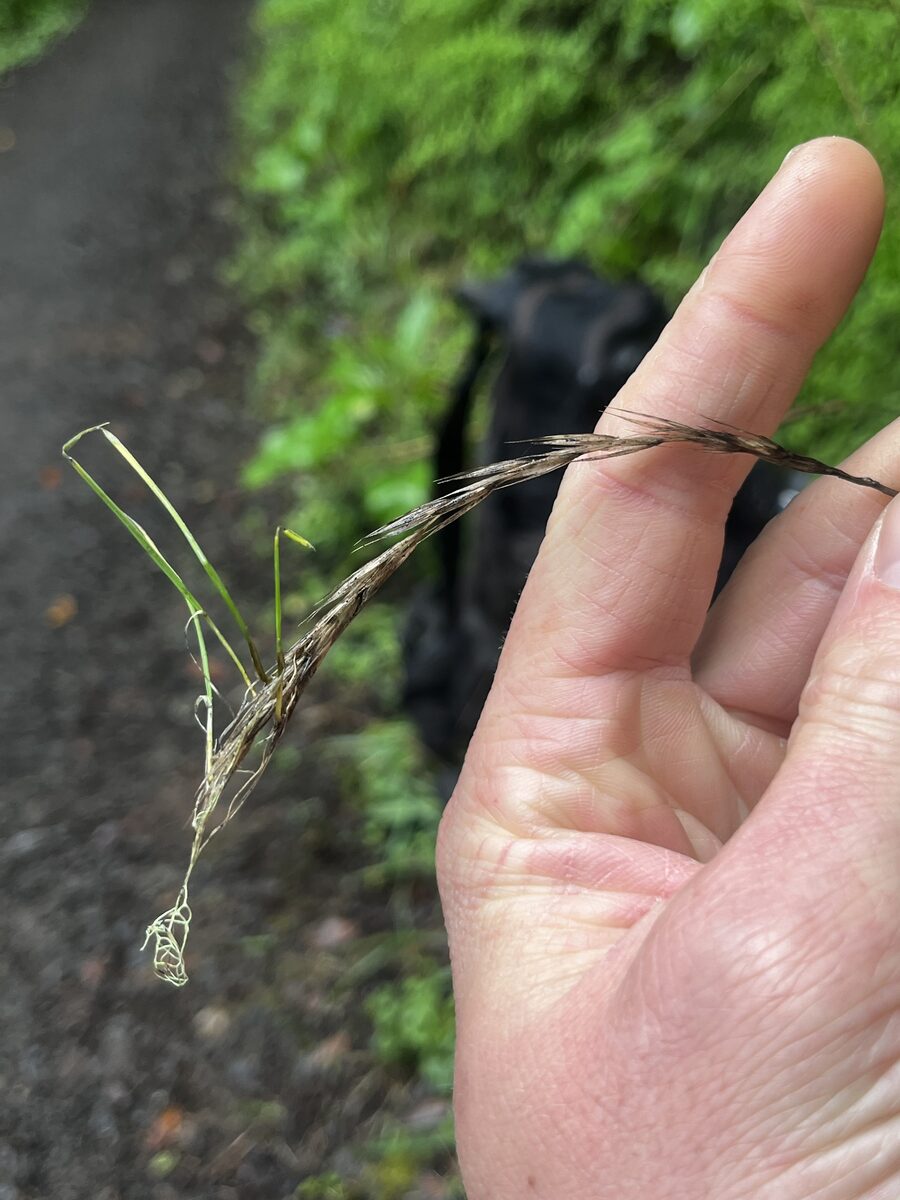
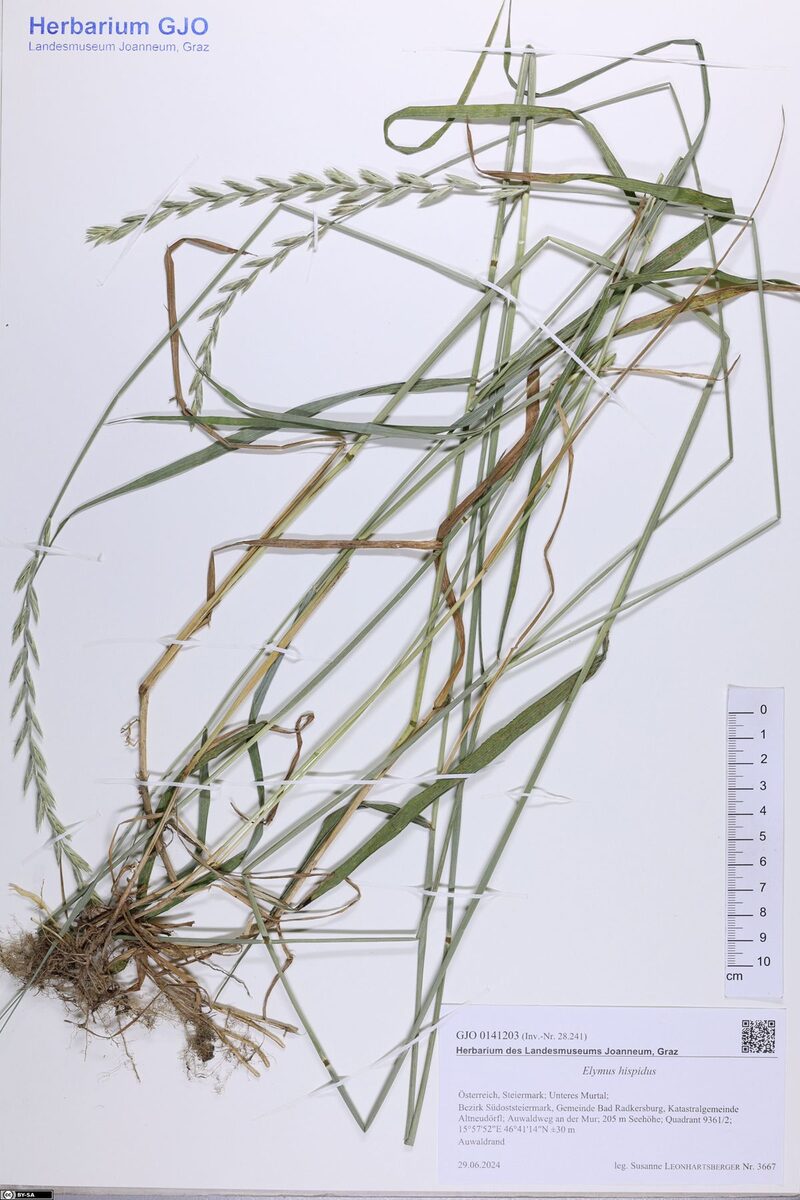
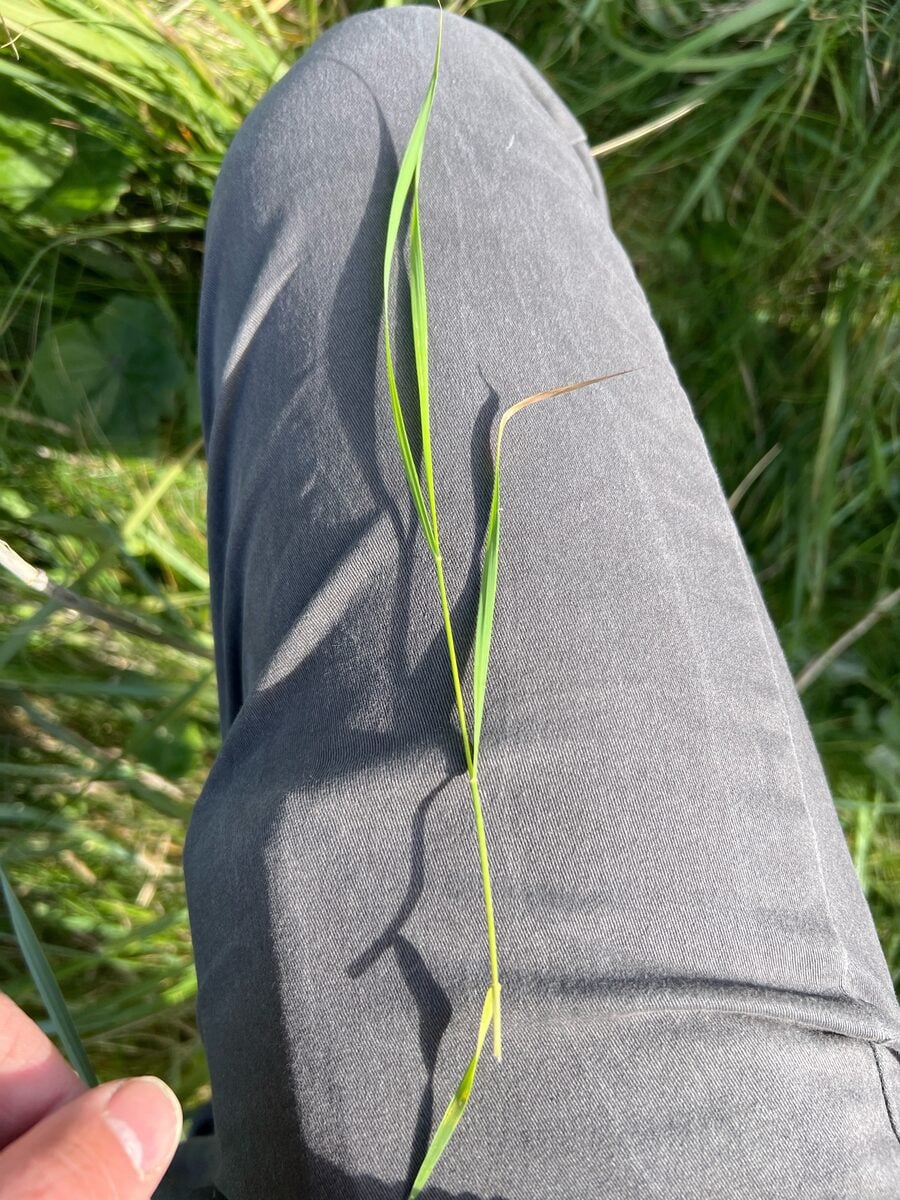
Beckmannia syzigachne - (Steud.)Fernald.
(Steud.)Fernald.
American Sloughgrass
gbif· cc-by-nc
Hugo Sun
gbif· cc-by-nc
Michael Stein
gbif· cc-by-nc
Michael Stein
Description
Beckmannia syzigachne is a PERENNIAL growing to 1 m (3ft 3in) by 0.5 m (1ft 8in). See above for USDA hardiness. It is hardy to UK zone 4 and is not frost tender. It is in flower from May to June, and the seeds ripen from July to August. The species is hermaphrodite (has both male and female organs) and is pollinated by Wind. Suitable for: light (sandy), medium (loamy) and heavy (clay) soils. Suitable pH: mildly acid, neutral and basic (mildly alkaline) soils and can grow in very alkaline and saline soils. It can grow in semi-shade (light woodland) or no shade. It prefers moist or wet soil and can grow in water.
Edible Uses
Seed - cooked. A mild flavour, it can be ground into a flour and used as a cereal. The seed is very small but is easily harvested. It does then have to be separated from its husk, which is a very fiddly operation. Some N. American Indian tribes burn the husks of grass seeds. Ripe grains (seeds)- Use: Cooked whole like wild rice or pounded into meal for porridge, flatbreads, or gruel. Flavor: Mild, nutty, cereal-like; similar to small wild rice kernels. Nutritional value: Not well-studied, but similar to other wetland cereals—moderate protein (~10%), complex carbohydrates (~70%), and trace minerals (Fe, Mg, Zn). Edibility rating: 3.5 / 5 — wholesome and palatable, though tedious to harvest. Taste, Processing & Kitchen Notes: Harvest when seed heads begin to droop and turn golden-brown. Seeds fall easily when mature; hand-stripping or gentle beating into a canoe, basket, or tarp works well. Processing steps: 1. Dry the seed heads in the sun or over low heat. 2. Thresh by rubbing or treading to separate grains. 3. Winnow in light breeze to remove chaff. 4. Parboil or toast lightly before storage to improve flavor and reduce spoilage. 5. Cook like rice (simmer 20–30 min) or grind for meal. Taste is mild and starchy, similar to brown rice with a faint grassy aroma; texture tender but slightly chewy.
Distribution
Eastern Europe to central Asia and North America.
Where It Grows
TEMPERATE ASIA: Russian Federation-Western Siberia (Western Siberia (south)), Russian Federation-Eastern Siberia (Eastern Siberia (south)), Kazakhstan, Mongolia, Russian Federation-Far East (Far East), China (north), Japan NORTHERN AMERICA: Canada (Yukon, Québec, Ontario, Saskatchewan, Alberta, Manitoba, British Columbia), United States (Alaska, Michigan, Iowa (north), Minnesota, Nebraska (north), North Dakota, South Dakota, Wisconsin, Colorado, Idaho, Montana, Oregon, Washington, Wyoming, New Mexico (north), California (north), Nevada, Utah) EUROPE: Russian Federation-European part (European part (southeast))
Cultivation
Prefers a moist to wet soil, succeeding in shallow water. Tolerates saline soils. Tolerates a pH in the range 5.8 to 7.6. We have no specific information on the hardiness of this species, but we have grown it successfully outdoors in Cornwall and, judging by its range, it should be cold-hardy in most if not all of Britain. Some botanists treat this species as no more than a synonym of B. eruciformis. Seasonality (Phenology): Germination: spring (in flooded or saturated soils). Growth: vigorous through early summer in shallow standing water. Bloom: July–August. Seed harvest: September–October—as water recedes and heads ripen. Seeds are synchronous, allowing efficient one-time harvest, though yields depend heavily on site hydrology. abitat & Range Native range: Northern and western North America from California, Nevada, and New Mexico north through the Great Plains and into Canada and Alaska. Common in: Marshes and sloughs, Edges of ponds and ditches, Seasonally flooded fields, Irrigation channels and low swales. Often co-occurs with sedges, cattails, bulrushes, and wild rice, contributing to wetland biodiversity and serving as nesting cover for waterfowl.
Propagation
Seed - surface sow in spring in pots in a cold frame. Do not let the soil dry out. Very quick germination. When they are large enough to handle, prick the seedlings out into individual pots and plant them out into their permanent positions in the summer. If there is sufficient seed, it can be sown in situ in the spring. Division in spring. Very easy, larger divisions can be planted straight into their permanent positions whilst smaller clumps are best potted up and kept in a cold frame until they are growing away well.
Other Uses
The plant is used for making bedding and pillows. Ecology & Wildlife: Food source: Seeds eaten by ducks, geese, and shorebirds; foliage grazed by muskrats and deer. Habitat value: Stabilizes soft substrates, improves water quality, and contributes to wetland plant diversity.
Also Known As
American Sloughgrass (Beckmannia syzigachne (Steud.) Fernald)