Ailanthus triphysa
(Dennst.) Alston
White bean, White siris
iNaturalist· cc-by-sa
(c) Forestowlet, some rights reserved (CC BY-SA)
iNaturalist· cc0
no rights reserved, uploaded by Ajit Ampalakkad
iNaturalist· cc-by-nc
(c) Radha Veach, some rights reserved (CC BY-NC), uploaded by Radha Veach
Summary
Source: WikipediaAilanthus triphysa (also Ailanthus malabarica), ferntop ash, is a medium to tall evergreen rainforest tree that is native to Asia and Australia. The wood is used for matchwood and plywood. The tree is known as halmaddi in India, where its resin, also called halmaddi, may be used in incense. Inappropriate extraction methods were resulting in trees dying, thus by the 1990s the Indian forestry department had banned extraction.
Description
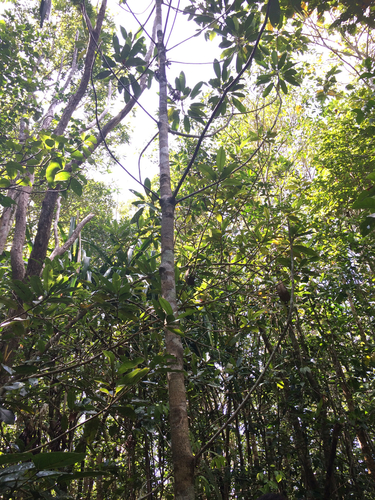
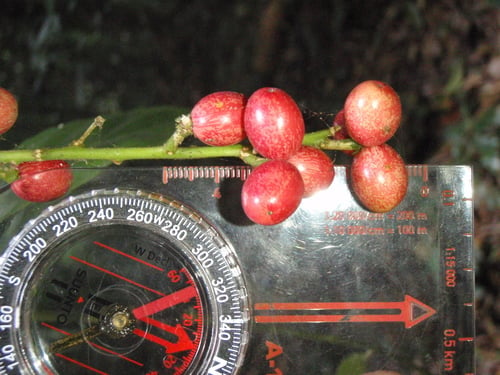
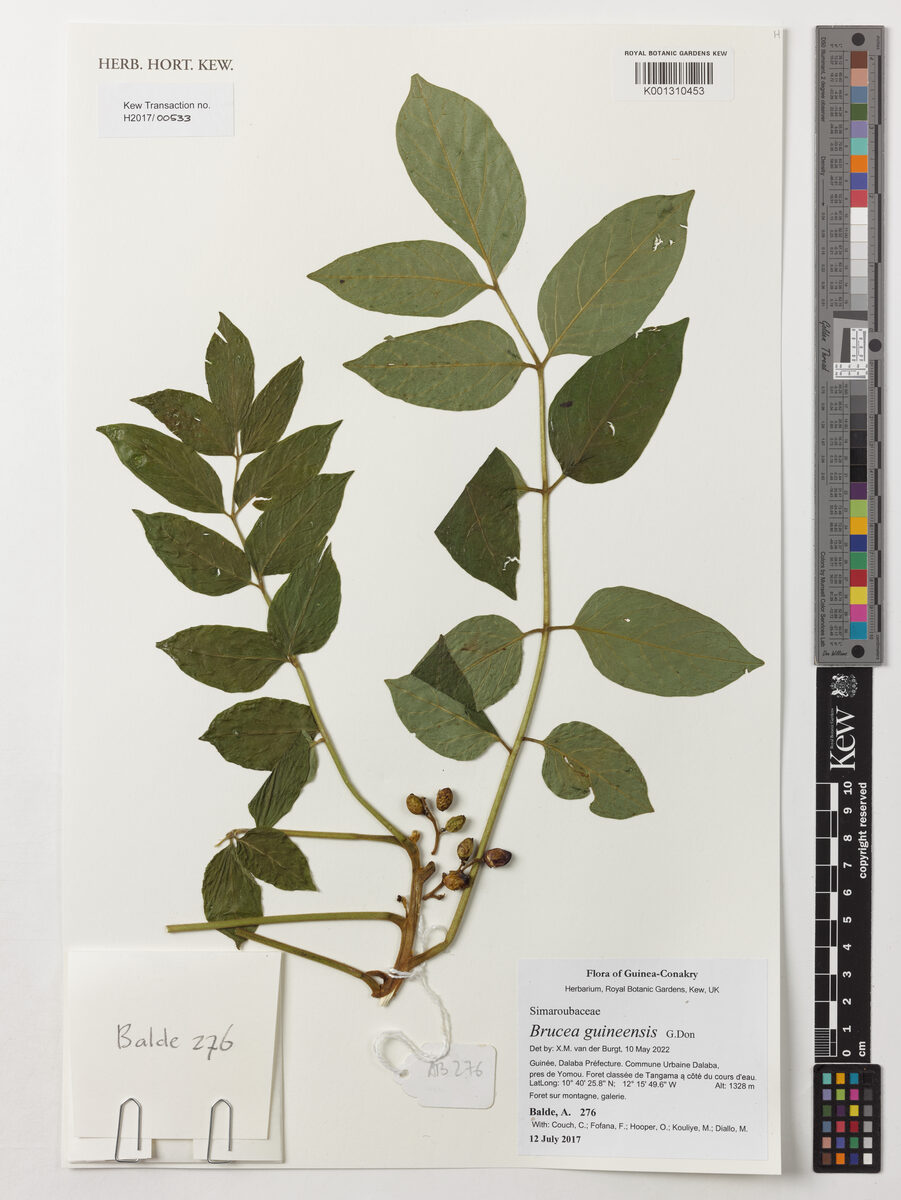
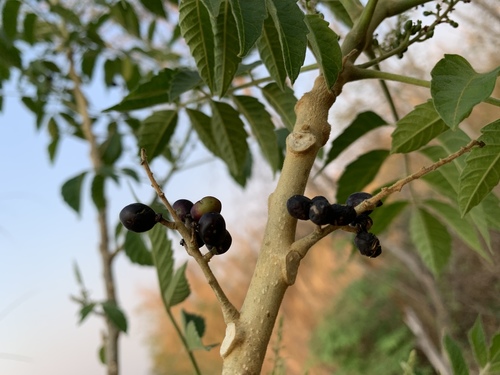
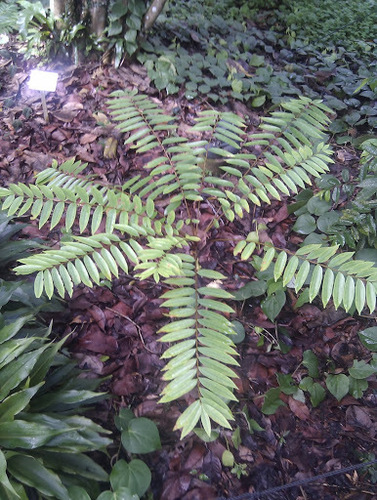
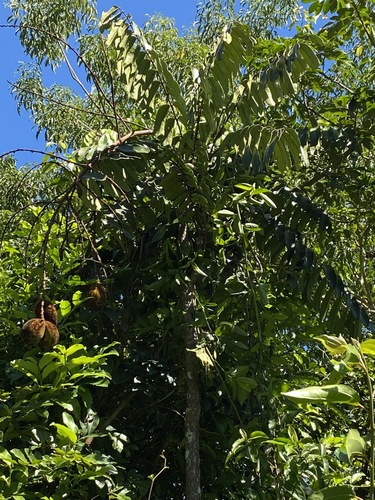
An evergreen tree. It grows 15-20 m tall. The leaves are 30-60 cm long. The leaves have 6-17 pairs of leaflets along the stalk. The leaflets are oval and 15-20 cm long by 3-6 cm wide. They are wedge shaped or rounded at the base and taper to the tip. The flower panicles are in the axils of leaves. The fruit are 5-8 cm by 2-3 cm. The seeds are flat with a wing around them.
Edible Uses
The ripe fruit are eaten.
Traditional Uses
The ripe fruit are eaten.
This uses section is brief — help expand it
Medicinal Uses
The wood is yellowish and brittle; the timber is mainly used for matchwood and plywood, though also makes charcoal. and When the bark is cut, a sticky resin is exuded, which becomes brittle on drying; this resin may be used for medicinal purposes, and particularly, because of its fixative properties, it may be used an ingredient in incense sticks. In India, the incense resin is named halmaddi, after the local name for the tree itself. Due to crude extraction methods which resulted in trees dying, by the 1990s the Forest Department in India had banned resin extraction; this forced up the price of halmaddi, and its use in incense-making declined. In Cambodia, the resin is also used as incense, whereas the bark is used in local folk medicine against dysentery and intestinal œdema. The wood contains various alkaloids and quassinoids, including beta-carboline, and has been used for the treatment of dyspepsia, bronchitis, ophthalmia and snake bite.
Known Hazards
No hazards mentioned in the data.
Distribution
It is a tropical plant. It grows in open woodland below 100-600 m above sea level. In Yunnan.
Where It Grows
Asia, Australia, China, India, Indochina, Malaysia, Myanmar, SE Asia, Sri Lanka, Thailand, Vietnam,
Cultivation
A tree of the wet tropical evergreen lowland forests, it grows best at an altitude of 60 - 1,500 metres where the mean annual temperature is around 27°c and the mean annual rainfall is around 1,920 mm. Requires a position in full sun. Prefers a well-drained, light sandy soil. A fast-growing tree. A dioecious species, both male and female forms need to be grown if fruit and seed are required. The flowers of male plants emit a foetid, disgusting smell and, for that reason, male trees are not desirable to cultivate as an ornamental.
Propagation
Seed - it has a short viability of only a few months. Seedlings need plenty of light to grow well.
Other Uses
The leaves are used to dye silk and satin black. An essential oil is obtained from the bark. A gum is obtained from stem cuttings The resin is used as incense. It is used in Hindu temples. The yellow wood is light in weight, soft and porous. It is used for making boats, matches, fishing floats and weaponry accessories such as sword handles and spear sheaths. The leaf litter decomposes well to help restore soil fertility. The trees are used to act as supports for growing plack pepper (Piper nigrum).
Synonyms
Also Known As
Mattipal, O-dein, Perumaram
References (2)
- World Checklist of Useful Plant Species 2020. Royal Botanic Gardens, Kew
- Yesodharan, K. & Sujana, K. A., 2007, Wild edible plants traditionally used by the tribes in the Parambokulam Wildlife Sanctuary, Kerala, India. Natural Product Radiance 6(1) pp 74-80