Picrasma quassioides
(D. Don) Benn.
Bharangi
iNaturalist· cc-by-nc
(c) 红梅, some rights reserved (CC BY-NC)
iNaturalist· cc-by
(c) りなべる, some rights reserved (CC BY)
iNaturalist· cc-by
(c) りなべる, some rights reserved (CC BY)
Summary
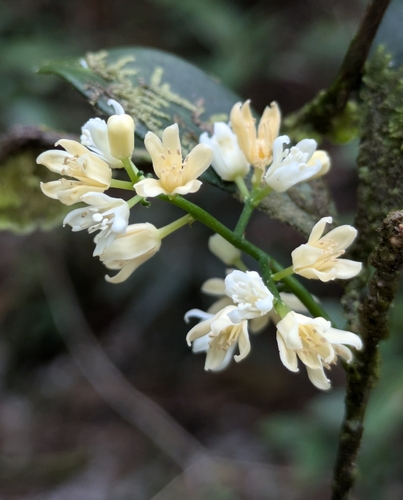
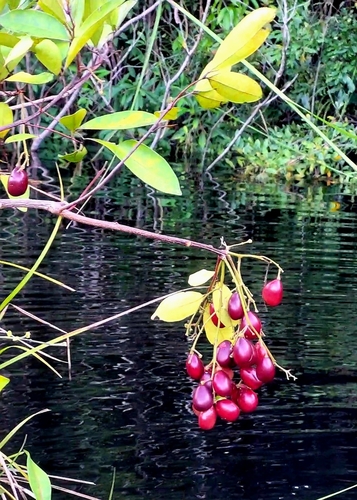
Source: WikipediaPicrasma quassioides (picrasma; Chinese: 苦樹 ku shu, Japanese: ニガキ nigaki "bitterwood"; also India quassia, quassia wood, shurni, quassia-wood, or quassiawood; syn. P. ailanthioides) is a species of Picrasma native to temperate regions of southern Asia, from the northeast of Pakistan east along the Himalaya and through East Asia from southern, central and eastern China to Taiwan, Japan and Korea. It is a deciduous shrub or small tree growing to 10–15 m (rarely 20 m) tall with a trunk up to 50 cm diameter. The bark is smooth and dark grey-brown. The leaves are 15–40 cm long, pinnate, with 7–15 leaflets 2.5–10 cm long and 1.5–4.5 cm broad, with a coarsely and irregularly toothed margin. The flowers are green to yellow-green with four or five sepals and petals, produced in cymes 8–15 cm long in mid to late spring. The fruit is an ovoid to globose, red to black drupe 6–7 mm diameter.
Description
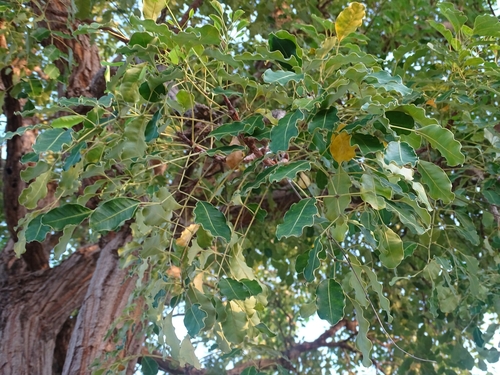
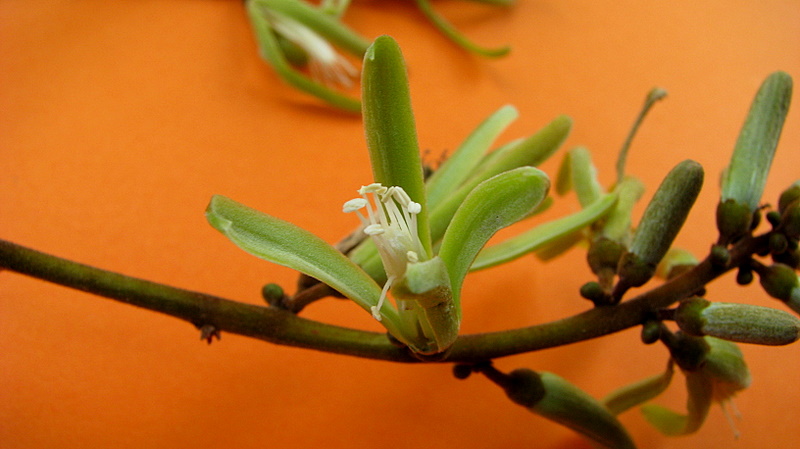
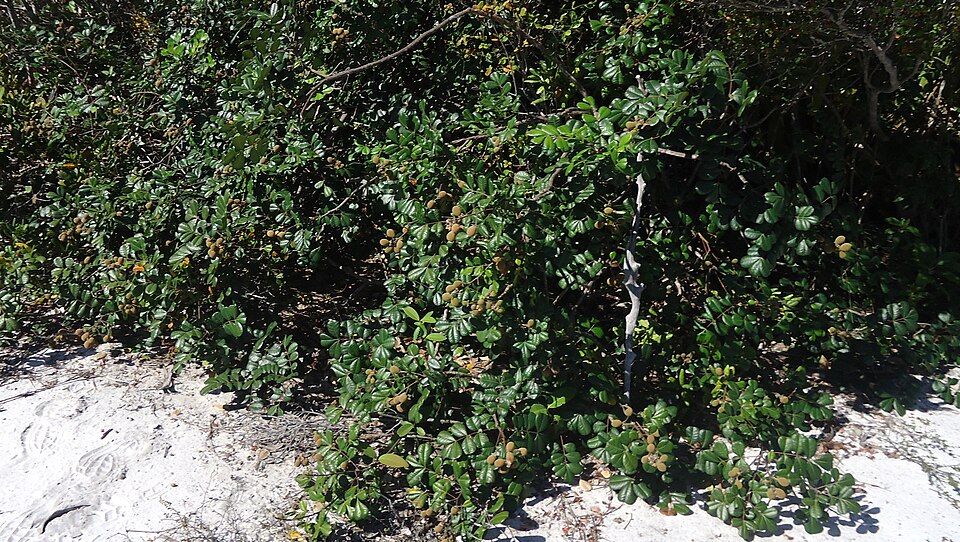
A scrambling shrub or tree. It grows 8 m high and spreads 8 m wide. It loses its leaves during the year. The leaves are divided into leaflets along the stalk. The leaflets are opposite and have sharp teeth. They turn yellow to orange in autumn. The flowers are small and pale green. They are in loose clusters. The fruit are berry like. They are small and red.
Edible Uses
The fruit is small, red, and berry-like, about 7mm in diameter. Young buds (whether flower or leaf buds is not specified) can be used to make a tea. A bitter substance called quassin is extracted from the tree — likely from the bark — and can be used as a hop substitute in brewing beer.
Traditional Uses
The fruit are eaten. The young buds are used to make tea. A bitter extract from the tree is used as a hop substitute for brewing beer
This uses section is brief — help expand it
Medicinal Uses
The wood contains a range of medicinal compounds and has been shown to be anthelmintic, antiamoebal, antiviral, bitter, hypotensive, and stomachic, and it increases the flow of gastric juices. In Korea it is used to treat digestive problems, especially chronic dyspepsia. A decoction of the stem bark is bitter, febrifuge, and tonic. The leaves have been used to treat itchy skin, probably by acting against body parasites.
Known Hazards
None listed.
Distribution
It is a temperate plant. It needs a well-drained soil. It can grow in sun or light shade. In Pakistan it grows in mountains in mixed forest between 1,400-3,200 m altitude. It suits hardiness zones 3-9. Burnie Rhodo Gardens.
Where It Grows
Asia, Australia, Bhutan, China, Himalayas, India, Japan, Korea, Nepal, Pakistan, Sri Lanka, Taiwan, Tasmania, Tibet,
Cultivation
Plants can be grown from seed.
Propagation
Seed is best sown as soon as it is ripe in a cold frame. Stored seed requires 3 months of cold stratification and should be sown as early in the year as possible. When large enough to handle, prick seedlings into individual pots and grow on in a greenhouse for at least their first winter. Plant out into permanent positions in late spring or early summer, after the last expected frosts. Cuttings of half-ripe wood can be taken in July/August in a frame. Root cuttings 4cm long taken in December should be planted horizontally in pots in a greenhouse.
Other Uses
The bark is used as an insecticide, though one report attributes this property to the wood instead. It serves as a substitute for the insecticide quassia, which is derived from the wood of a tropical tree. Quassia is a relatively safe organic insecticide that breaks down quickly and has low toxicity to mammals. It has been used as a parasiticide to eliminate lice, fleas, and similar pests. The wood is hard, fine, and close-grained, and is used for mosaic work and utensils.
Notes
There are 6 Picrasma species in the Americas and 6 in Asia.
Synonyms
Also Known As
Bhurungi, Charangi, Dieng-kchlang, Hala, Karwi, Kashshing, Nigaki, Puthorin, Shama-baringi, Tithu
References (9)
- Ambasta, S.P. (Ed.), 2000, The Useful Plants of India. CSIR India. p 455
- J. J. Bennett & R. Brown, Pl. jav. rar. 198. 1844
- Burkill, I.H., 1966, A Dictionary of the Economic Products of the Malay Peninsula. Ministry of Agriculture and Cooperatives, Kuala Lumpur, Malaysia. Vol 2 (I-Z) p 1753
- Cundall, P., (ed.), 2004, Gardening Australia: flora: the gardener's bible. ABC Books. p 1042
- Facciola, S., 1998, Cornucopia 2: a Source Book of Edible Plants. Kampong Publications, p 230
Show all 9 references Hide references
- Flora of Pakistan. www.eFloras.org
- Hibbert, M., 2002, The Aussie Plant Finder 2002, Florilegium. p 233
- Singh, H.B., Arora R.K.,1978, Wild edible Plants of India. Indian Council of Agricultural Research, New Delhi. p 68
- Tanaka,