Quassia africana
(Baill.) Baill.
iNaturalist· cc-by-nc
(c) Bart Wursten, some rights reserved (CC BY-NC), uploaded by Bart Wursten
iNaturalist· cc-by-nc
(c) Bart Wursten, some rights reserved (CC BY-NC)
Description
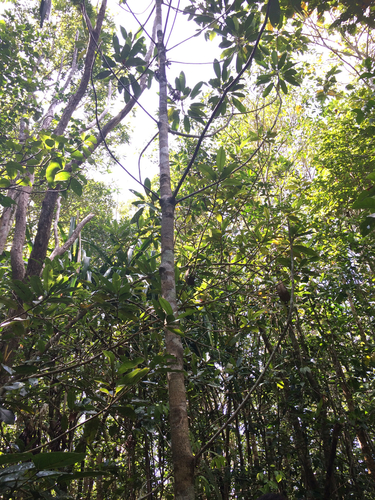
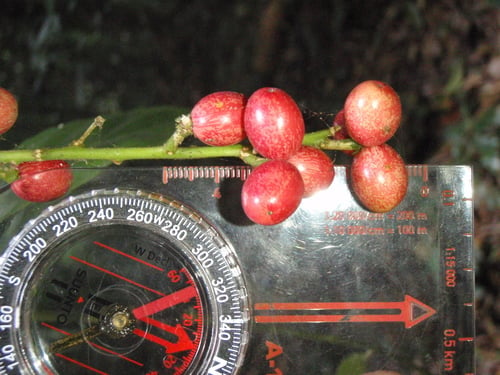
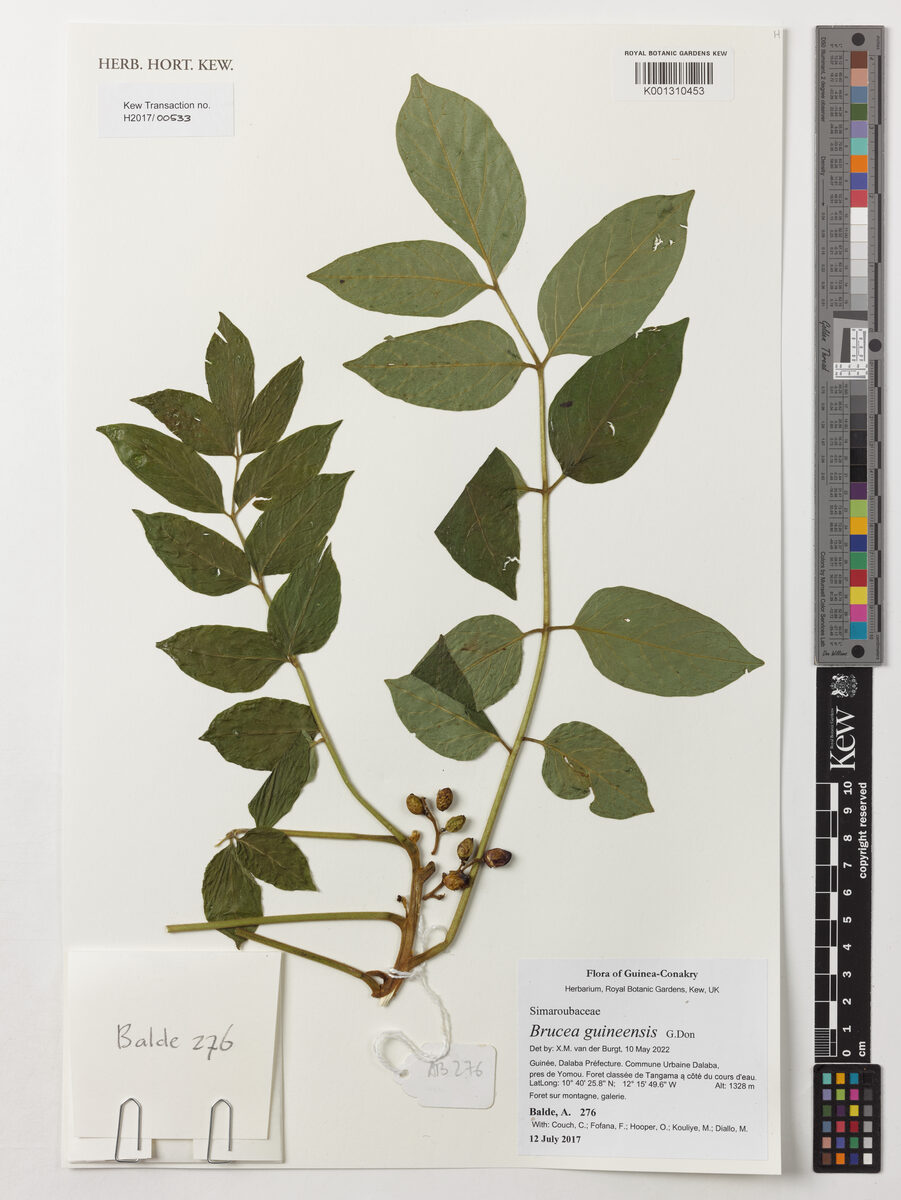
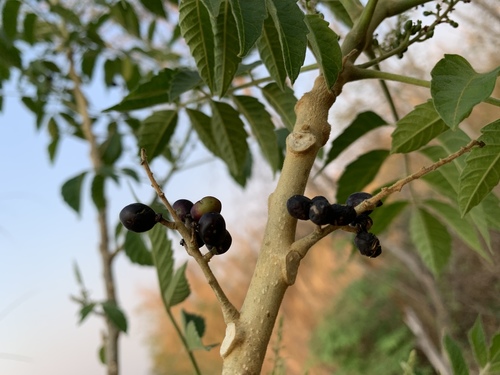
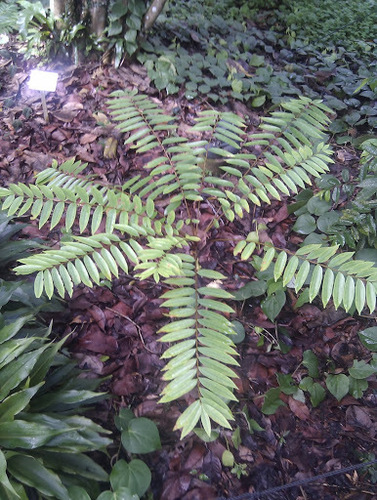
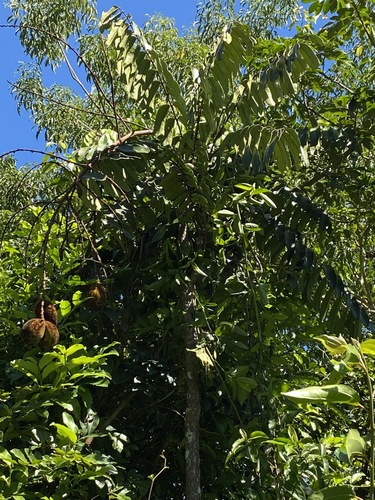
A shrub. It grows 4 m high. All parts of the plant are very bitter. The bark is greyish green. The leaves are alternate and compound. There are 5-7 opposite leaflets. These are 5-20 cm long by 2-8 cm wide. The end leaflet is largest. The flowering shoots are at the end and are 12-20 cm long. The flower petals are white to yellow with a pinkish tinge.
Edible Uses
The leaves, wood, and root are edible, though caution is advised.
Traditional Uses
The wood is used as a tonic.
This uses section is brief — help expand it
Medicinal Uses
The wood is used as a tonic.
Distribution
It is a tropical plant.
Where It Grows
Africa, Angola, Cameroon, Central Africa, Congo DR, Gabon, West Africa,
Cultivation
A plant of the lowland, humid tropics, where it is found at elevations up to 500 metres.
Synonyms
References (3)
- Burkill, H. M., 1985, The useful plants of west tropical Africa, Vol. 5. Kew.
- Latham, P & Mbuta, A., 2017, Useful Plants of Central Province, Democratic Republic of Congo. Volume 2. Salvation Army p 127
- World Checklist of Useful Plant Species 2020. Royal Botanic Gardens, Kew