Quassia gabonensis
Pierre
gbif· cc-by
Meise Botanic Garden
gbif· cc-by
Meise Botanic Garden
gbif· cc-by
Meise Botanic Garden
Description
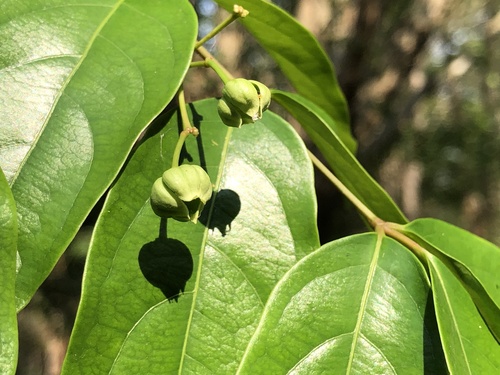
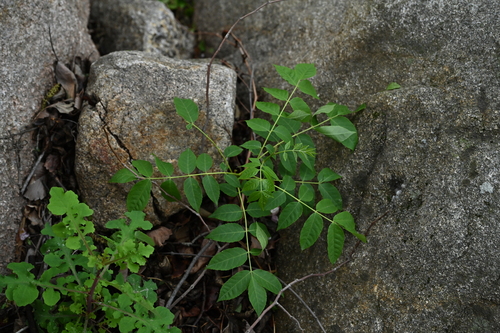
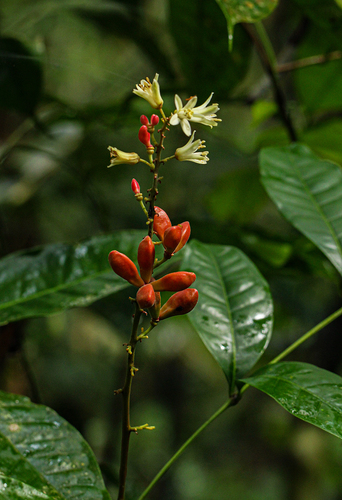
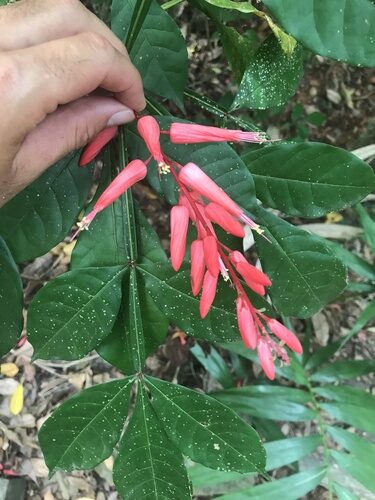
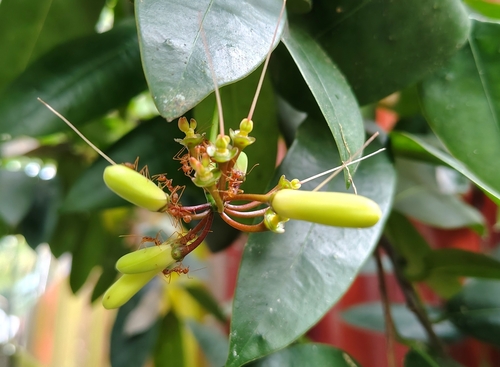
A large tree. It grows 40 m tall. The wood is soft and white. The trunk can be 2 m across. The leaves have 7-19 opposite leaflets. The flowers are yellowish-white, The fruit are black and shiny.
Edible Uses
The seeds are boiled for 2-3 hours, then washed for several days in running water, dried, and crushed. Fat is extracted from the processed seeds and eaten raw. Both fruit and seeds are used as spices.
Traditional Uses
The seeds are boiled for 2-3 hours then washed for a few days in running water before being dried and crushed. Fat is extracted from the seeds and eaten raw.
Medicinal Uses
The seeds undergo a traditional processing method of boiling and water washing before consumption.
Known Hazards
Cytotoxic quassinoids have been isolated from the bark.
Distribution
It is a tropical plant. It grows in rainforest.
Where It Grows
Africa, Angola, Benin, Cameroon, Central Africa, Congo DR, Côte d'Ivoire, Gabon, Ghana, Guinea, Guinée, Ivory Coast, Liberia, Nigeria, Sierra Leone, Togo, West Africa,
Other Uses
The heartwood is pale yellow and lustrous; it is not demarcated from the sapwood. The grain is fairly regular, sometimes irregular, texture medium to coarse. The wood is lightweight, soft, brittle and has a low durability, being liable to fungal attack and susceptible to termites, powder-post beetles and dry-wood borers. Seasoned wood saws easily and planes well. Screws and nails are applied easily, with little tendency for the wood to split, but it does not hold nails well. The wood peels and slices easily, but as the logs are deeply fluted peeling is not recommended. It can be pulped satisfactorily using the kraft or sulphite processes. The wood is used for making musical instruments, mallets to beat bark for house construction, spoons, and bells for hunting dogs. In general it is considered suitable for ship and boat building, furniture and cabinet work, frame moulding, light boxes and crates, interior trim, matches, toys and novelties, veneer and plywood, hardboard and particle board, wood-wool, and as pulpwood.
Synonyms
Also Known As
Nzeng
References (2)
- Ferns, K., Useful Tropical Plants.
- World Checklist of Useful Plant Species 2020. Royal Botanic Gardens, Kew