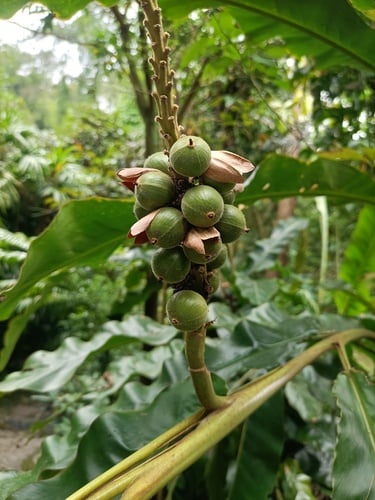
Amomum dealbatum
Roxb.
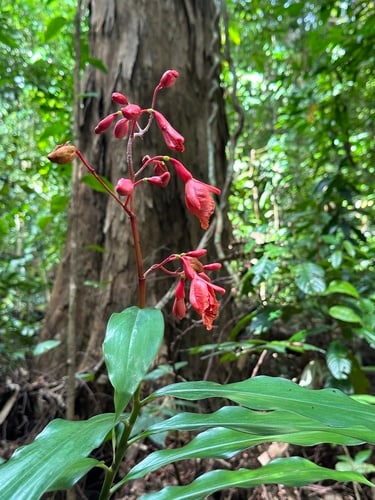
iNaturalist· cc-by-nc
(c) guanhong, some rights reserved (CC BY-NC)
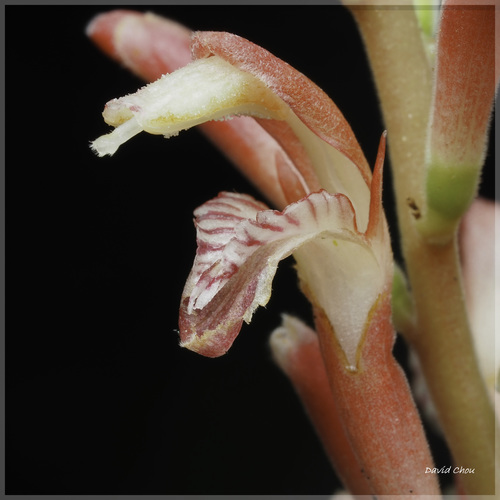
iNaturalist· cc-by-nc
(c) guanhong, some rights reserved (CC BY-NC)
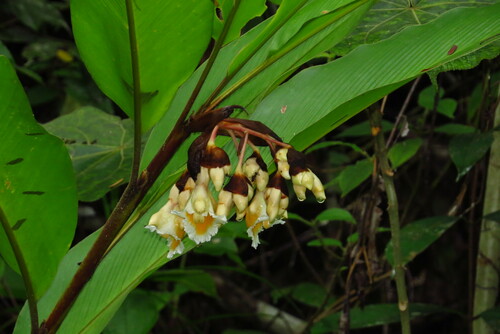
iNaturalist· cc-by-nc
(c) guanhong, some rights reserved (CC BY-NC)
Description
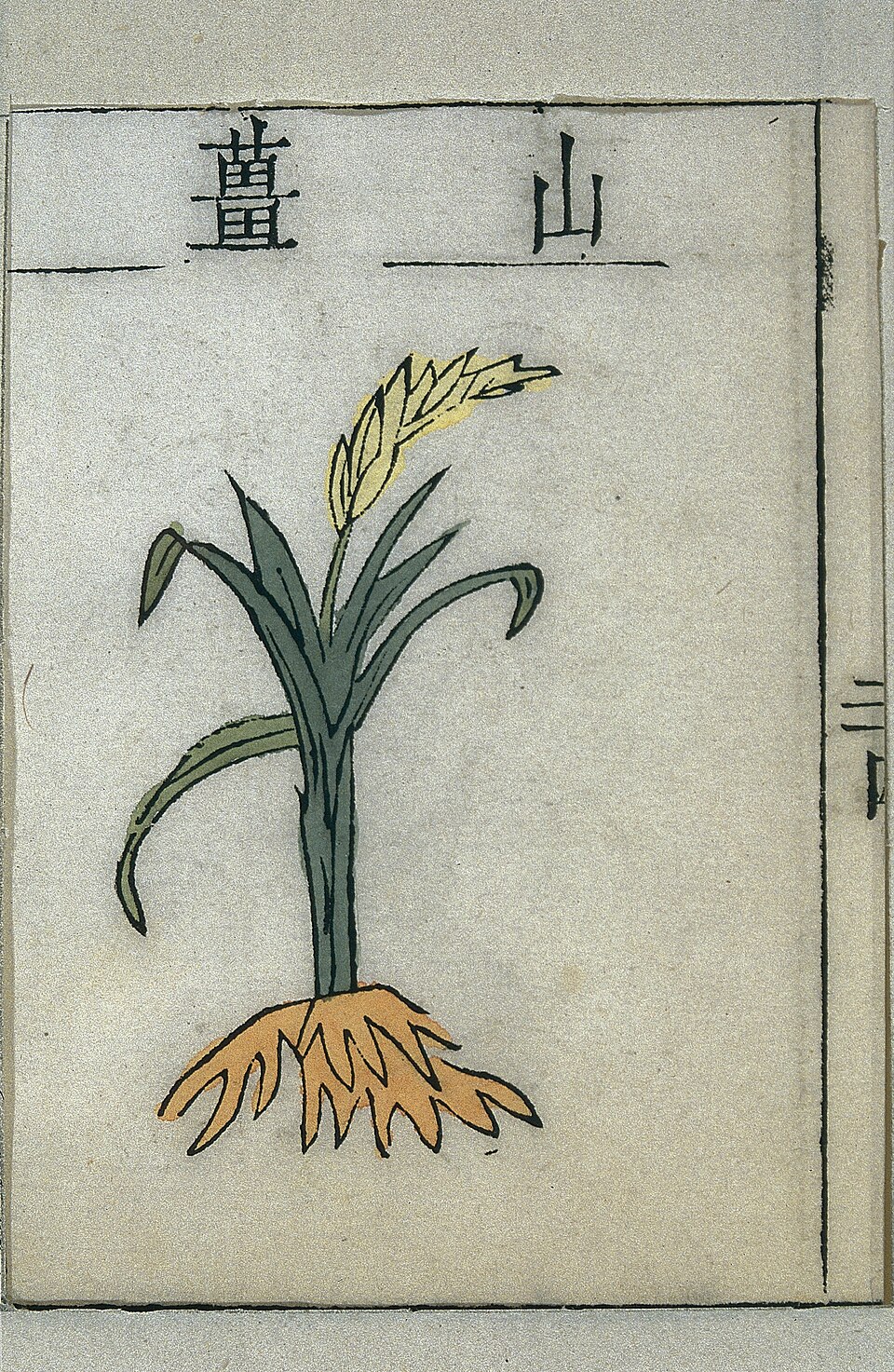
A ginger family herb. It grows 1-3.5 m tall. The leaves are whitish underneath. They are oblong and 50-70 cm long by 6-14 cm wide. The flower spikes are almost round and 3-5 cm across. The flower tube is white. The fruit is a purple-green capsule that is 3 cm long by 1 cm wide. It has 9 winged ribs.
Edible Uses
The flowers are eaten cooked or steamed. The rhizome is peeled, then burnt or boiled and eaten as a chutney. The seeds are used as a spice, and shoots are also edible.
Traditional Uses
The flowers are eaten cooked or steamed. The rhizome is peeled, burnt or boiled and eaten as a chutney.
This uses section is brief — help expand it
Medicinal Uses
The rhizome is traditionally prepared and consumed as a chutney.
Distribution
It is a subtropical plant. It grows in shaded forests and hill slopes between 600-800 m above sea level in southern China. In Yunnan.
Where It Grows
Asia, Bangladesh, China, Himalayas, India, Indochina, Indonesia, Laos, Myanmar, Nepal, Northeastern India, SE Asia, Sikkim, Thailand, Vietnam,
Propagation
Seed - Cuttings of the root-bearing tips of the rhizome.
Synonyms
Also Known As
Aidu, Aigia, Papia, Tingnyang
References (9)
- Angami, A., et al, 2006, Status and potential of wild edible plants of Arunachal Pradesh. Indian Journal of Traditional Knowledge 5(4) October 2006, pp 541-550
- Gangte, H. E., et al, 2013, Wild Edible Plants used by the Zou Tribe in Manipur, India. International Journal of Scientific and Research Publications, Volume 3, Issue 5
- Guite, C., 2016, Study of wild edible plants associated with the Paite Tribe of Manipur, India. International Journal of Current Research. Vol. 8, Issue 11, pp. 40927-40932
- Khodram,S. D., et al, 2019, Local knowledge of edible flowers used in Mizoram. Indian Journal of Traditional Knowledge Vol 18(40 pp 715-723
- Lungphi, P., Wangpan, T. & Tangjang, S., 2018, Wild edible plants and their additional uses by the Tangsa community living in the Changlang district of Arunachal Pradesh, India. Pleione 12(2): 151 - 164. 2018.
Show all 9 references Hide references
- Meitei, L. R., et al, 2022, An ethnobotanical study on the wild edible plants used by forest dwellers in Yangoupokpi Lokchao Wildlife Sanctuary, Manipur, India. Ethnobotany Research and Application 23:15
- Misra, R. C., et al, 2013, Genetic resources of wild tuberous food plants traditionally used in Similipal Biosphere Reserve, Odisha, India. Genetic Resources and Crop Evolution. Vol. 60 No. 2. Springer
- Thokchom, R., et al, 2016, Documentation and assessment of wild medicinal and edible flowers of valley districts of Manipur. International Journal of Research in Applied, Natural and Social Sciences. 4(11):13-20
- World Checklist of Useful Plant Species 2020. Royal Botanic Gardens, Kew