Chrysophyllum pruniforme
(Engl.) Pierre ex Engl.
wikimedia· cc-by
Forest & Kim Starr (via Wikimedia Commons)
Description
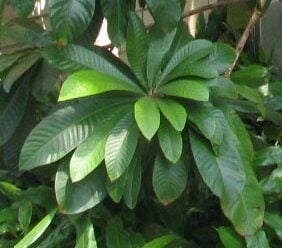
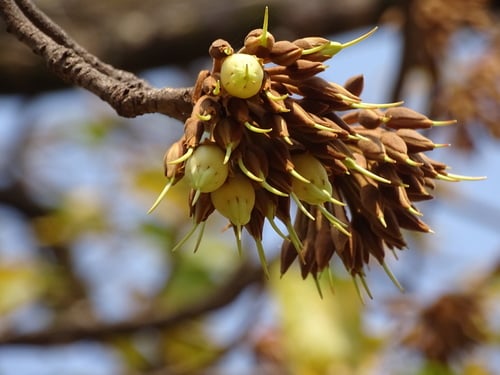
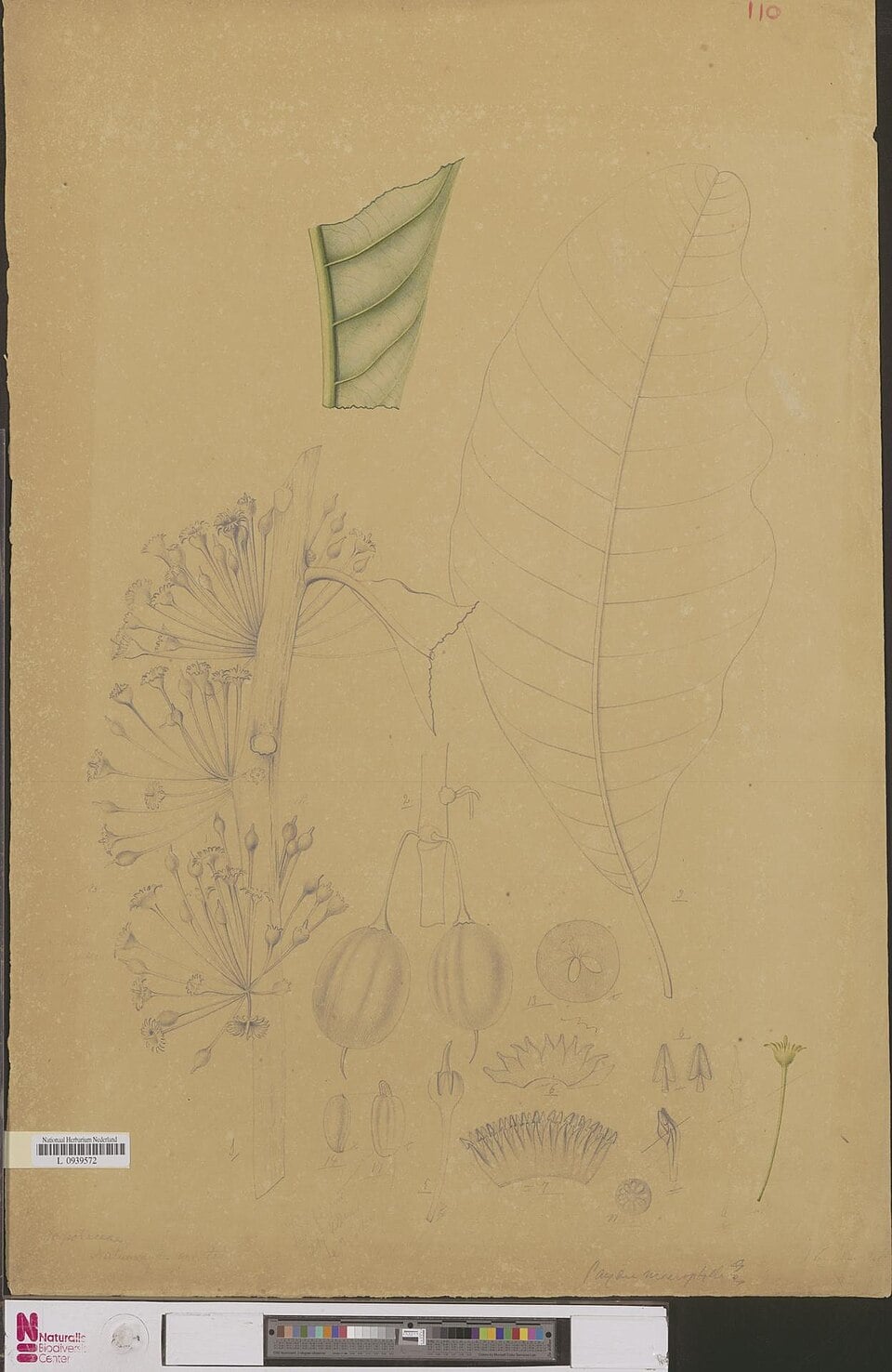
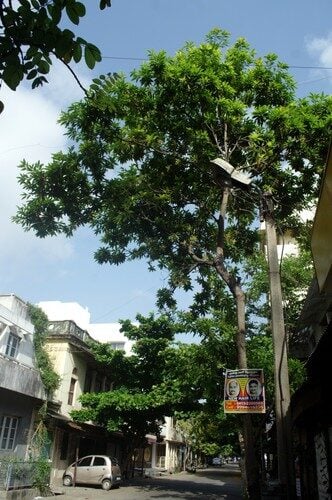
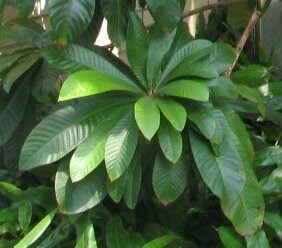
A tree. It grows to 30 m high. The trunk is 80 cm across. The trunk is straight and cylinder shaped. It may have slight buttresses. The leaves are alternate in 2 rows. They are simple and entire. The leaf blade is 4-11 cm long by 2-5 cm wide. The flowers are in tufts in the axils of leaves. They are greenish. The fruit are round of oval and 5 cm long by 4 cm wide. They are yellow when ripe. They have up to 5 seeds. The seeds are 2.5 cm long by 1.5 cm wide and shiny brown.
Edible Uses
In some regions the fruit pulp is reported as edible, but in others as inedible. The fruit is a yellow, globose to ovoid berry up to 5cm × 4cm, containing up to 5 fairly large seeds.
Traditional Uses
The pulp of the fruit is edible in some regions.
This uses section is brief — help expand it
Medicinal Uses
A tea made from the bark is drunk to treat cough.
Distribution
A tropical plant. It grows in lowland rainforest usually on well drained soils. It suits humid locations. In East Africa it grows up to 1,500 m altitude.
Where It Grows
Africa, Benin, Cameroon, Central Africa, Central African Republic, CAR, Congo DR, Congo R, East Africa, Gabon, Ghana, Ivory Coast, Nigeria, Rwanda, Sierra Leone, Uganda, West Africa,
Cultivation
A plant of the moist tropics, where it is found at elevations up to 1,500 metres. Older plants can be grown in a sunny position, but seedlings appreciate some shade. Prefers a well-drained soil.
Other Uses
The wood is yellowish-white and moderately hard. It is used for construction, grain mortars, beehives and house construction.
Notes
There are about 80-150 Chrysophyllum species. They are mostly in tropical America. There are 44 species in tropical America.
Synonyms
Also Known As
Abam akouk bekwe, Duatadwe
References (12)
- Abbiw, D.K., 1990, Useful Plants of Ghana. West African uses of wild and cultivated plants. Intermediate Technology Publications and the Royal Botanic Gardens, Kew. p 42
- Burkill, H. M., 1985, The useful plants of west tropical Africa, Vol. 5. Kew.
- Dalziel, J. M., 1937, The Useful plants of west tropical Africa. Crown Agents for the Colonies London.
- Ferns, Useful Tropical Plants
- Jardin, C., 1970, List of Foods Used In Africa, FAO Nutrition Information Document Series No 2.p 127
Show all 12 references Hide references
- Lemmens, R.H.M.J., 2007. Chrysophyllum pruniforme Pierre ex Engl. [Internet] Record from Protabase. Louppe, D., Oteng-Amoako, A.A. & Brink, M. (Editors). PROTA (Plant Resources of Tropical Africa), Wageningen, Netherlands. < http://database.prota.org/search.htm>. Accessed 14 October 2009.
- Monogr. afrik. Pflanzen-Fam. 8:42, t. 14a. 1904
- Nkeoua, G. & Boundzanga, G. C., 1999, Donnees sur les produits forestieres non ligneux en Republique du Congo. FAO. p 25 (As Donella pruniformis)
- Peters, C. R., O'Brien, E. M., and Drummond, R.B., 1992, Edible Wild plants of Sub-saharan Africa. Kew. p 182
- Savill, P. S. & Fox, J. E. D., Trees of Sierra Leone. p 238
- Vivien, J., & Faure, J.J., 1996, Fruitiers Sauvages d'Afrique. Especes du Cameroun. CTA p 316 (As Donella pruniformis)
- World Checklist of Useful Plant Species 2020. Royal Botanic Gardens, Kew (As Donella pruniformis)