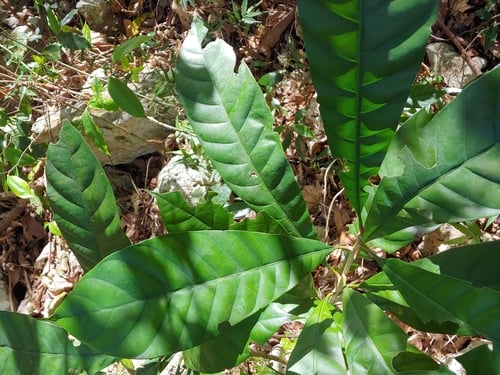
Planchonella chartacea
(F. Muell. ex Benth.) H. J. Lam.
Thin Leafed Coondoo
iNaturalist· cc-by-nc
(c) Ian McMaster, some rights reserved (CC BY-NC), uploaded by Ian McMaster
iNaturalist· cc-by-nc
(c) Dominique Fleurot, some rights reserved (CC BY-NC), uploaded by Dominique Fleurot
iNaturalist· cc-by-nc-sa
(c) Nick Lambert, some rights reserved (CC BY-NC-SA), uploaded by Nick Lambert
Description
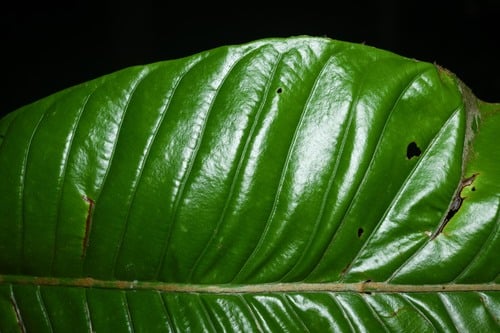
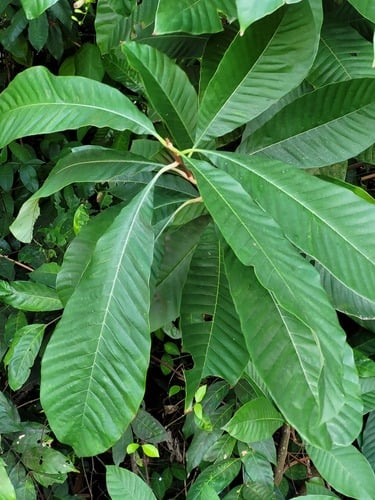
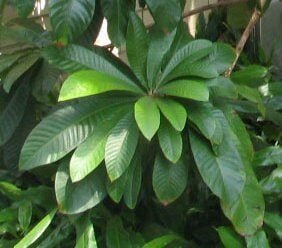
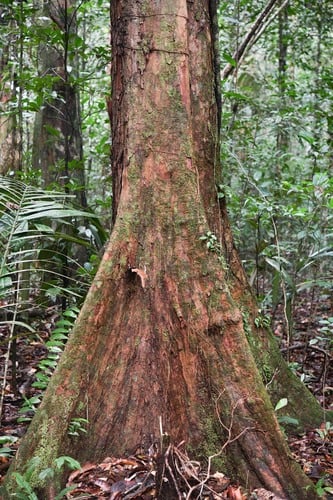
A tree up to 12-20 m high. It spreads 4-10 m wide. The leaves are simple and 4-19 cm long by 2-6 cm wide. They can be broadly oval or spoon shaped. They are thin and papery. The leaves are dark green and shiny above and dull underneath. The broken stems produce milky latex. The flowers are 0.5 cm long and cream-green. They occur in clusters of 4-7 in the axils of leaves. The fruit are 15-22 mm long by 5-15 mm wide. They hang singly or in clusters in the axils of leaves. As the fruit ripens it turns from red to black. There are 2-5 seeds and these are 9-20 mm long by 3-7 mm wide. The fruit is edible.
Edible Uses
The fruit is edible.
Distribution
A tropical plant. It grows in tropical rainforest. They need good drainage. It needs good light and fertile soil. It grows from sea level to 750 m above sea level.
Where It Grows
Australia, Asia, Cook Islands, Fiji, Indonesia, New Caledonia, Pacific, Papua New Guinea, PNG, Samoa, SE Asia, Singapore, Solomon Islands, Tonga,
Cultivation
Plants are grown from fresh seed.
Production
It is slow growing.
Notes
There are about 100 Planchonella species. They are mostly in Asia and the Pacific.
Nutrition
| Part | Moisture | kJ | kcal | Protein | Vit A | Vit C | Iron | Zinc |
|---|---|---|---|---|---|---|---|---|
| Fruit | 57.6 | — | — | 4.1 | — | — | — | — |
Synonyms
Also Known As
Nyatoh tree, Dugulla
References (11)
- Bodkin, F., 1991, Encyclopedia Botanica. Cornstalk publishing, p 808
- Cooper W & Cooper W T, 1994, Fruits of the Rain Forest. RD Press p 224
- Cooper, W. and Cooper, W., 2004, Fruits of the Australian Tropical Rainforest. Nokomis Editions, Victoria, Australia. p 509
- Cribb, A.B. & J.W., 1976, Wild Food in Australia, Fontana. p 50
- Elliot, W.R., & Jones, D.L., 1997, Encyclopedia of Australian Plants suitable for cultivation. Vol 7. Lothian. p 356
Show all 11 references Hide references
- Havel, J.J., 1975, Forest Botany, Volume 3 Part 2 Botanical taxonomy. Papua New Guinea Department of Forests, p 261
- Hiddins, L., 1999, Explore Wild Australia with the Bush Tucker Man. Penguin Books/ABC Books. p 139
- Melzer, R. & Plumb, J., 2011, Plants of Capricornia. Belgamba, Rockhampton. p 335 (As Pouteria chartacea)
- Townsend, K., 1994, Across the Top. Gardening with Australian Plants in the tropics. Society for Growing Australian Plants, Townsville Branch Inc. p 316
- Walter, A. & Sam C., 2002, Fruits of Oceania. ACIAR Monograph No. 85. Canberra. p 281 (As Pouteria linggensis)
- Williams, J.B., Harden, G.J., and McDonald, W.J.F., 1984, Trees and shrubs in rainforests of New South Wales and Southern Queensland. Univ. of New England, Armidale. p 92, 100